
Gadgets
Nano Banana 2: Revolutionizing Android Phone Design

Summary created by Smart Answers AI
In summary:
- Tech Advisor delves into the use of Google’s Nano Banana 2 AI image generator to envision a futuristic Android phone concept named the Gemini Horizon.
- The AI effectively produced highly realistic phone mock-ups from single prompts, showcasing significant advancements in visual fidelity and creative capabilities compared to previous versions.
- The conceptual design boasts impressive features such as a 7.1-inch Fluid OLED display, a 200MP camera with Liquid Lens technology, and a sleek 4.9mm titanium-carbide construction.
Like any groundbreaking technical innovation, the era of AI has seen its fair share of tedious “prompt engineering” and subpar AI output cluttering our feeds.
However, amidst the mundane, there are moments of pure magic. These breakthroughs signal a period that rivals, if not surpasses, the dotcom boom of 25 years ago and perhaps even the computer age that preceded it. Are these grand claims? Perhaps, but when your phone can seamlessly translate your speech into another language in real-time with your actual voice, you can’t deny that something extraordinary is afoot. And we’ve only just scratched the surface.
With the introduction of Google Nano Banana 2, the latest iteration of Gemini AI’s image generator, it’s evident that we’ve leaped yet again. A prime example is when I tasked Gemini with designing a new Android phone.
To be honest, I was skeptical. I had previously used Gemini for concept sketches, and it usually required extensive “prompt engineering” and explanation of design objectives to produce something passable, albeit still resembling a CGI creation.
Not this time. Utilizing the newly released Nano Banana 2 technology from Google and running directly from a Pixel 10 Pro phone (no computer needed), the results were remarkably impressive – enough to be deemed feasible.
Some insights on Nano Banana 2
Prior to revealing the final concept sketches and specifications, including the phone’s name, let’s delve into a brief history of Nano Banana, along with my personal encounter.
The image generation is quicker and, notably, based on real-time data
Introduced just last summer, Nano Banana created a viral sensation, as noted by Naina Raisinghani, Product Manager at Google DeepMind. Subsequently, Nano Banana Pro emerged, and I eagerly immersed myself in the process. I crafted concept sketches, produced videos, and generated social media content that appeared incredibly lifelike. I consistently marveled at the outcomes, even if they exhibited a slight artificial appearance.
Nano Banana 2 brings several groundbreaking enhancements when operated directly from your phone. The image generation is swifter and, notably, driven by real-time data sourced from the web, ensuring alignment with current trends. Text generation has also improved accuracy, resulting in fewer typos.
Raisinghani elucidated that Nano Banana 2 is more adept at interpreting your requests, discerning your actual intent rather than relying on guesswork. This explains why I encountered minimal back-and-forth when directing a new prompt for designing an Android phone. Furthermore, there’s a heightened “visual fidelity,” indicating enhanced realism according to Google’s terminology.
The captivating new Android design
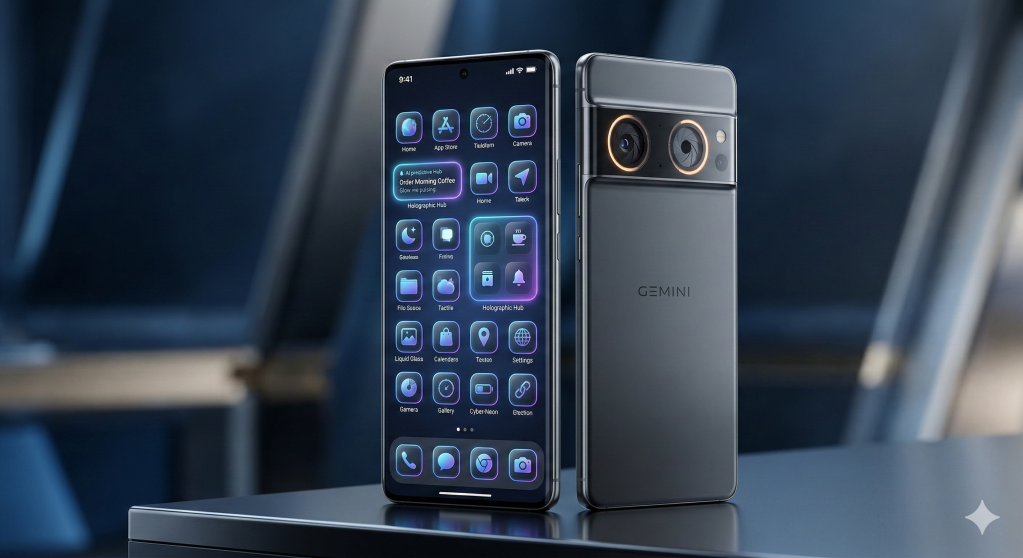
Gemini Horizon laid flat on a table
John Brandon / Google
Skipping ahead to the final mock-ups, they exude a strikingly authentic appearance. It’s essential to note that these were based on a single prompt, not multiple iterations, demonstrating Gemini’s grasp of intent.
My prompt was concise: “Design a new Android phone with these specifications: a slightly larger screen than the current market offerings, a thinner profile than the norm, a more advanced-looking camera, and a sleeker interface.”
Nano Banana 2 delivers more realistic renderings with minimal prompts
Instantly, the initial image surpassed anything I had witnessed from the original Nano Banana. The render appeared tangible, as if you could reach out and grab the phone, ready to engage in email correspondence or peruse the web endlessly. The display technology appeared convincing, and the dual lenses on the rear outshone current Pixel phone aesthetics.
The key takeaway here is that Nano Banana 2 offers heightened realism with fewer prompts. One can envision using this version to create mock-ups of diverse products, craft social media content, generate staff headshots, or simply revel in personal amusement.
Most notably, in further testing, the images lacked the typical AI-generated flaws or obvious CGI artifacts. Gemini transcended mere mock-up imagery, providing intricate and well-informed specifications.
“Gemini Horizon” model specifications
The specifications seemed derived from a superior data set, evident from the product’s name. Dubbed the Gemini Horizon, this phone demands attention – frankly, Google should consider manufacturing this device. It boasts a slender profile, a potent camera setup, and an appealing design that entices potential buyers.
Here are some of its notable specifications:
- The Infinite Screen: A 7.1-inch “Fluid OLED” display with a 21:9 ultra-wide aspect ratio for enhanced portability.
- The “Zero-G” Thickness: Engineered at a mere 4.9mm, surpassing the iPhone 16’s 7.8mm thickness.
- Frame Material: Constructed from a Grade 5 titanium-carbide alloy, offering a lighter yet sturdier build to prevent bending in the slim frame.
These specifications are remarkably specific! The screen size exceeds conventional standards, and as Gemini highlights, the device’s thinness sets it apart from previous iPhone iterations.
Regarding the camera functionality envisioned for this futuristic device:
- The Liquid Lens System: Featuring a single, seamless electromagnetic glass strip on the back instead of protruding lenses.
- Reactive Aperture: The camera app showcases mechanical iris blades that expand and contract, reminiscent of professional Leica or Hasselblad cameras.
- Thermal Glow: A subtle LED ring encircling the main sensor that changes color based on the shooting mode, enhancing visual appeal.
The detailed specs paint a picture of a potential Google creation in the near future:
- Display: 7.1-inch 144Hz Fluid OLED (21:9 ratio)
- Thickness: 4.9mm
- Battery: 5,500mAh solid-state
- Main camera: 200MP variable aperture + 50MP periscope (10x optical)
- OS: Android 16 with “Expressive” skin
Remarkably, these specifications stemmed from a single prompt. Gemini’s awareness is evident in the choice of a solid-state battery to maintain the device’s slim profile, a forward-thinking approach necessitating innovative battery technology to fit within a 4.9mm frame.
Gemini didn’t seek guidance on screen technology, camera specifics, or even the device’s presentation on a modern office table – it made these decisions autonomously due to its enhanced predictive capabilities and improved engine performance.
What lies ahead is a source of anticipation for me, but my assessment following this evaluation is that Nano Banana 2 represents a substantial improvement – faster, trend-savvy, and more intelligent.
Explore our top recommendations for the finest smartphones currently available on the market.










Lessons Learned: Navigating Federal Contracts as a Startup

Ultimate Guide: Streaming the Australian Grand Prix 2026 on Apple TV

Unveiling the Exciting Updates: A Comprehensive Guide to iOS 26.4 for Your iPhone

Bugatti’s Ultimate W-16 Masterpiece: A Golden Finale

How Cryptocurrency ACTUALLY works.

Urgent Alert: CISA Urges Immediate Patching for iOS Vulnerabilities Linked to Crypto Theft

Breaking News: WWE 2K26 Roster Unveiled – Exclusive Look!

Nano Banana 2: Revolutionizing Android Phone Design

Safe and Clean Cities: How City Detect’s AI Technology is Transforming Urban Safety and Sanitation

EU Takes Action Against Instagram and Facebook for Violating Illegal Content Rules

Warning: Facebook Creators Face Monetization Loss for Stealing and Reposting Videos

Facebook Compliance: ICE-tracking Page Removed After US Government Intervention

InstaDub: Meta’s AI Translation Tool for Instagram Videos

Facebook’s New Look: A Blend of Instagram’s Style

Facebook and Instagram to Reduce Personalized Ads for European Users

Reclaim Your Account: Facebook and Instagram Launch New Hub for Account Recovery

Meta discontinues Messenger apps for Windows and macOS

Breaking Updates: Meta Connect 2025 Unveils Latest Developments
How Cryptocurrency ACTUALLY works.

OnePlus Nord CE Unboxing!

STOP Buying this Tech Scam.

Who has the WORST Customer Service?

How many Spy Cameras are Recording you right now?

Dear Apple.

22 NIGHTMARE Tech FAILS they want us to forget.

Do NOT buy the Freedom Phone!! 🤬

Nothing Ear 1 Review – The Problem with Hype.
-
 Facebook4 months ago
EU Takes Action Against Instagram and Facebook for Violating Illegal Content Rules
-
 Facebook5 months ago
Warning: Facebook Creators Face Monetization Loss for Stealing and Reposting Videos
-
 Facebook5 months ago
Facebook Compliance: ICE-tracking Page Removed After US Government Intervention
-
 Facebook5 months ago
InstaDub: Meta’s AI Translation Tool for Instagram Videos
-
 Facebook3 months ago
Facebook’s New Look: A Blend of Instagram’s Style
-
 Facebook3 months ago
Facebook and Instagram to Reduce Personalized Ads for European Users
-
 Facebook3 months ago
Reclaim Your Account: Facebook and Instagram Launch New Hub for Account Recovery
-
 Apple5 months ago
Meta discontinues Messenger apps for Windows and macOS
