
Startups
Navigating FMLA: A Comprehensive Guide for Employers


Since its introduction in 1993, the Family and Medical Leave Act (FMLA) has been utilized over 100 million times to aid employees in balancing their work and family obligations, as reported by the U.S. Department of Labor. However, data from the Department of Labor indicates that only about half of American workers are eligible for FMLA protections at any given time.
Employers looking to establish a compliance process from the ground up often seek assistance from external legal counsel to ensure that notices and handbook language are accurate from the outset. By engaging the services of an employment attorney specializing in employer obligations, companies can establish a streamlined FMLA notice and documentation workflow.
Having a thorough understanding of FMLA responsibilities is crucial for employers to maintain compliance with the law, prevent violations, and safeguard the rights of employees during qualified leave periods.
Which Employers and Employees Are Covered by FMLA
Under FMLA regulations, private employers with 50 or more employees within a 75-mile radius are subject to providing FMLA leave. The same requirements apply to public agencies, regardless of their workforce size, as well as to any elementary or secondary school, whether public or private. These criteria apply at the time an employee requests leave, not at the time of hiring.
To be eligible for FMLA benefits, an individual must have been employed by the organization for at least 12 months, accrued a minimum of 1,250 hours of service in the preceding 12 months before commencing leave, and be part of a workplace with 50 or more employees within a 75-mile radius.
The 12 months of employment do not need to be continuous, as breaks in service are also counted towards the requirement. According to 29 C.F.R. § 825.110, prior periods of employment with the same employer may be considered in meeting the 12-month threshold, provided certain conditions are met.
Federal FMLA coverage represents the minimum standard, as many states have additional family and medical leave provisions that extend beyond federal requirements. For example, California’s FMLA regulations provide further insight into how the state’s family leave law aligns with, and in some aspects surpasses, the federal FMLA framework.
Types of Leave Covered by FMLA
Eligible employees are entitled to take up to 12 workweeks of unpaid, job-protected leave each year for various qualifying reasons. Examples include the birth of a child, adoption or foster care placement, and bonding with a new child during the first 12 months.
Additionally, employees may be granted up to 26 workweeks of leave in a year to care for a covered servicemember with a serious injury or illness. Leave can be taken continuously, intermittently, or on a reduced schedule basis.
Guidance from the DOL’s Wage and Hour Division outlines how each type of leave is calculated and how the 12-month period is determined, which can vary based on the employer’s chosen calculation method and consistent application.
The Four Mandatory Notices for Employers
Most instances of FMLA non-compliance stem from failures in providing required notices. The law imposes four distinct notice obligations on employers, each with specific timing and format requirements outlined in 29 C.F.R. § 825.300.
General Notice
Every covered employer must prominently display an approved FMLA notice, detailing employee rights and employer responsibilities, as specified by the DOL. Additionally, employers with FMLA-eligible employees must include this information in employee handbooks or other written policies. Failure to post the notice carries a civil fine of $216 per violation.
Eligibility Notice
Within five business days of becoming aware that an employee’s leave may qualify under FMLA, the employer must inform the employee of their eligibility or ineligibility. The employee does not need to explicitly reference FMLA to trigger the process; once the employer has sufficient information to suspect qualifying leave, the countdown begins as per 29 C.F.R. § 825.301.
Rights and Responsibilities Notice
In conjunction with the eligibility notice, the employer must provide a written notice outlining the employee’s specific obligations, such as the need for medical certification, deadline for submission (at least 15 calendar days), concurrent use of paid leave, and potential requirement for a fitness for duty certification before returning to work.
Designation Notice
Once the employer has sufficient information to determine if the leave qualifies under FMLA, they must issue a written designation notice within five business days. The employer cannot wait for the employee to request designation; it must be done proactively. Failure to designate leave as FMLA-protected, even retroactively, is a common source of FMLA litigation.
Intermittent Leave and Common Compliance Challenges
Intermittent FMLA leave poses significant compliance difficulties for employers. A survey by Guardian revealed that 65% of employers struggle with monitoring intermittent leave, highlighting the complexities involved.
The challenges stem from the unpredictable nature of intermittent leave, where absences can be as brief as minutes, requiring employers to track leave in the smallest increment used by their payroll system, provided it does not exceed one hour.
In a notable case in 2024, the Second Circuit’s decision in Kemp v. Regeneron Pharmaceuticals expanded employer liability by ruling that discouraging an employee from taking leave, even if the leave is eventually approved without formal denial, could constitute a violation of FMLA.
Job Restoration and Key Employee Exception
Job restoration is a key component of FMLA requirements. Upon returning from FMLA leave, employees must be reinstated to their original position or an equivalent one.
An equivalent position must closely match the original role, prohibiting employers from reducing hours, changing shifts, or relocating the employee to a less favorable site as a condition for reinstatement. The criteria for what constitutes an equivalent position are outlined in 29 C.F.R. § 825.214.
The narrow exception to job restoration applies to key employees, defined as salaried employees ranking among the highest-paid 10% within a 75-mile radius. Employers can deny reinstatement to a key employee only if doing so would cause significant economic harm to the organization’s operations and after providing specific written notice to the employee at the time of leave request.
The key employee exception is seldom upheld in court and should not be invoked as a default response to inconvenient leave scheduling.
Common Sources of FMLA Liability
DOL investigations and civil litigation consistently reveal a pattern in FMLA liability cases. Violations typically arise not from outright denial of leave but from delayed designation of qualifying leave, subtle pressure discouraging employees from taking protected time off, or inadequate job reinstatement upon return.
The DOL’s FMLA Compliance Assistance Toolkit offers model notices, sample forms, and guidance documents to help covered employers establish a systematic process for fulfilling their FMLA obligations.






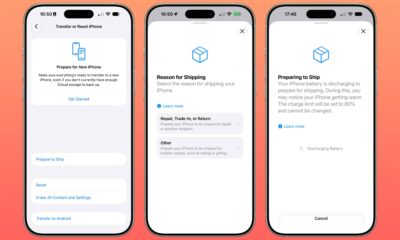




Effortlessly Syncing One Number Across Two iPhones in iOS 27

Unveiling the New Adventure Model

Enhanced Precision: The New Surface Mouse with Haptic Feedback and Customizable Action Button

Purdue and University of Illinois Join Forces to Enhance Semiconductor Industry Talent Pool

Unveiling the Secrets of ARC Raiders: Exploring Frozen Trails, Pendola Pass, Weapon Amplification, and Beyond

Samsung Galaxy S25: Unveiling Android 17 in September – Tech Advisor

Top Phones to Run Qualcomm Snapdragon 8 Elite Gen 6 – Tech Advisor’s Picks

Navigating Expansion: Essential Tips for European Founders Entering the US Market (Sponsored)

Unveiling iOS 27.2: Enhanced features, official release date, and much more

EU Takes Action Against Instagram and Facebook for Violating Illegal Content Rules

Warning: Facebook Creators Face Monetization Loss for Stealing and Reposting Videos

Facebook’s New Look: A Blend of Instagram’s Style

Facebook Compliance: ICE-tracking Page Removed After US Government Intervention

Facebook and Instagram to Reduce Personalized Ads for European Users

InstaDub: Meta’s AI Translation Tool for Instagram Videos

Reclaim Your Account: Facebook and Instagram Launch New Hub for Account Recovery

Meta discontinues Messenger apps for Windows and macOS

Breaking Updates: Meta Connect 2025 Unveils Latest Developments

THE BEST PHONE HTC EVER MADE?

The Truth about Google?

Samsung S9/ S9+ vs iPhone X vs Galaxy Note 8 Battery Life DRAIN TEST

Samsung S9 / S9+ vs Mate 10 Pro vs iPhone X Charging SPEED Test

The BEST APPS in 2018 – ft. MKBHD, UrAvgConsumer, iJustine + More

The ULTIMATE Smartphone Unboxing!!

HOW GOOD can a $250 Smartphone Camera be!?

10 Android Apps you NEED to try in 2018

They could not believe how cheap this Phone is
-
 Facebook11 months ago
EU Takes Action Against Instagram and Facebook for Violating Illegal Content Rules
-
 Facebook11 months ago
Warning: Facebook Creators Face Monetization Loss for Stealing and Reposting Videos
-
 Facebook10 months ago
Facebook’s New Look: A Blend of Instagram’s Style
-
 Facebook11 months ago
Facebook Compliance: ICE-tracking Page Removed After US Government Intervention
-
 Facebook10 months ago
Facebook and Instagram to Reduce Personalized Ads for European Users
-
 Facebook11 months ago
InstaDub: Meta’s AI Translation Tool for Instagram Videos
-
 Facebook10 months ago
Reclaim Your Account: Facebook and Instagram Launch New Hub for Account Recovery
-
 Apple11 months ago
Meta discontinues Messenger apps for Windows and macOS
