
AI
Unveiling Toyota’s $6.4bn Investment in Robotics: The Future of Physical AI

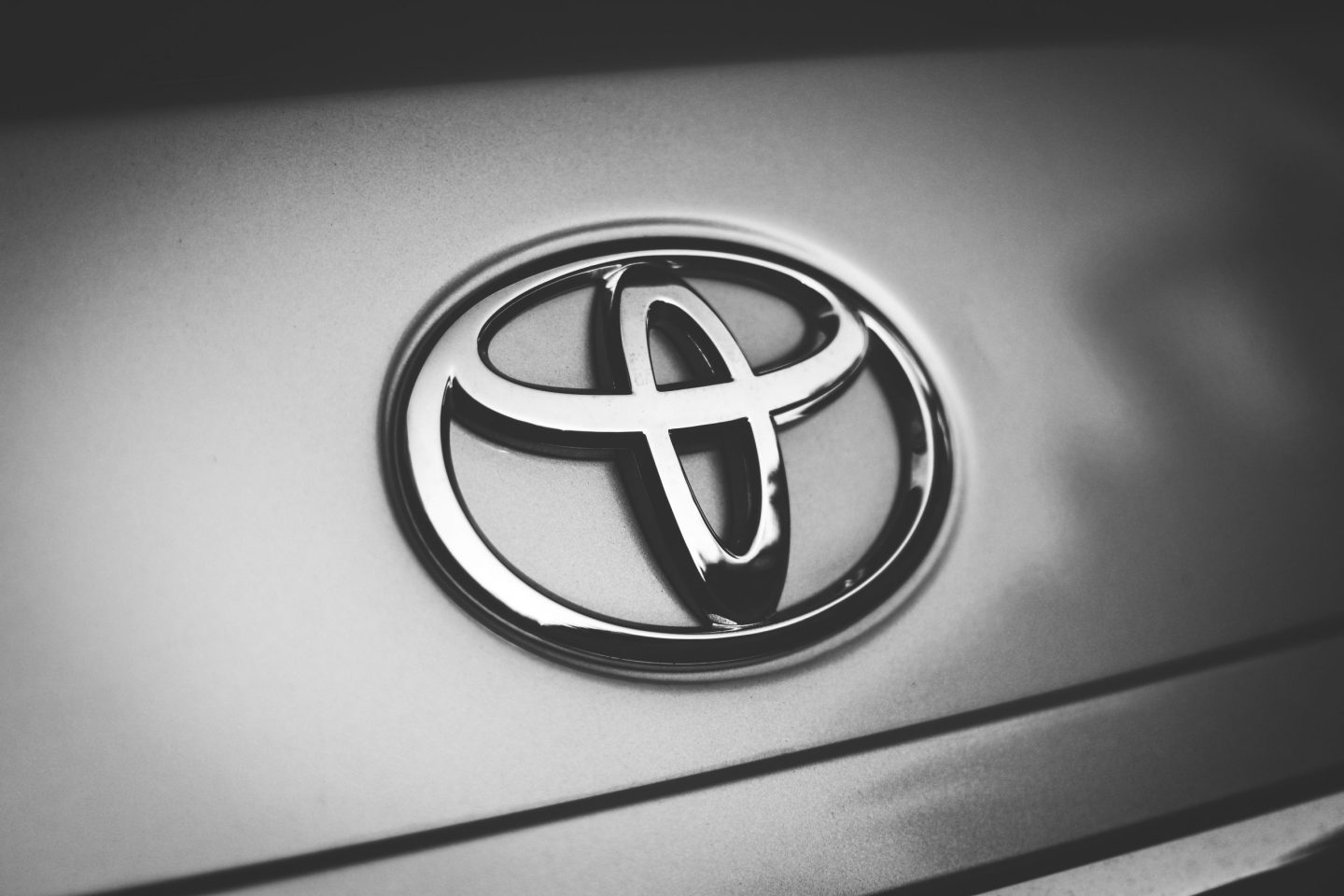
Toyota Plans to Invest in Automation with Estimated 400,000 Robots by 2028
Toyota Motor is considering a significant expansion of automation in its factories, group companies, and major suppliers. The company estimates that this initiative could entail the deployment of approximately 400,000 robots, with an annual budget of around 1 trillion yen ($6.4 billion) starting in 2028.
During discussions with investors in September, the potential investment was revealed, although Toyota has not confirmed the full implementation or the duration of such extensive spending.
The 400,000 robot projection encompasses both the replacement of existing machinery and the installation of new robots, including both humanoid and non-humanoid systems. The investment would cover various applications such as industrial robots, automated logistics, and collaborative human-robot operations within factory settings.
Toyota is already actively utilizing and testing robotics in several manufacturing processes. In its financial report for FY2026, the company highlighted demonstrations in factories involving tasks like parts transportation and picking, as well as robotics applications in areas like medical equipment transport.
Toyota’s Progress in Automation
At Toyota’s Kamigo Plant, a piston assembly line that was initially introduced with robots in January 2025 has since transitioned to full automation, reducing the need for human operators. The plant’s automation journey began in 2008 with the gradual introduction of robots on selected sub-lines.
However, as Toyota expanded its engine production globally, it faced challenges with maintenance operations in overseas facilities due to a shortage of skilled personnel. This led to some processes being reverted to manual production, with knowledge transfer from Japanese plants to overseas locations.
Subsequently, workers developed tools and jigs that significantly enhanced efficiency in manual processes, which later contributed to the development of advanced automated production systems, such as the piston assembly line at the Kamigo Plant.
Toyota is also working on systems capable of handling parts without the need for precise pre-positioning. For instance, the KumiPro parts-picking robot at Toyota Motor East Japan uses cameras to identify and manipulate loosely positioned components on production lines.
Moreover, Toyota has demonstrated assembly processes where force-feedback control compensates for camera recognition errors. This allows the robot to adjust its movements while inserting components into tight spaces, bridging the gap between camera data and physical object positioning.
Toyota’s Innovations in Physical AI
Toyota is pioneering the concept of physical AI, enabling robots to perceive their environment through sensors, adapt their actions based on circumstances, and operate autonomously. The company’s Frontier Research Center is actively exploring robotics solutions to address labor shortages and facilitate knowledge transfer in manufacturing settings.
Technologies developed under the Human Support Robot program, focusing on object recognition, decision-making, and motion execution, have been integrated into operations at Toyota Motor East Japan, including the KumiPro robot.
Additionally, Toyota is developing the ELEY (Embodied Learning robot for Enhanced Yield), designed for tasks involving physical interaction with objects and surroundings. This robot features human-like arms and a mobile base to handle external forces encountered during operations.
While Toyota continues to refine the reliability and repeatability of its robotic systems, the company plans to test ELEY in production-like conditions to enhance its performance. By leveraging both successful and unsuccessful attempts, Toyota aims to optimize the robot’s learning capabilities.
Furthermore, Toyota employs reinforcement learning to train humanoid robots in simulated environments before transferring the acquired skills to physical machines. This approach involves running multiple simulated robot instances concurrently to expedite the learning process.
To bridge the gap between simulation and real-world applications, researchers introduce variations in conditions during training and utilize data from physical robots to refine the algorithms.
In collaboration with Boston Dynamics, Toyota Research Institute is developing AI control systems for the Atlas humanoid robot. Demonstrations have showcased Atlas performing a range of tasks, including walking, lifting, sorting, and packing, with skills acquired through human demonstrations.
According to the International Federation of Robotics, Japan ranked as the world’s second-largest market for industrial robots in 2024, with significant growth in installations within the automotive sector.
Toyota’s ambitious plan to deploy 400,000 robots reflects its commitment to advancing automation technologies across its operations and supply chain, setting a benchmark for the industry’s future trajectory.
(Photo by HY ART)
For more insights on AI and automation trends, explore Gartner’s detailed analysis of warehouse automation strategies.

Interested in learning more about AI and big data from industry experts? Discover the upcoming AI & Big Data Expo events in Amsterdam, California, and London, part of the TechEx series, co-located with the Cyber Security & Cloud Expo. Visit here for more details.
AI News is powered by TechForge Media, offering insights into upcoming enterprise technology events and webinars. Discover more events here.











Belmont’s Curse: A Spooky Demo Arrives in October

Samsung Gallery App Now Syncing with Google Photos: A Seamless Integration for Users

Xiaomi 18 Pro Camera: Specs, Samples, and Impressions Unveiled by Tech Advisor

Verda: The Rise of Europe’s Newest Unicorn in AI Cloud Technology

Apple Underground: An Exclusive Live Music Experience at the UK Headquarters

Unveiling Toyota’s $6.4bn Investment in Robotics: The Future of Physical AI

Unveiling the Enhanced Anti-Snatching Feature: iOS 27.2 Beta 2 Breakdown

Samsung S9 / S9+ vs Mate 10 Pro vs iPhone X Charging SPEED Test

Zeekr Makes History with Groundbreaking Achievement in Australia

EU Takes Action Against Instagram and Facebook for Violating Illegal Content Rules

Warning: Facebook Creators Face Monetization Loss for Stealing and Reposting Videos

Facebook’s New Look: A Blend of Instagram’s Style

Facebook Compliance: ICE-tracking Page Removed After US Government Intervention

Facebook and Instagram to Reduce Personalized Ads for European Users

InstaDub: Meta’s AI Translation Tool for Instagram Videos

Reclaim Your Account: Facebook and Instagram Launch New Hub for Account Recovery

Meta discontinues Messenger apps for Windows and macOS

Breaking Updates: Meta Connect 2025 Unveils Latest Developments
Samsung S9 / S9+ vs Mate 10 Pro vs iPhone X Charging SPEED Test

The BEST APPS in 2018 – ft. MKBHD, UrAvgConsumer, iJustine + More

The ULTIMATE Smartphone Unboxing!!

HOW GOOD can a $250 Smartphone Camera be!?

10 Android Apps you NEED to try in 2018

They could not believe how cheap this Phone is

A $50,000 Smartphone for $400?

Huawei P20 Pro Unboxing!

Huawei P20 Pro vs Samsung S9 Plus!
-
 Facebook11 months ago
EU Takes Action Against Instagram and Facebook for Violating Illegal Content Rules
-
 Facebook11 months ago
Warning: Facebook Creators Face Monetization Loss for Stealing and Reposting Videos
-
 Facebook10 months ago
Facebook’s New Look: A Blend of Instagram’s Style
-
 Facebook11 months ago
Facebook Compliance: ICE-tracking Page Removed After US Government Intervention
-
 Facebook10 months ago
Facebook and Instagram to Reduce Personalized Ads for European Users
-
 Facebook11 months ago
InstaDub: Meta’s AI Translation Tool for Instagram Videos
-
 Facebook10 months ago
Reclaim Your Account: Facebook and Instagram Launch New Hub for Account Recovery
-
 Apple11 months ago
Meta discontinues Messenger apps for Windows and macOS
