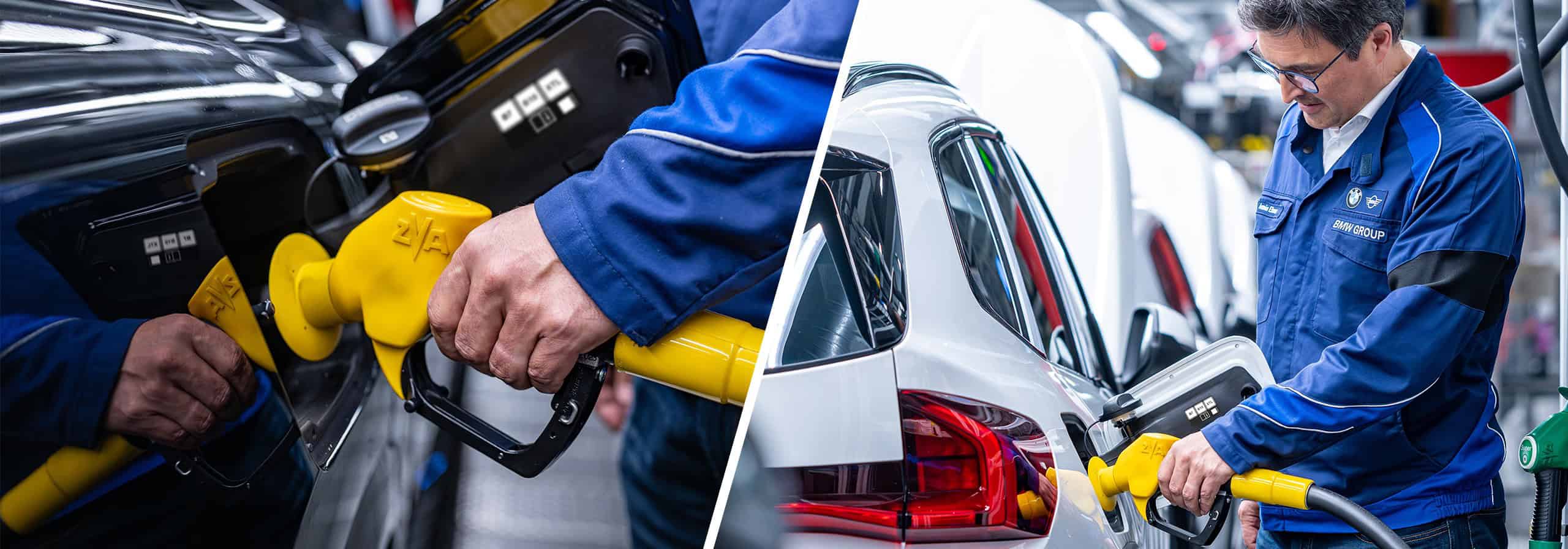
BMW is pioneering a groundbreaking solution for fleet operators to monitor the usage of renewable diesel in their vehicles. This initiative revolves around HVO100, an eco-friendly alternative to traditional diesel that can reduce CO₂ emissions by up to 90%. While all BMW models produced in Germany are compatible with this sustainable fuel, its adoption among large fleets has been limited. The primary obstacle has not been availability or performance issues, as HVO100 can seamlessly function in existing diesel engines without any modifications. Rather, the challenge has been validating consistent usage of renewable diesel in vehicles.
To bridge this gap, BMW has developed an innovative digital tool. This system connects vehicle data with the fleet operator’s payment records, enabling the logging and verification of each refueling event. Consequently, companies can accurately track the amount of HVO100 utilized across their fleet, transforming emission reduction estimates into tangible outcomes.
This cutting-edge technology is currently operational in a BMW demonstration fleet and is undergoing real-world testing. Discussions with major fleet operators in Germany and Italy are also in progress.
For large corporate fleets, the potential benefits are substantial. Given that diesel vehicles remain a significant portion of corporate transportation fleets, utilizing verified renewable fuel presents an immediate opportunity to reduce emissions without having to wait for new vehicle acquisitions or charging infrastructure.
Looking ahead, BMW is exploring additional renewable fuel alternatives. By 2028, the company aims to introduce synthetic eFuels for gasoline engines as part of a broader initiative to minimize emissions from the numerous existing vehicles still in operation. Concurrently, BMW is advocating for accelerated implementation of the Renewable Energy Directive (RED III) by European policymakers, which calls for a 30% reduction in greenhouse gas emissions from fuels. The company asserts that robust policy incentives are essential to scale up the viability of renewable fuels like HVO100.