
Inovation
Revolutionizing Wildlife Tracking: From Months to Days with AI Technology

AI Revolutionizing Wildlife Conservation Through Rapid Data Analysis
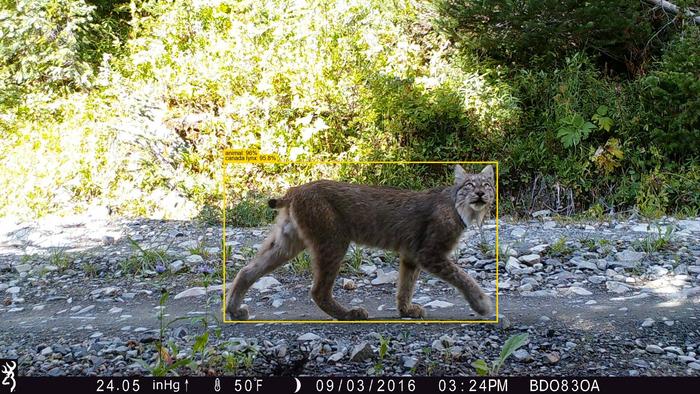
Artificial intelligence (AI) is revolutionizing the way conservation groups analyze wildlife camera trap data, significantly reducing the time required for this crucial task. Traditionally, this process could take months or even up to a year to complete. However, a recent study led by researchers from Washington State University (WSU) and Google, published in the Journal of Applied Ecology, has shown that AI can now perform wildlife tracking analysis in just days, producing results that closely align with those derived by human experts.
Camera traps, which are motion-activated cameras positioned in natural habitats, play a vital role in monitoring wildlife populations. These devices generate vast amounts of image data, with projects often producing hundreds of thousands to millions of images that need to be reviewed to identify species and behaviors. The manual review process, even with dedicated teams, can cause significant delays in analysis, sometimes taking six to seven months or more, hindering conservation efforts.
AI Analysis Accuracy and Efficiency
The study aimed to determine if a fully automated AI system could effectively replace human analysts in processing large volumes of camera trap data. The researchers utilized SpeciesNet, a general AI model developed by Google, to analyze images from various ecosystems, including locations in Washington state, Montana’s Glacier National Park, and Guatemala’s Maya Biosphere Reserve. The AI-generated results were then compared to datasets labeled by human experts.
Lead author of the study, Daniel Thornton, a wildlife ecologist at WSU, emphasized that the goal is not to replace human analysts but to expedite the research process. The study showed that the AI analysis matched human-derived models with about 85% accuracy, demonstrating the potential of AI in wildlife conservation.
Enhancing Conservation Efforts
The time savings offered by AI are remarkable, with what used to take six to twelve months now achievable in just a few days. This accelerated analysis process eliminates a major bottleneck in wildlife monitoring, allowing conservationists to make faster, data-driven decisions. The efficiency gained is particularly beneficial for smaller or underfunded conservation groups, enabling them to process large datasets quickly and expand their monitoring programs.
By sharing part of their dataset publicly, the research team also contributes to the advancement of AI tools like SpeciesNet, enhancing their capabilities through access to diverse training datasets. While AI may be less effective for rarer species, the study’s results indicate that image processing no longer needs to hinder large-scale camera-trapping studies.
Future of AI in Wildlife Conservation
This study marks a significant step forward in leveraging AI technology to accelerate wildlife monitoring and conservation decision-making. By harnessing the power of AI, researchers and conservationists can work hand-in-hand to protect biodiversity effectively. The potential for near real-time monitoring of species like jaguars, wolves, and grizzly bears is within reach, promising a future where technology and ecology combine to safeguard wildlife populations.
Overall, the integration of AI into wildlife conservation efforts holds great promise for streamlining data analysis, enabling faster responses, and ultimately driving more effective conservation initiatives.
Author Information
The study was a collaborative effort involving researchers from Washington State University, Google, Montana Fish, Wildlife and Parks, Wildlife Conservation Society, and other institutions. Their collective work has paved the way for a new era of AI-driven conservation practices.












Purdue and University of Illinois Join Forces to Enhance Semiconductor Industry Talent Pool

Unveiling the Secrets of ARC Raiders: Exploring Frozen Trails, Pendola Pass, Weapon Amplification, and Beyond

Samsung Galaxy S25: Unveiling Android 17 in September – Tech Advisor

Top Phones to Run Qualcomm Snapdragon 8 Elite Gen 6 – Tech Advisor’s Picks

Navigating Expansion: Essential Tips for European Founders Entering the US Market (Sponsored)

Unveiling iOS 27.2: Enhanced features, official release date, and much more

THE BEST PHONE HTC EVER MADE?

Revolutionizing Luxury: The 2027 Bentley Torcal – A Fusion of British Elegance and Porsche Performance

Activision’s Halo Takeover: A Game-Changing Xbox Overhaul

EU Takes Action Against Instagram and Facebook for Violating Illegal Content Rules

Warning: Facebook Creators Face Monetization Loss for Stealing and Reposting Videos

Facebook’s New Look: A Blend of Instagram’s Style

Facebook Compliance: ICE-tracking Page Removed After US Government Intervention

Facebook and Instagram to Reduce Personalized Ads for European Users

InstaDub: Meta’s AI Translation Tool for Instagram Videos

Reclaim Your Account: Facebook and Instagram Launch New Hub for Account Recovery

Meta discontinues Messenger apps for Windows and macOS

Breaking Updates: Meta Connect 2025 Unveils Latest Developments
THE BEST PHONE HTC EVER MADE?

The Truth about Google?

Samsung S9/ S9+ vs iPhone X vs Galaxy Note 8 Battery Life DRAIN TEST

Samsung S9 / S9+ vs Mate 10 Pro vs iPhone X Charging SPEED Test

The BEST APPS in 2018 – ft. MKBHD, UrAvgConsumer, iJustine + More

The ULTIMATE Smartphone Unboxing!!

HOW GOOD can a $250 Smartphone Camera be!?

10 Android Apps you NEED to try in 2018

They could not believe how cheap this Phone is
-
 Facebook11 months ago
EU Takes Action Against Instagram and Facebook for Violating Illegal Content Rules
-
 Facebook11 months ago
Warning: Facebook Creators Face Monetization Loss for Stealing and Reposting Videos
-
 Facebook10 months ago
Facebook’s New Look: A Blend of Instagram’s Style
-
 Facebook11 months ago
Facebook Compliance: ICE-tracking Page Removed After US Government Intervention
-
 Facebook10 months ago
Facebook and Instagram to Reduce Personalized Ads for European Users
-
 Facebook11 months ago
InstaDub: Meta’s AI Translation Tool for Instagram Videos
-
 Facebook10 months ago
Reclaim Your Account: Facebook and Instagram Launch New Hub for Account Recovery
-
 Apple11 months ago
Meta discontinues Messenger apps for Windows and macOS
