
Security
Uncovering Russian Intelligence: The FBI’s Investigation into Signal Phishing Attacks

Russian Intelligence-Linked Threat Actors Targeting Encrypted Messaging Apps
In a recent public service announcement, the FBI has cautioned users of encrypted messaging apps like Signal and WhatsApp about ongoing phishing campaigns orchestrated by Russian intelligence-linked threat actors. These campaigns have already compromised a significant number of accounts, prompting concerns about data security.
This announcement marks the first direct attribution of such attacks to Russian intelligence services, highlighting the specific targeting of users of commercial messaging apps to bypass end-to-end encryption through account hijacks.
While the attacks can potentially affect multiple commercial messaging apps, Signal users are predominantly targeted. The attackers aim to gain unauthorized access to accounts to read private messages, access contact lists, impersonate victims, and launch further phishing campaigns.
According to the FBI, the victims of these attacks are primarily individuals with access to sensitive information, including current and former U.S. government officials, military personnel, political figures, and journalists.
International Warnings and Advisories
Prior to the FBI’s announcement, Dutch and French cybersecurity authorities had issued advisories about similar account-hijacking operations targeting Signal and WhatsApp users. These operations primarily rely on tricking users into granting access to their accounts or linking them to attacker-controlled devices.
France’s Cyber Crisis Coordination Center (C4) also raised concerns about widespread phishing tactics targeting instant messaging platforms, indicating ongoing threats across various countries.
Phishing Techniques and Implications
All three advisories emphasize that phishing attacks are used to bypass encryption by hijacking accounts or linking devices to existing accounts. The tactics typically involve impersonating support accounts to deceive targets into sharing verification codes or scanning malicious QR codes.
Once threat actors gain access to accounts, they can monitor communications, join group chats, and send messages on behalf of compromised users, making detection challenging and enabling further phishing attempts.
It is important to note that the encryption in platforms like Signal and WhatsApp remains intact, and the vulnerabilities exploited in these attacks are related to human interaction rather than a technical flaw in the encryption protocols.
Protecting Against Phishing Attacks
Users are advised to exercise caution when receiving unexpected messages, avoid scanning QR codes or linking devices to their accounts without verification, and never share verification codes with anyone, especially individuals claiming to be platform support representatives.
Remaining vigilant and skeptical of unsolicited requests can help mitigate the risk of falling victim to phishing attacks and unauthorized access to messaging accounts.
Source: FBI
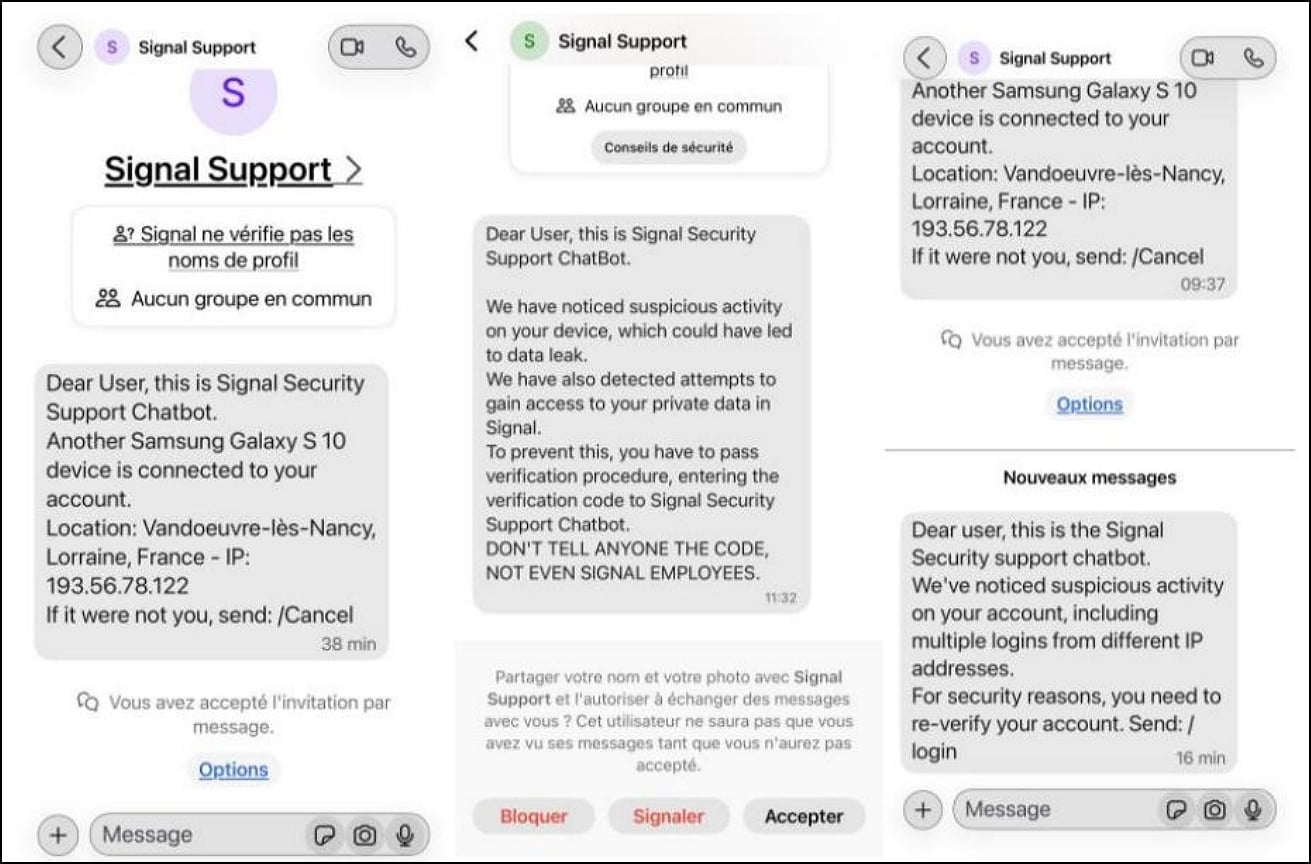
Source: France’s Cyber Crisis Coordination Center (C4)










BMW M2 CS Production Concludes with Record-Breaking 2,882 Cars Sold, a 21% Increase from Previous Model

Fortnite Hearts: Keyblade Chaos under the Heart Moon

The Imperfect Brilliance of the Google Pixel 11 Pro

Cycloid Secures Spot in European Commission’s €180 Million Sovereign Cloud Framework after Successful Series A Funding Round

Exploring the Exciting Updates of iOS 27: A Look Beyond Artificial Intelligence

A $50,000 Smartphone for $400?

Ram Trucks Australia Braces for Price Increases Due to Emissions Regulations

Revving Up: Tractor Battle Adventure RPG Expands with Mod Support on Steam Workshop

Troubleshooting Guide: Unable to Access 192.168.0.1

EU Takes Action Against Instagram and Facebook for Violating Illegal Content Rules

Warning: Facebook Creators Face Monetization Loss for Stealing and Reposting Videos

Facebook’s New Look: A Blend of Instagram’s Style

Facebook Compliance: ICE-tracking Page Removed After US Government Intervention

Facebook and Instagram to Reduce Personalized Ads for European Users

InstaDub: Meta’s AI Translation Tool for Instagram Videos

Reclaim Your Account: Facebook and Instagram Launch New Hub for Account Recovery

Meta discontinues Messenger apps for Windows and macOS

Breaking Updates: Meta Connect 2025 Unveils Latest Developments
A $50,000 Smartphone for $400?

Huawei P20 Pro Unboxing!

Huawei P20 Pro vs Samsung S9 Plus!

Huawei P20 vs P20 Pro vs iPhone 8 Plus vs S9 Battery Drain Test!

10 Android Mods that Change Everything

I used the first Android Phone in the World.

DOOGEE MIX 4 UNBOXING (PROTOTYPE)!

MYSTERY UNBOXING FROM SAMSUNG!

The Truth about Huawei P20 Pro – REAL Review
-
 Facebook11 months ago
EU Takes Action Against Instagram and Facebook for Violating Illegal Content Rules
-
 Facebook11 months ago
Warning: Facebook Creators Face Monetization Loss for Stealing and Reposting Videos
-
 Facebook9 months ago
Facebook’s New Look: A Blend of Instagram’s Style
-
 Facebook11 months ago
Facebook Compliance: ICE-tracking Page Removed After US Government Intervention
-
 Facebook9 months ago
Facebook and Instagram to Reduce Personalized Ads for European Users
-
 Facebook11 months ago
InstaDub: Meta’s AI Translation Tool for Instagram Videos
-
 Facebook10 months ago
Reclaim Your Account: Facebook and Instagram Launch New Hub for Account Recovery
-
 Apple11 months ago
Meta discontinues Messenger apps for Windows and macOS
