Tech News
Building a SMART on FHIR App: A Comprehensive Step-by-Step Guide

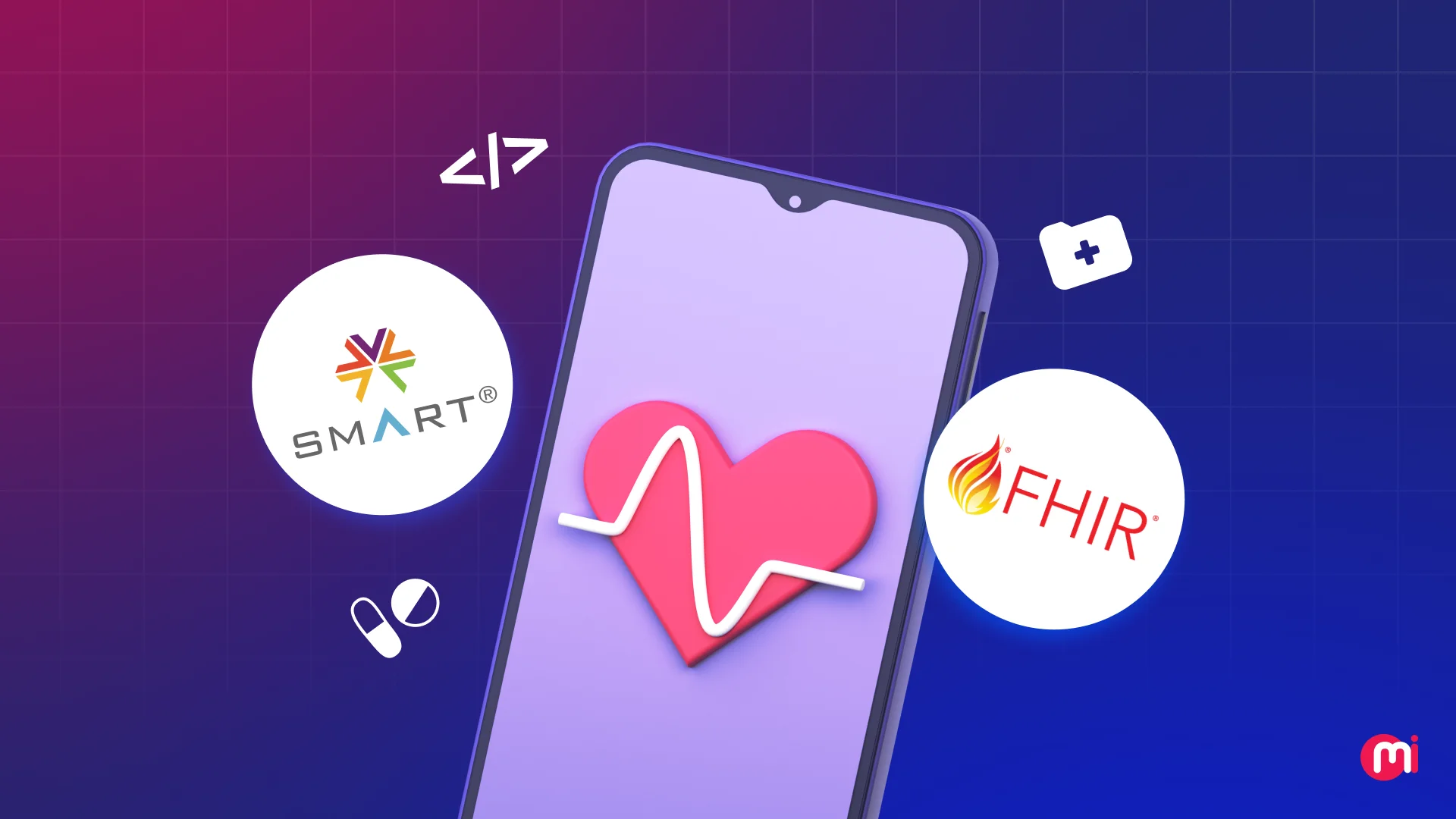
SMART on FHIR is the standard for modern healthcare interoperability. It has revolutionized the way healthcare applications are built by providing a secure and standardized framework for connecting to Electronic Health Record (EHR) systems without the need for custom integrations.
For decades, patient health data was locked inside EHR systems, making it inaccessible and siloed. Organizations had to negotiate proprietary integrations with each EHR vendor individually, leading to slow innovation and limited interoperability.
The introduction of the Office of the National Coordinator for Health Information Technology’s Final Rule, known as the 21st Century Cures Act, and the Centers for Medicare & Medicaid Services’ final rule for patient access to data and interoperability changed this landscape. These regulations mandated the use of open FHIR APIs and SMART on FHIR for sharing EHR data.
SMART on FHIR combines the SMART authorization protocol (OAuth 2.0 + OpenID Connect) with the HL7 FHIR data standard. This combination enables secure and standardized access to EHR data for third-party applications. It allows apps to be developed once and run across major EHR systems like Epic, Cerner, and Athenahealth without the need for rebuilding from scratch.
One of the key benefits of SMART on FHIR is its ability to standardize access to EHR data, making it easier for organizations to build secure, scalable, and multi-EHR applications. However, building such applications still requires technical depth and expertise.
Key Takeaways
- SMART on FHIR is the standard for modern healthcare interoperability.
- It replaces vendor-specific EHR integrations with a scalable, API-driven approach.
- SMART on FHIR reduces repetitive integration work and accelerates multi-system deployment.
- OAuth 2.0, token-based access, and scope controls provide enterprise-grade protection without custom security layers.
- Compared to proprietary integrations, SMART on FHIR lowers development, maintenance, and expansion costs.
- SMART on FHIR is not just for patient-level apps; it supports AI and large-scale insights.
What is SMART on FHIR?
SMART on FHIR is an open, standards-based framework that allows third-party applications to securely connect to electronic health record systems and access patient data without the need for custom, proprietary integrations for each EHR vendor.
The name SMART on FHIR combines two standards, SMART (Substitutable Medical Applications and Reusable Technologies) and FHIR (Fast Healthcare Interoperability Resources). Together, they form a protocol stack that governs how an app launches inside an EHR, authenticates the user, requests data, and receives it in a machine-readable format.
Where SMART on FHIR Came From
The SMART on FHIR framework originated from an interoperability project initiated by Harvard Medical School and Boston Children’s Hospital in the early 2010s. The goal was to develop a platform that would enable medical applications to run unmodified across different healthcare IT systems.
The initial version of SMART used its own clinical data models. However, in 2013, the team decided to adopt the new Health Level Seven draft standard called Fast Health Interoperability Resources (FHIR). This decision led to the development of SMART on FHIR, which was publicly showcased at HIMSS 2014.
Today, SMART on FHIR is integrated into major EHR products, used by Apple in its Health App, and supported by platforms like Microsoft Azure.
SMART on FHIR vs. Traditional EHR Integration
SMART on FHIR revolutionizes healthcare integration by offering plug-and-play, secure, and standardized app deployment within EHRs in weeks compared to the 12-18 months required for traditional custom interfaces.
It uses modern web standards like OAuth 2.0 and FHIR R4 for in-context, secure data access, while traditional methods rely on costly, fragile, custom-built, or legacy HL7 interfaces.
The table below illustrates the differences between SMART on FHIR and traditional EHR integration:
| SMART on FHIR vs. Traditional EHR Integration | ||
|---|---|---|
| Capabilities | Traditional EHR Integration | SMART on FHIR |
| Auth mechanism | Proprietary, vendor-specific | OAuth 2.0 / OpenID Connect (universal web standard) |
| Data format | HL7 v2, vendor-specific schemas | FHIR R4 resources (JSON/XML) |
| App portability | Rebuild per vendor | Write once, run across compliant EHRs |
| Time to first integration | Months | Days to weeks (with sandbox access) |
| Regulatory standing | Not mandated | Federally required under ONC Final Rule |
| Developer ecosystem | Closed, gated by vendor | Open, standardized |
FHIR Alone vs. SMART on FHIR
FHIR and SMART on FHIR are not the same thing. FHIR alone does not automatically become SMART on FHIR. They serve different purposes, and understanding the distinction is crucial to avoid architectural mistakes.
Let’s compare apps developed with FHIR alone and SMART on FHIR: