
Mobile Tech
Is Upgrading Your Budget Worth the Investment?

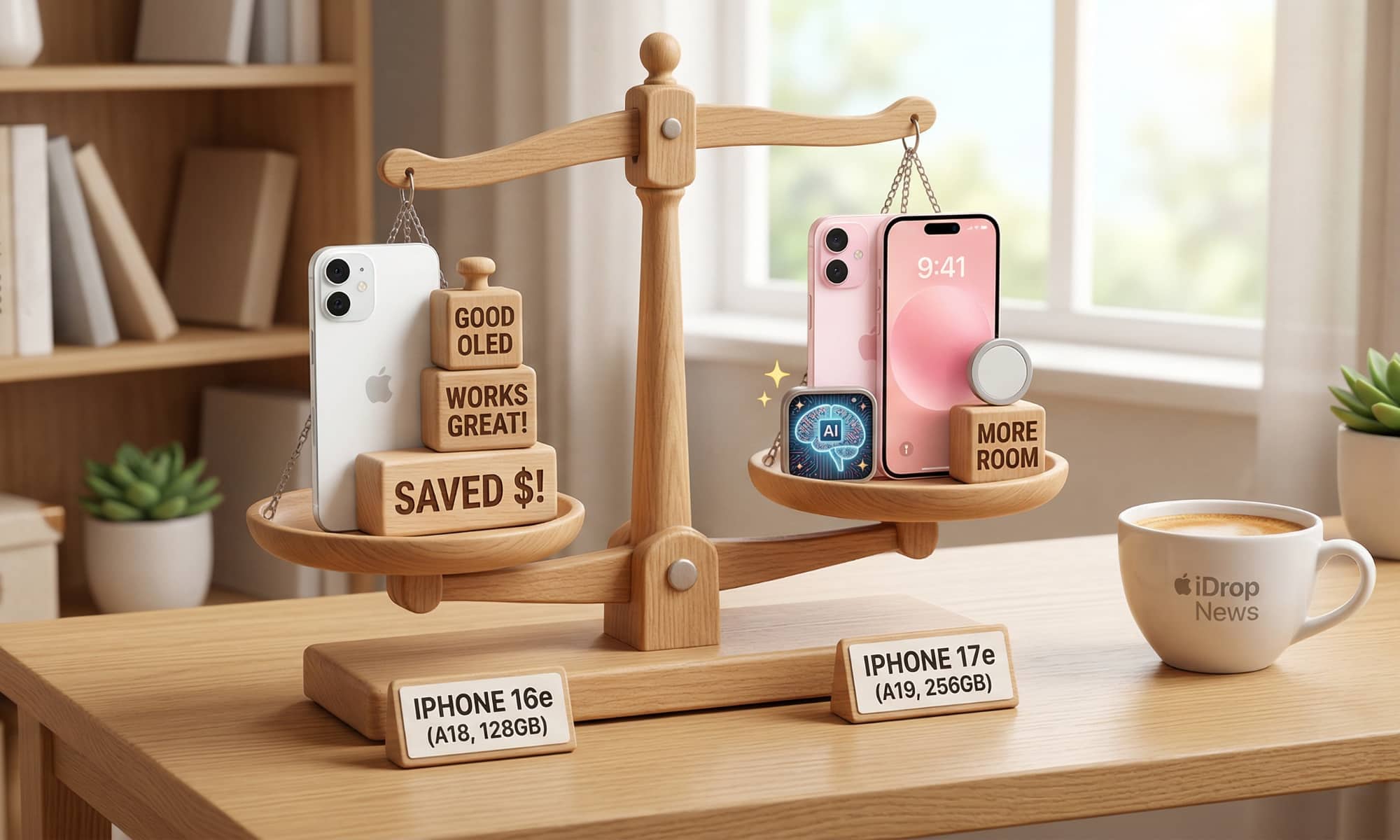
Apple’s e-series iPhones are built around a very specific group of people: users who want a modern iPhone experience without paying flagship prices.
That usually means you still get the things that matter most, like an OLED display, Face ID, USB-C, solid cameras, strong performance, and support for Apple’s latest software features, while giving up some of the more premium extras that separate the standard iPhones and the Pro models. That formula made the iPhone 16e easy to recommend to a lot of buyers. And now the iPhone 17e is trying to do the same thing, just a little better.
But what if you already have the iPhone 16e and are considering upgrading to Apple’s latest iPhone 17e? Well, on the surface, these phones seem very similar. They share the same overall role of being Apple’s budget phone; they look nearly identical, and, for basic tasks, they’re both going to feel like modern iPhones. But once you start breaking down things like battery life, storage, long-term value, and the newer chip inside the 17e, the differences become easier to appreciate.
That still doesn’t automatically make the iPhone 17e a must-buy upgrade, though. The real question is whether the iPhone 17e is worth replacing an iPhone 16e you already own. Let’s break down all the differences to see if you should pull the trigger or not.
Performance:
The A19 Chip and Future-Proofing
The biggest technical advantage of the iPhone 17e is the newer A19 chip. The iPhone 16e uses the A18, which is a more than capable processor, but newer chips matter over time, and that’s worth considering if you plan to keep your iPhone for the next few years.
A newer chip generally gives you a little more performance headroom, a little more efficiency, and a slightly stronger chance of feeling comfortable with future iOS updates and whatever Apple decides to add next to Apple Intelligence.
At the same time, this is also the kind of category where it’s easy to overstate the difference. The iPhone 16e is not slow, outdated, or underpowered for normal use. If your day is mostly messaging, social media, Safari, YouTube, streaming, and light gaming — all tasks the budget e-series iPhones are designed for — you probably won’t feel a dramatic performance gap.
Plus, if you bought the iPhone 16e in the first place, chances are you’re not someone who uses their iPhone for heavy workloads.
So the honest answer is to only upgrade if you want a little more future-proofing and a little more power, so your iPhone doesn’t feel outdated so soon.
Battery & Charging:
MagSafe Finally Makes the Cut
Battery life is one of the biggest reasons to consider keeping your iPhone 16e, instead of upgrading to the iPhone 17e. On paper, both devices have the same battery life. Both iPhones will give you up to 26 hours of video playback, and will charge up to 50% in 30 minutes with a 20W charger.
With all of that said, there is still one reason why you might want to upgrade to the iPhone 17e: MagSafe charging. While you can still wirelessly charge the iPhone 16e thanks to its Qi wireless charging support, the iPhone 17e adds support for 15W Qi2 and MagSafe wireless charging, which means it can charge up twice as fast when using most modern chargers.
Having MagSafe also means that you can attach other kinds of accessories. For instance, you can add a wallet, a phone stand, or a battery pack to the back of your iPhone, which is something the iPhone 16e just can’t do — at least not without adding a MagSafe case.
If you already have some MagSafe accessories that you can’t use anymore, upgrading to the iPhone 17e might be the best choice. On the other hand, if you never wirelessly charge your iPhone or just want the best battery life, you can keep your iPhone 16e for a little longer.
Storage:
256 GB Is the New (and Welcome) Standard
One of the most important upgrades on the iPhone 17e has nothing to do with speed or display technology. It’s the storage. Apple set the iPhone 17e at 256 GB of storage as the starting point, a major improvement over the 128 GB base storage on the iPhone 16e. That makes the 17e feel much stronger as a long-term value phone without having to spend extra money.
If you’re a casual user, you might not think much of that difference, but the truth is that it matters more than you might think. Higher-resolution photos, bigger apps, downloaded videos, voice notes, social media caches, and years of messages all pile up faster than people think, and they are getting heavier over time.
A phone that starts with 128 GB can still work fine, but you might reach a point where you’ll have to start thinking of deleting stuff faster than with the iPhone 17e.
Display:
A Great (But Completely Identical) View
Unfortunately, if you were hoping for a major screen upgrade, this is not really where the iPhone 17e separates itself from the iPhone 16e.
Both phones literally use the same 6.1-inch OLED display panel, which was first used in the 2022 iPhone 14. This means you’ll get an identical experience, although that’s not necessarily a bad thing. You still get deep blacks, strong color contrast, and overall sharpness that make modern iPhone displays feel premium — even when they’re in a budget iPhone.
Brightness also remains the same, with both devices reaching a maximum brightness of up to 1,200 nits, so you won’t notice any advantages even outdoors.
So if display quality is the only thing pushing you toward an upgrade, you might want to wait another year. The 16e already covers the essentials well here, and the 17e screen isn’t a reason on its own to spend the money as it hasn’t changed.
Camera:
Familiar Hardware Meets Smarter Processing
This is another area where some people may expect a bigger leap than they’re actually getting.
Apple continues to prioritize improving the camera system on their iPhones, even if the flagship models don’t receive major upgrades. However, this focus on camera enhancements does not extend to the budget-friendly iPhones.
The iPhone 16e and 17e both sport a single-lens, 48 MP Fusion camera system, with computational photography technology enhancing the overall picture quality. Both devices offer up to 2x zoom options through the main camera system.
While the camera quality on both phones is commendable, it falls short of being exceptional. If you were hoping for the iPhone 17e to be a budget photography powerhouse, you might be disappointed.
That being said, there are some differences in the camera performance of the iPhone 17e. The newer chip can improve image processing, particularly with HDR and low-light shots, resulting in slightly better photos in challenging conditions. Additionally, Apple has introduced its “next-generation” portrait mode on the iPhone 17e, a feature previously absent in the iPhone 16e. While this is a nice addition, it may not be a significant factor for most users unless they are heavily invested in creative photography.
If you are satisfied with the camera on your iPhone 16e, upgrading to the iPhone 17e may not provide a transformative experience. It might be more prudent to wait for the iPhone 18e release next year.
In terms of design, the iPhone 17e boasts subtle improvements in durability, including Ceramic Shield 2, making it up to three times more scratch-resistant than its predecessor. However, the overall design remains largely unchanged, with both devices sharing similar dimensions and features.
The weight difference between the iPhone 17e and 16e is minimal, with the former weighing slightly more at 5.96 ounces compared to the latter’s 5.88 ounces. This slight difference is unlikely to be noticeable in daily use and should not heavily influence your decision to upgrade.
When it comes to pricing, the iPhone 17e is expected to be priced higher than the iPhone 16e. Starting at $599 for the base 256 GB model, the iPhone 17e can be upgraded to a 512 GB version for $799. While the iPhone 16e may no longer be available directly from Apple, it can likely be found at discounted rates from other retailers.
Ultimately, the decision to upgrade to the iPhone 17e hinges on whether the improvements in battery life, storage, and performance justify the higher price tag. While the iPhone 17e offers incremental upgrades over the iPhone 16e, the differences may not be significant enough to warrant the cost.
If your iPhone 16e still meets your needs, especially if it is relatively new, there may not be a compelling reason to upgrade. Waiting a year or two for more substantial advancements may be a more prudent choice.













Exploring the Exciting Updates of iOS 27: A Look Beyond Artificial Intelligence

A $50,000 Smartphone for $400?

Ram Trucks Australia Braces for Price Increases Due to Emissions Regulations

Revving Up: Tractor Battle Adventure RPG Expands with Mod Support on Steam Workshop

Troubleshooting Guide: Unable to Access 192.168.0.1

Choosing the Right AI: Ensuring Trust in Multi-Model Translation Systems

Friday Night Baseball Madness: iPhone 18 Pro Edition

Partnership Potential: JAC & Huawei in Talks to Produce Electric Maserati Vehicles

Grand Theft Auto VI: The Soundtrack – Limited Edition Physical Release

EU Takes Action Against Instagram and Facebook for Violating Illegal Content Rules

Warning: Facebook Creators Face Monetization Loss for Stealing and Reposting Videos

Facebook’s New Look: A Blend of Instagram’s Style

Facebook Compliance: ICE-tracking Page Removed After US Government Intervention

Facebook and Instagram to Reduce Personalized Ads for European Users

InstaDub: Meta’s AI Translation Tool for Instagram Videos

Reclaim Your Account: Facebook and Instagram Launch New Hub for Account Recovery

Meta discontinues Messenger apps for Windows and macOS

Breaking Updates: Meta Connect 2025 Unveils Latest Developments
A $50,000 Smartphone for $400?

Huawei P20 Pro Unboxing!

Huawei P20 Pro vs Samsung S9 Plus!

Huawei P20 vs P20 Pro vs iPhone 8 Plus vs S9 Battery Drain Test!

10 Android Mods that Change Everything

I used the first Android Phone in the World.

DOOGEE MIX 4 UNBOXING (PROTOTYPE)!

MYSTERY UNBOXING FROM SAMSUNG!

The Truth about Huawei P20 Pro – REAL Review
-
 Facebook11 months ago
EU Takes Action Against Instagram and Facebook for Violating Illegal Content Rules
-
 Facebook11 months ago
Warning: Facebook Creators Face Monetization Loss for Stealing and Reposting Videos
-
 Facebook9 months ago
Facebook’s New Look: A Blend of Instagram’s Style
-
 Facebook11 months ago
Facebook Compliance: ICE-tracking Page Removed After US Government Intervention
-
 Facebook9 months ago
Facebook and Instagram to Reduce Personalized Ads for European Users
-
 Facebook11 months ago
InstaDub: Meta’s AI Translation Tool for Instagram Videos
-
 Facebook10 months ago
Reclaim Your Account: Facebook and Instagram Launch New Hub for Account Recovery
-
 Apple11 months ago
Meta discontinues Messenger apps for Windows and macOS
