
Security
Deceptive Tactics: Exploiting Apple Account Change Alerts for Phishing Scams


Apple users are being targeted by cybercriminals who are exploiting Apple account change notifications to send fake iPhone purchase phishing scams. These fraudulent emails are disguised as legitimate notifications from Apple, making them more convincing and potentially able to evade spam filters.
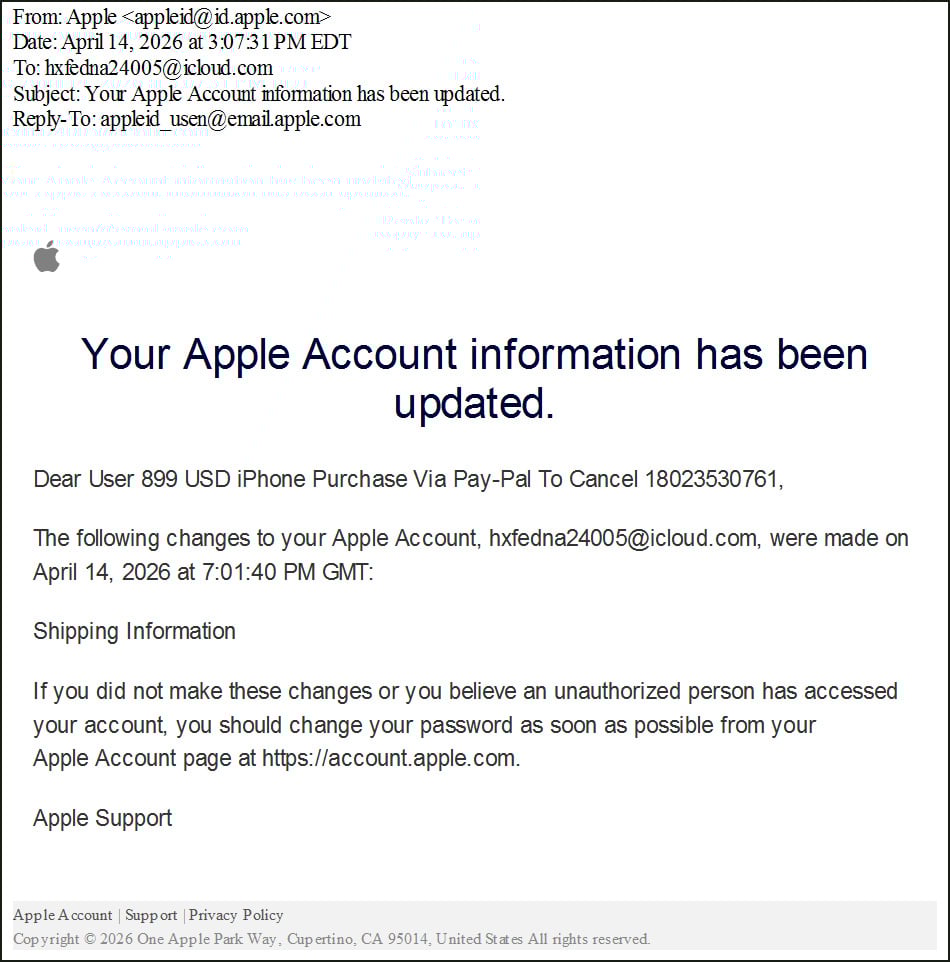
A concerned reader shared an email with BleepingComputer that initially appeared to be a routine Apple security notification informing them of an account update.
However, upon closer inspection, the email contained a phishing attempt claiming that an unauthorized $899 iPhone purchase had been made through PayPal. The email also included a phone number for the recipient to call and cancel the supposed transaction.

The phishing email text read, “Dear User 899 USD iPhone Purchase Via Pay-Pal To Cancel 18023530761.” It then proceeded to list supposed changes to the recipient’s Apple account, including shipping information.
Source: BleepingComputer
These deceptive emails aim to create a sense of urgency and trick recipients into believing their accounts were used for fraudulent purchases, prompting them to call the provided phone number for assistance.
Typically, when victims call the number, scammers manipulate them into thinking their accounts are compromised and may request the installation of remote access software or financial details.
Previous callback phishing schemes have resulted in financial theft, malware deployment, and data breaches through remote access gained via such methods.
Exploiting Apple Account Notifications
This campaign highlights how cybercriminals are adapting their strategies by leveraging legitimate features on websites for malicious purposes. By utilizing Apple’s own infrastructure, attackers are able to send emails from addresses like appleid@id.apple.com that pass authentication checks, giving the appearance of legitimacy.
        dkim=pass header.d=id.apple.com header.i=@id.apple.com header.b=o3ICBLWN

spf=pass (spf.icloud.com: domain of uatdsasadmin@email.apple.com designates 17.111.110.47 as permitted sender) smtp.mailfrom=uatdsasadmin@email.apple.com
Further analysis of email headers confirms that the messages originate from Apple’s own mail infrastructure and are not spoofed.
        Initial server: rn2-txn-msbadger01107.apple.com

Outbound relay: outbound.mr.icloud.com

IP address: 17.111.110.47 (Apple-owned)
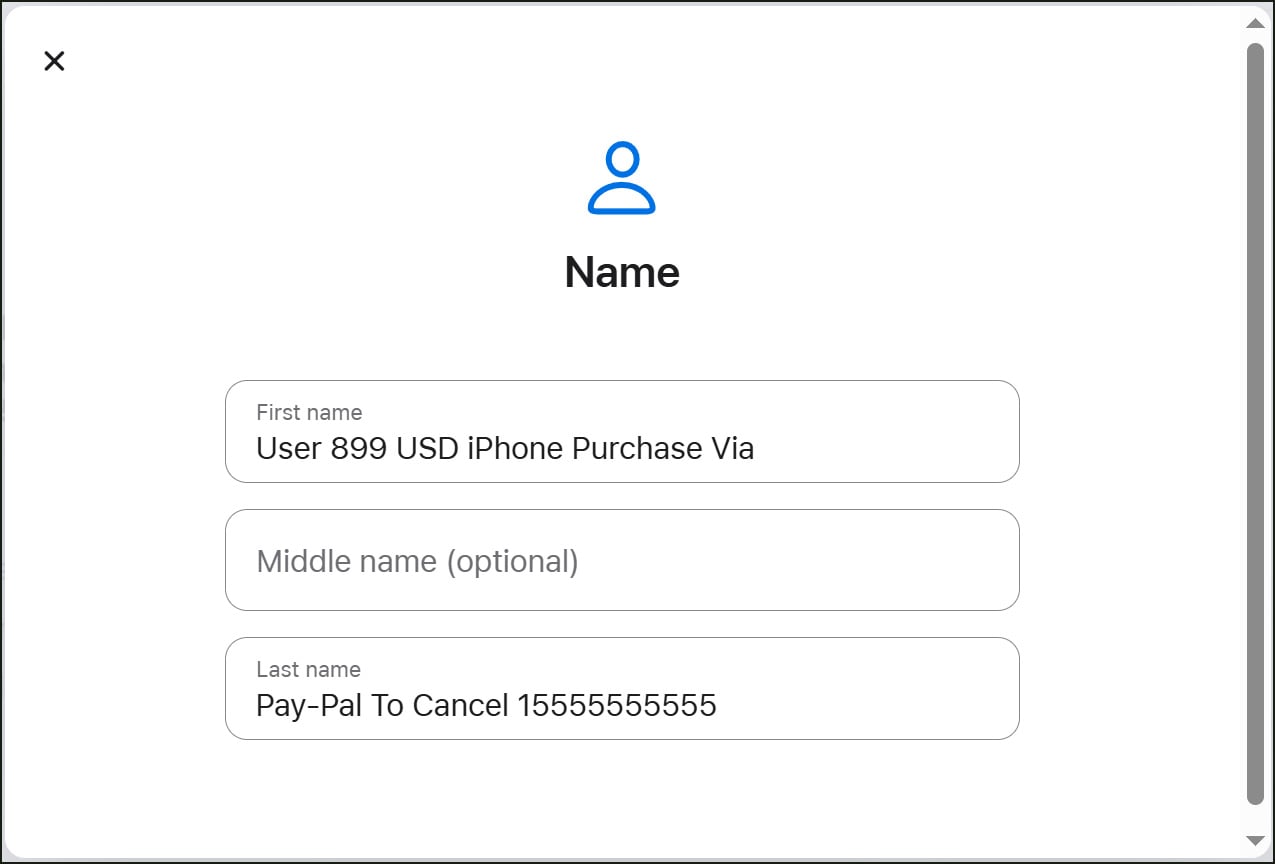
By exploiting Apple ID creation and modifying account information, threat actors embed phishing messages into legitimate account change notifications. This method allows the malicious content to bypass spam filters and appear as authentic alerts from Apple.
Source: BleepingComputer
By triggering Apple account profile change notifications, scammers can include user-supplied information in the emails, making them more convincing and alarming. This technique aims to deceive recipients into believing their accounts have been compromised.
Header analysis reveals that the original recipient differs from the final delivery address, indicating the use of mailing lists to distribute fraudulent emails to multiple targets.
This scheme mirrors a previous phishing campaign that exploited iCloud Calendar invites to send fake purchase notifications through Apple’s servers.
Users are advised to approach unexpected account alerts with caution, especially if they mention unauthorized purchases or prompt calls to unfamiliar support numbers. If in doubt, users should verify the legitimacy of such communications directly through official channels.
Despite reaching out to Apple for comment, BleepingComputer has not received a response, leaving the possibility of continued abuse in place.

AI chained four zero-days into one exploit that bypassed both renderer and OS sandboxes. A wave of new exploits is coming.
Discover how autonomous, context-rich validation can identify vulnerabilities, verify controls, and streamline the remediation process at the Autonomous Validation Summit on May 12 & 14.








Speeding Through 749 Kilometers at 90 Kilometers per Hour

Seattle Tech Leaders Unite for Unified Regional Strategy

UNSEEN’s Resilient Team: KEMURI’s XBOX Skipping Saga

Unveiling the Threat: How Android Malware Invades Privacy by Taking Covert Photos

Disrupting the Status Quo: Cornelis Secures $205M to Challenge Nvidia’s Reign in AI Infrastructure

Fortify Your Home: Apple Home’s Advanced Security Camera Subscription for $60/Month

Exploring the Ethics of Big Tech’s AI Slowdown: Safety Pact or Cartel?

Troubleshooting iOS 27 Update Problems: Resolving Bugs and Battery Drain

Behind the Scenes: Inside the Departure of General Motors Australia’s Former Leader

EU Takes Action Against Instagram and Facebook for Violating Illegal Content Rules

Warning: Facebook Creators Face Monetization Loss for Stealing and Reposting Videos

Facebook Compliance: ICE-tracking Page Removed After US Government Intervention

Facebook’s New Look: A Blend of Instagram’s Style

Facebook and Instagram to Reduce Personalized Ads for European Users

InstaDub: Meta’s AI Translation Tool for Instagram Videos

Reclaim Your Account: Facebook and Instagram Launch New Hub for Account Recovery

Meta discontinues Messenger apps for Windows and macOS

Breaking Updates: Meta Connect 2025 Unveils Latest Developments

How to Love your Android Phone again.

The LG G7 has a Big Problem.

The most Beautiful Android Games you’ve never played.

Charge your Smartphone in 5 Minutes – How Batteries are about to Change!

10 CHEAP Smartphone Gadgets that Change Everything.

Huawei Mobile Cloud – The Huawei P20 Feature you didn’t know about!

PUBG MOBILE on Android – Disastrous or Revolutionary?

Why you should buy the Galaxy S8 right now.

Customize your Android Smartphone!
-
 Facebook11 months ago
EU Takes Action Against Instagram and Facebook for Violating Illegal Content Rules
-
 Facebook11 months ago
Warning: Facebook Creators Face Monetization Loss for Stealing and Reposting Videos
-
 Facebook11 months ago
Facebook Compliance: ICE-tracking Page Removed After US Government Intervention
-
 Facebook9 months ago
Facebook’s New Look: A Blend of Instagram’s Style
-
 Facebook9 months ago
Facebook and Instagram to Reduce Personalized Ads for European Users
-
 Facebook11 months ago
InstaDub: Meta’s AI Translation Tool for Instagram Videos
-
 Facebook9 months ago
Reclaim Your Account: Facebook and Instagram Launch New Hub for Account Recovery
-
 Apple11 months ago
Meta discontinues Messenger apps for Windows and macOS
