
Startups
The Importance of Email Security for Startups: Common Mistakes Founders Make

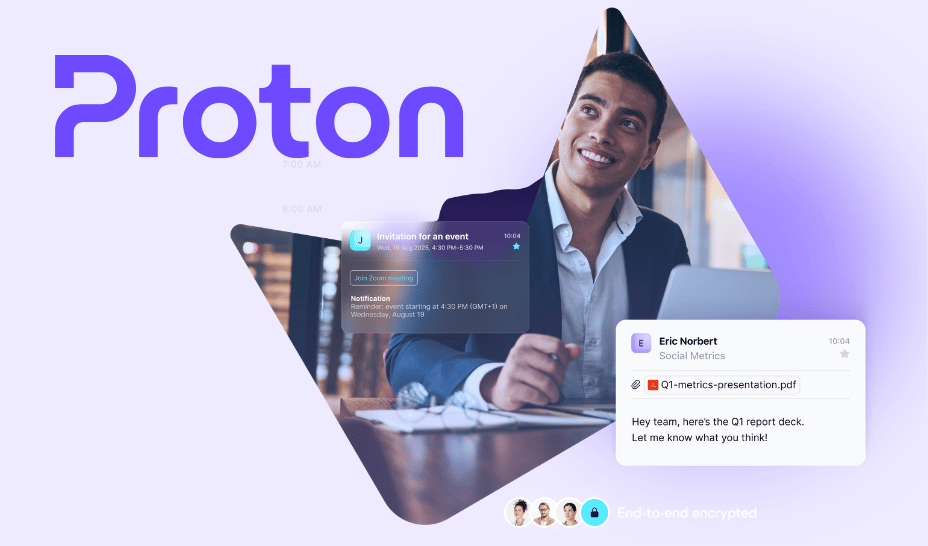
Ask a founder what keeps them up at night and you’ll hear about runway, hiring and product-market fit. Rarely the inbox. Yet the data is stubborn on this point: according to IBM’s Cost of a Data Breach Report 2025, phishing was once again the most common initial attack vector, responsible for 16% of breaches analysed, at an average cost of €4.19 million ($4.8 million) per incident.
A Verizon Data Breach Investigations Report (DBIR) adds that a human element such as phishing, stolen credentials or social engineering is involved in roughly 60% of all breaches.
For early-stage companies, the maths is even less forgiving. A corporate can absorb a seven-figure incident; for a Seed-stage startup, a compromised inbox that leaks customer data or reroutes an investor wire transfer can be existential.
And the attackers know it: business email compromise (BEC) alone caused €2.42 billion ($2.77 billion) in reported losses in the US in 2024 across 21,442 complaints, according to the FBI’s Internet Crime Report.
Europe’s cybersecurity ecosystem is responding, and this is evidenced by the wave of startups building defences against exactly these threats, from deception technology that tricks attackers into surrendering stolen credentials to the broader cohort of European cybersecurity startups.
But, most breaches don’t happen because a company lacked cutting-edge tooling. They happen because founders got the basics wrong.
Here are the five mistakes that come up again and again.
Treating email security as an IT problem for later
In a five-person startup, “IT” is whoever set up the workspace account in week one, usually with default settings and usually in a hurry. The problem is that email isn’t just a communication channel; it’s the master key to everything else.
Password resets for your CRM, your cloud console and your banking portal all flow through the inbox. Once an attacker controls a founder’s email, they effectively control the company.
The fix costs almost nothing: enforce two-factor authentication (ideally hardware keys or passkeys rather than SMS), require a password manager from day one, and choose a business email provider where security is the default rather than an add-on.
Privacy-focused services built in Europe come with end-to-end encryption, phishing protection and GDPR-aligned data handling out of the box, which matters when your “security team” is one overworked CTO.
Whatever provider you choose, the point is the same: the decision you make in week one is the one you’ll be living with when you’re 50 people.
Assuming your team can spot a phish
Awareness training built for the 2015 threat landscape, with its misspelled sender names and clumsy grammar, is now dangerously outdated. IBM’s research found that generative AI has cut the time needed to produce a convincing phishing email from roughly 16 hours to about 5 minutes.
The telltale signs founders tell their teams to look for are disappearing.
Startups are especially exposed because of who they hire and how fast. Research from security training firm Keepnet found that new hires are 44% more likely to fall for phishing than longer-tenured staff, and 71% click a phishing email within their first 90 days.
If you’re doubling headcount every year, a large share of your company is permanently in that high-risk window. Training still matters, but it has to be continuous and simulation-based, not a one-off onboarding slide.
Ignoring the money-movement problem
BEC attacks don’t need malware. They need a plausible email, supposedly from the CEO who is travelling and urgently requesting a transfer, and an employee who wants to be helpful.
The Verizon report puts the median loss from a single BEC incident at around €43,675 ($50,000), which for many early-stage companies is a month or more of runway. Fundraising periods are peak season: wire instructions, new counterparties and time pressure are exactly the conditions attackers exploit.
The defence is procedural, not technical: any change to payment details or any transfer above a set threshold gets verified through a second channel, meaning a phone call to a known number, never a reply to the email. Write it down, and make it apply to the founders too. Most successful BEC scams work precisely because the “CEO’s” instructions weren’t supposed to be questioned.
Skipping the boring authentication standards
SPF, DKIM and DMARC are three DNS-based email authentication records that tell the world’s mail servers which messages genuinely come from your domain. Without them, anyone can send email that appears to come from you, aimed at your customers, your investors or your suppliers.
DMARC, an email authentication, policy, and reporting protocol, maintains accessible documentation, and configuring all three typically takes an afternoon. Skipping it means your brand can be weaponised in someone else’s phishing campaign, and you may only find out when an angry customer forwards you the “invoice” you never sent.
Forgetting that email security is now a compliance issue
Under GDPR, a breach of personal data flowing through your inboxes can trigger notification duties within 72 hours and fines of up to €20 million or 4% of global turnover, and the NIS2 directive extends security obligations across a much wider set of companies and their suppliers.
EU-Startups previously covered a compliance survival guide covering ISO 27001, GDPR and NIS 2 for founders navigating exactly this. Increasingly, it’s not just regulators asking: enterprise customers and investors now routinely probe security practices during due diligence.
Where your email is hosted, how it’s encrypted and who can access it are questions you’ll be answering in data rooms, not just in security reviews. ENISA, the EU’s cybersecurity agency, publishes free guidance aimed at SMEs that makes a solid starting point.
The takeaway
The startups getting this right aren’t spending more, they’re deciding earlier. A hardened email setup, a payment-verification rule, three DNS records and realistic training will neutralise the attack vector behind most breaches, and every one of those measures is accessible to a two-person team.
Europe’s founders are building a generation of security companies to handle the sophisticated end of the threat landscape.
It’s important for all of us to make an effort to close the front door when we leave. This simple action can help keep our home safe and secure.
This article was developed with valuable input from the experts at Proton, who provided valuable insights on home security.
Taking this small step can make a big difference in protecting our homes and belongings. Let’s all do our part to keep our front door closed and secure.
Remember, a little effort can go a long way in ensuring the safety of our homes. Thank you to Proton for their expertise in this area.












Upgrade Alert: HomePod Mini 2 and HomePod 2 Set to Become Default Mac Speakers

Finally Fixing my Wi-Fi – Zyxel Multy X!

Lost in the Living Maze: Unraveling Hidden Terrain Magic Through Copy-Paste

Samsung Unveils Exclusive Galaxy Z Fold 8 BTS Edition

Navigating the Digital World: Expert Tech Advice for Everyman

OMass Therapeutics Secures €275 Million Funding to Advance Innovative Small-Molecule Therapies

The Evolution of Apple’s Smart Home Strategy: A Closer Look at Their Own Devices

Unveiling the Imposter: The Truth Behind the Fake WhatsApp Clone on the Play Store

Digital Protection: How a 1988 Law Could Safeguard Your Online Viewing Experience

EU Takes Action Against Instagram and Facebook for Violating Illegal Content Rules

Warning: Facebook Creators Face Monetization Loss for Stealing and Reposting Videos

Facebook’s New Look: A Blend of Instagram’s Style

Facebook Compliance: ICE-tracking Page Removed After US Government Intervention

Facebook and Instagram to Reduce Personalized Ads for European Users

InstaDub: Meta’s AI Translation Tool for Instagram Videos

Reclaim Your Account: Facebook and Instagram Launch New Hub for Account Recovery

Meta discontinues Messenger apps for Windows and macOS

Breaking Updates: Meta Connect 2025 Unveils Latest Developments
Finally Fixing my Wi-Fi – Zyxel Multy X!

$25,000 Gaming Setup – EVOLUTION!

The Maze Alpha X is HERE!

Cool Tech under $100 – December!

MYSTERY UNBOXING FROM GOOGLE!

TOP 6 Smartphones from Companies you NEVER Expected!

A Surprise Smartphone from EE!

DOOGEE MIX 2 VS DOOGEE MIX 1!

INCREDIBLE Smartphone Gadgets on Amazon!
-
 Facebook12 months ago
EU Takes Action Against Instagram and Facebook for Violating Illegal Content Rules
-
 Facebook1 year ago
Warning: Facebook Creators Face Monetization Loss for Stealing and Reposting Videos
-
 Facebook10 months ago
Facebook’s New Look: A Blend of Instagram’s Style
-
 Facebook1 year ago
Facebook Compliance: ICE-tracking Page Removed After US Government Intervention
-
 Facebook10 months ago
Facebook and Instagram to Reduce Personalized Ads for European Users
-
 Facebook1 year ago
InstaDub: Meta’s AI Translation Tool for Instagram Videos
-
 Facebook11 months ago
Reclaim Your Account: Facebook and Instagram Launch New Hub for Account Recovery
-
 Apple12 months ago
Meta discontinues Messenger apps for Windows and macOS
