
Security
Cybersecurity Alert: AI Compute Hijacking, Apple Email Vulnerability, and BlueHammer Ransomware – A Compilation of 14 Stories

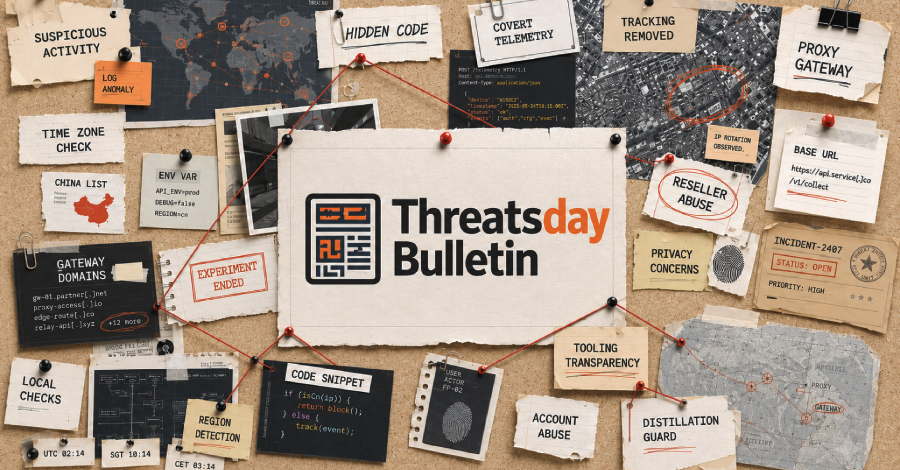
Weak Spots Highlighted in This Week’s Security News
The latest security news has brought attention to vulnerabilities in various systems. Browsers, bots, sandboxes, AI systems, and email flows have all exhibited weaknesses that can be exploited. These vulnerabilities often go unnoticed until someone tests a small gap and finds a way to breach the system.
While it may seem like one major security breach, the reality is that these incidents are often the result of small permissions, weak checks, open systems, and normal tools being used in unintended ways. This recurring pattern is evident in the following stories:
-
Ransomware phishing lure
Small businesses across Europe, Asia, the Middle East, and the U.S. are being targeted by a phishing campaign using fake investigation emails impersonating law enforcement officials. The emails contain evidence of suspicious activity and pressure recipients to open a password-protected archive, ultimately leading to the delivery of ransomware.
-
Sandbox root escape
Research has uncovered an attack chain affecting Claude Cowork on Windows, allowing attackers to run arbitrary commands as root in the sandbox without network egress restrictions. The exploit takes advantage of unvalidated parameters, bypassing network filtering and potentially exfiltrating sensitive data.
-
Email privacy flaw
A vulnerability in Apple’s Hide My Email service has been disclosed, exposing users’ real email addresses. Despite being reported over a year ago, the issue remains unpatched, raising concerns about the security of user data.
-
China-linked RAT activity
BeepRAT, a customized version of the DCRat framework, has been distributed via a Chinese phone number management utility, establishing persistence on hosts and enabling various malicious activities. The malware operates within the China-nexus espionage ecosystem, highlighting the evolving threats in the cybersecurity landscape.
-
AI cyber benchmark
OpenAI’s GPT-5.6 Sol has been evaluated on real-world offensive security benchmarks, demonstrating capabilities in finding and exploiting vulnerabilities but showing limitations against hardened targets. The model continues to evolve, showcasing both strengths and weaknesses in offensive cyber operations.
-
Platform-aware phishing
Phishing operations have evolved to deliver platform-specific payloads, adapting to victims’ environments to increase the likelihood of compromise. Threat actors are leveraging operating system-specific payloads to target a wider range of systems, reflecting a strategic shift in the threat landscape.
-
Russian hacker reward
The U.S. State Department is offering a reward for information on threat actors associated with malicious cyber groups linked to Russian security and military services. The groups have been involved in phishing campaigns targeting government officials, highlighting the ongoing cybersecurity challenges posed by nation-state actors.
-
LLM role confusion
Machine learning models are susceptible to prompt injection attacks, where unauthorized input can lead to role confusion and potentially malicious actions. The attack exploits the trust models place in their own thinking, highlighting the need for robust security measures in AI systems.
-
Covert tracking rollback
Anthropic is removing hidden code added to detect unauthorized distillation efforts, addressing privacy concerns and strengthening security measures. The decision reflects a commitment to enhancing user protection and addressing potential vulnerabilities.
-
Clipboard attack defense
Opera introduces Paste Protect to safeguard against clipboard attacks that manipulate users into executing malicious commands. The feature aims to enhance user security by detecting and warning against suspicious clipboard activities, mitigating the risks posed by social engineering tactics.
-
Gmail phishing operation
A spear-phishing attack targeting Belarusian politician Yury Hubarevich is part of a broader credential phishing operation, underscoring the persistent threat posed by phishing campaigns. The use of deceptive tactics highlights the need for vigilance and robust cybersecurity measures to protect against such attacks.
-
FTC enforcement action
The U.S. Federal Trade Commission fines Amazon for failing to assist customers affected by identity theft, emphasizing the importance of transparency and accountability in addressing consumer fraud. The enforcement action aims to protect consumers and hold companies accountable for safeguarding sensitive information.
-
Telegram RAT surge
The emergence of Millennium RAT highlights the evolving tactics of threat actors, utilizing advanced techniques to compromise Windows machines. The surge in infections underscores the need for robust cybersecurity measures to combat the growing threat landscape.
-
Search hijack extension
The discovery of a malicious extension impersonating Perplexity AI underscores the ongoing challenges posed by social engineering tactics. The incident highlights the importance of vigilance and awareness in protecting against deceptive practices in the digital landscape.
-
Meeting bot controls
Microsoft’s introduction of smarter bot protection features aims to enhance security in virtual meetings, addressing the risks posed by unauthorized participants. The new safeguards provide organizations with greater control over external bots, ensuring secure and confidential communication environments.
-
Defender zero-day abuse
The exploitation of the Microsoft Defender vulnerability in ransomware attacks highlights the evolving tactics of threat actors. The incident underscores the need for proactive cybersecurity measures to detect and mitigate zero-day vulnerabilities.
-
Stolen AI compute abuse
The misuse of Ollama model server for malicious purposes demonstrates the risks associated with unauthorized access to AI resources. The incident underscores the importance of securing AI infrastructure to prevent misuse and protect against potential security threats.
These stories serve as a reminder that security breaches often result from overlooked vulnerabilities and small mistakes. By addressing these weaknesses and implementing robust security measures, organizations can better protect themselves against cyber threats. Stay informed and stay vigilant in the ever-evolving landscape of cybersecurity.
Until next ThreatsDay, remember that a proactive approach to security is key to safeguarding against potential risks and threats.











Unleashing Power: The Mercedes-AMG GT 63 Pro Hits Malaysian Roads at RM 2.09 million

Revised Game++: Conquering Bugs and Keeping Pants Intact

Power Players: Europe’s Top AI Influencers

Beware: The Secret iOS 27 Setting That’s Sapping Your Battery Life

Concept Smartphones that are better than Real Smartphones

Unwrapping the Power: A Digital Look at BMW’s Electric M3 Body Wrap

Shadow Ops: Covert Extraction

Mastering the Fundamentals of Business Auditing

Apple Unveils Stunning Images Captured with ‘iPhone Duo’ Camera

EU Takes Action Against Instagram and Facebook for Violating Illegal Content Rules

Warning: Facebook Creators Face Monetization Loss for Stealing and Reposting Videos

Facebook’s New Look: A Blend of Instagram’s Style

Facebook Compliance: ICE-tracking Page Removed After US Government Intervention

Facebook and Instagram to Reduce Personalized Ads for European Users

InstaDub: Meta’s AI Translation Tool for Instagram Videos

Reclaim Your Account: Facebook and Instagram Launch New Hub for Account Recovery

Meta discontinues Messenger apps for Windows and macOS

Breaking Updates: Meta Connect 2025 Unveils Latest Developments
Concept Smartphones that are better than Real Smartphones

Samsung Galaxy SII Unboxing!

The SECRET to Maximise Smartphone Battery Life?

We Designed the Ultimate Gaming Smartphone of 2018!

Using the Cheapest Smartphone in the World.

Samsung Galaxy S9+ Unboxing! (Clone)

Unboxing the First Ever Samsung Galaxy S!!

Huawei P Smart – Huawei’s new Killer Budget Smartphone!

MYSTERY Package from Xiaomi – HUGE UNBOXING!
-
 Facebook11 months ago
EU Takes Action Against Instagram and Facebook for Violating Illegal Content Rules
-
 Facebook12 months ago
Warning: Facebook Creators Face Monetization Loss for Stealing and Reposting Videos
-
 Facebook10 months ago
Facebook’s New Look: A Blend of Instagram’s Style
-
 Facebook12 months ago
Facebook Compliance: ICE-tracking Page Removed After US Government Intervention
-
 Facebook10 months ago
Facebook and Instagram to Reduce Personalized Ads for European Users
-
 Facebook12 months ago
InstaDub: Meta’s AI Translation Tool for Instagram Videos
-
 Facebook10 months ago
Reclaim Your Account: Facebook and Instagram Launch New Hub for Account Recovery
-
 Apple12 months ago
Meta discontinues Messenger apps for Windows and macOS
