In late 2010, an up-and-coming Google executive named Sundar Pichai took the stage in front of a bunch of reporters and explained that Google had a big new idea about laptops. In the future, he said, the only thing you’d need on your computer was a web browser — that was where all your apps, data, and connections would live going forward. Your computer didn’t need much storage, Pichai explained, or any fancy hardware, because the cloud would do the work. The software designed for these new laptops, Chrome OS, was an enormous bet that the web would eventually overtake everything.
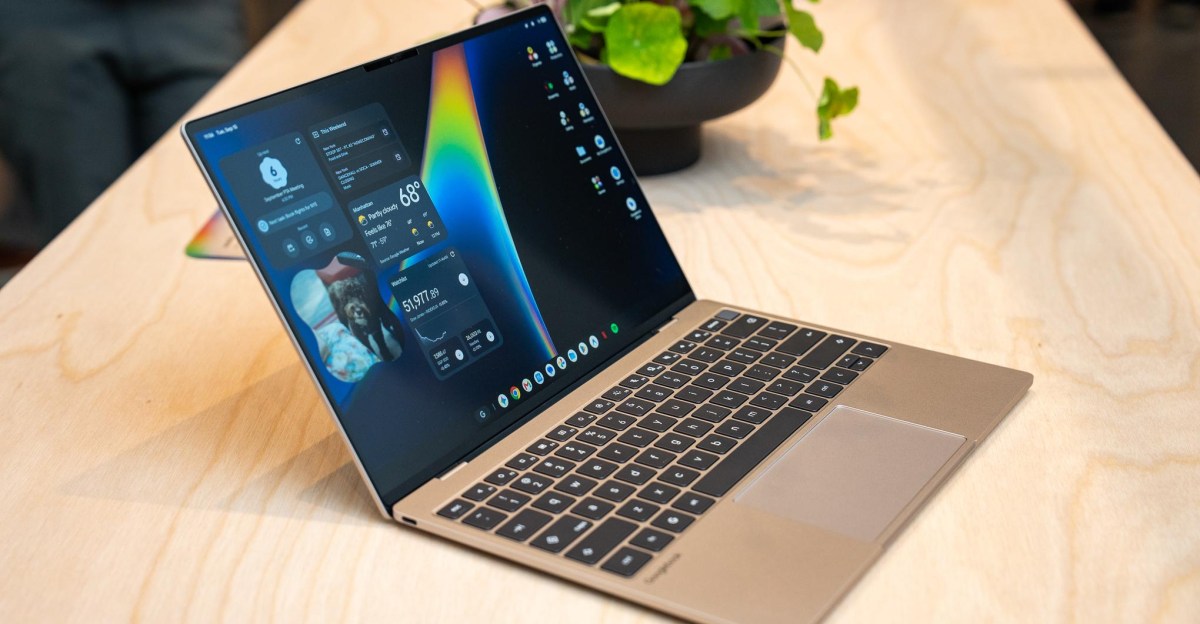
Chrome OS (which eventually became ChromeOS) has been, in many ways, a huge hit. But the computer currently on Rick Osterloh’s desk isn’t a Chromebook. Osterloh is Google’s head of hardware and devices, and the sleek, slim device he’s tapping on as he joins our Google Meet is a 13-inch Dell clamshell with decidedly un-Chromebook specs: 16 gigs of RAM, a cutting-edge Qualcomm processor, a light and thin and MacBook-ish metallic look. It’s called the XPS Googlebook, and it’s one of five new devices running Googlebook OS, Google’s latest big idea about computers.
At first blush, Googlebooks feel like classic Google in a bad way: yet another operating system, yet another brand, yet another thing destined for the Google graveyard. But Osterloh sees it differently. He greenlit the whole project in part because he saw it as “the ultimate focusing move” for Google. For a long time, he says, Google has built, maintained, and shipped two operating systems. ChromeOS stayed on laptops, while Android conquered phones and tablets and TVs and cars and everything else. Slowly but surely, Google has built Android into a familiar interface and a large app ecosystem across all those devices. Except for laptops.
It’s your computer. It’s your phone. It’s your phone-puter!
Meanwhile, Google became convinced that the advent of AI might change the way we use computers forever — but might not need to change the computers themselves. Osterloh says he has tables full of wheel-reinventing prototypes, and of course the company is betting big on things like smart glasses, but high-end PCs, which have the power needed to run AI models for coding, dictation, and more, have been a surprise winner of the AI revolution so far. (Just ask Apple, which has seen AI enthusiasts buy high-end Macs in huge volume.) “I think laptops are one of those resonant form factors,” Osterloh says. “It’s an established category that’s incredibly useful for productivity and apps, and it’s going to be really hard to replace that.”
Those two ideas together — Android’s dominance and the rise of AI — tell the whole story of Googlebook. There are a lot of bets inside of the Googlebook project, both about what we do on computers and how we’ll do it going forward, but maybe the most surprising is Google’s commitment to building kickass laptops. A generation ago, then-CEO Eric Schmidt argued that the future was “disposable” hardware, that devices wouldn’t matter as the internet took over. Googlebooks represent Google’s growing belief that devices matter more than ever. And that a good laptop is worth paying for.
“The key thing that had changed was just the rapid pace of evolution that Android itself has gone under.”
The Googlebook project started in earnest a couple of years ago, but some of the ideas have been floating around much longer. Rumors and reports of a ChromeOS-Android merger have been around for more than a decade, and Google has tried various ways to bring the two operating systems into harmony. The company spent years programming ChromeOS to be able to run Android apps (and even Windows apps), but never nailed the integration. For years, a project called Fuchsia looked like the combination users had been waiting for, but that petered out into a smart home-specific project.
In early 2024, though, a couple of Googlers asked a new question: What if, instead of trying to bring Android apps to ChromeOS, we brought the best of ChromeOS to Android? They weren’t the first people to ask that question, but they were the first to time it right. “The key thing that had changed,” says Prajakta Gudadhe, Google’s VP of engineering for laptops and tablets, “was just the rapid pace of evolution that Android itself has gone under.”
“` “At that time, Android was serving multiple form factors, from phones to wearables to TVs to autos,” Gudadhe says. “Because of that, they just had to invest in a much more modular stack that could support this diversity.” This is about having a phone that runs Google, a car, and a laptop. The Googlebooks operating system is a mix of Android and ChromeOS, designed to seamlessly integrate with your devices and provide a great user experience. It requires high-quality hardware to work well, and Google is partnering with PC makers and phone manufacturers to build an ecosystem of Googlebooks. Despite past challenges with Chromebooks, Google is confident that Googlebooks will be successful, even at higher price points. These laptops are designed to be your central computer, connecting you to networks and providing a great screen for entertainment and productivity. Sixteen years ago, Google introduced a groundbreaking laptop designed for the internet age. Today, the tech giant is embarking on a new endeavor to create a laptop tailored for the mobile era that is already here and the emerging AI-centric era. This ambitious project will require leveraging Google’s extensive expertise across various domains and building on its past successes in creating top-notch devices. The ultimate goal is to convince users of the necessity of a laptop that mirrors the functionality of a smartphone and seamlessly integrates with their AI ecosystem. This is no small feat and may prove to be a more significant leap than the transition from traditional laptops to web-based computing. However, if Google’s gamble pays off, it could revolutionize the way we interact with technology, potentially changing the way we navigate our digital world forever. If successful, this innovative laptop could redefine user experiences and reshape the future of computing. Transform the following sentence:
Original: “She is going to the store to buy some groceries.”
Transformed: “To buy some groceries, she is going to the store.” Transform the following:
“Change is inevitable, growth is optional.”
into:
“Change is unavoidable, but growth is a choice.” Transform the following sentence into the passive voice:
“The chef is preparing a delicious meal for the guests.”
“A delicious meal is being prepared for the guests by the chef.” Transform the following sentence.
Original: The cat is sleeping peacefully on the couch.
Transformed: Peacefully sleeping on the couch is the cat.