
Inovation
First Hydrogen Unveils Cutting-Edge Unmanned Ground Vehicle Prototype

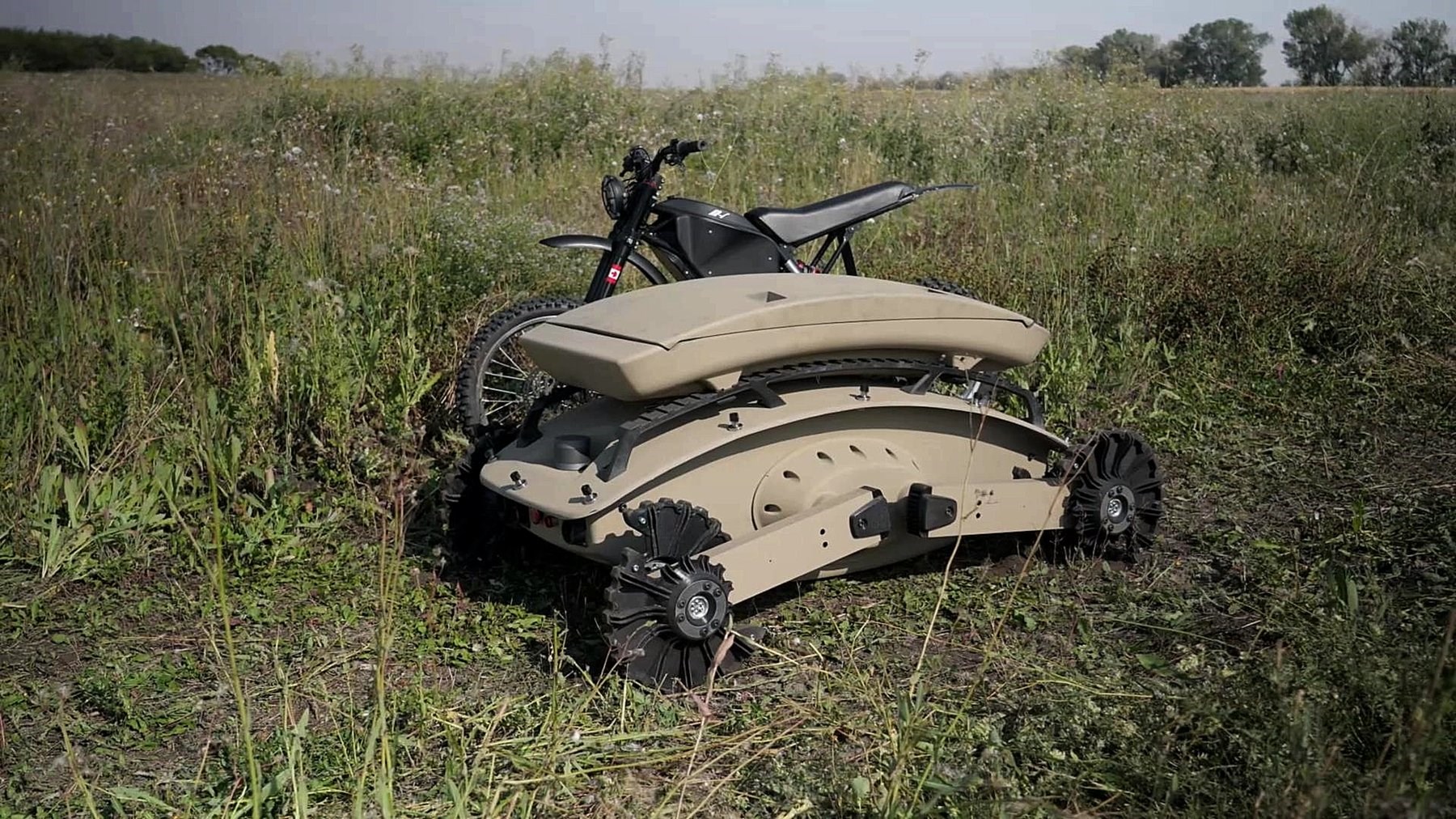
First Hydrogen Corp. achieves key milestone with completion of new unmanned ground vehicle (UGV)
First Hydrogen Corp. has successfully built its latest unmanned ground vehicle (UGV), marking a significant advancement in its agreement for a patented mobile drone UGV.
The company highlights that the finished platform showcases the technology’s fundamental structure, mobility, and adaptable payload capabilities.
This achievement grants First Hydrogen exclusive global rights for the patent’s remaining duration, with a 1% royalty on gross sales of products utilizing the patented technology.
The finalized UGV serves as a versatile foundation platform that can be customized for various purposes through interchangeable modules and payloads.
Key features of the UGV include morphing-wheel technology, a constant-direction drivetrain, semi-robotic suspension, and a configurable payload system.
These elements are designed to facilitate operations in challenging terrains while enabling swift adjustments to meet diverse mission requirements.
Balraj Mann, Chairman and CEO of First Hydrogen, expresses, “The completion of the drone UGV construction and the attainment of the Development Milestone signify significant progress in First Hydrogen’s robotics strategy.”
“We now possess a fully assembled platform showcasing the UGV’s core abilities and hold exclusive global rights for the patent’s remaining term.”
“Its modular design allows for a single platform to accommodate multiple applications, ranging from drone deployment and surveillance to security, defense, and other demanding operational settings.”
Modular design enhances versatility for diverse applications
A pivotal aspect of First Hydrogen’s UGV is its Modular Open Systems Approach (MOSA), which utilizes interchangeable hardware and standardized open-source software instead of closed, single-vendor systems.
The platform is structured to enable the exchange of components such as batteries, sensors, cameras, robotic arms, and computer cards. Mission-specific modules and payloads can be swapped in the field without specialized tools or training.
This adaptability allows a single UGV platform to be tailored for functions like logistics, surveillance, communications, and drone deployment.
The completed build features a specialized auto-opening drone launching and carrier module, showcasing its capability as a mobile platform for aerial drone deployment.
Future enhancements aim to accommodate additional sensors, communication systems, surveillance tools, and other specialized payloads.
Robust drivetrain design ensures durability
The UGV’s constant-direction drivetrain is engineered to sustain operation even in the event of damage or component loss.
First Hydrogen integrates this feature with a semi-robotic suspension system that offers active height and attitude adjustments alongside passive suspension.
This setup is intended to enhance maneuverability on challenging terrains while minimizing robotic power consumption, potentially extending battery life and operational range.
The resultant platform is an efficient, long-range, all-terrain system capable of functioning in environments that might be inaccessible to traditional UGVs.
Expanding UGV market anticipates growth
First Hydrogen’s progress aligns with the anticipated substantial growth in the global unmanned ground vehicles market.
According to Fortune Business Insights, the market is projected to expand from $12.99 billion to $32.23 billion by 2034, representing a compound annual growth rate of 18.7%.
The company also cites increased defense expenditures among NATO nations following the Russia-Ukraine conflict. Notably, Germany has raised defense spending to over 2% of GDP, reaching $109 billion.
With the core UGV architecture successfully demonstrated, First Hydrogen plans to diversify its array of modules and configurations for defense and security applications.












SpaceX’s Starlink Surges Forward as Amazon’s Rivalry Falters

First Hydrogen Unveils Cutting-Edge Unmanned Ground Vehicle Prototype

ARC Raiders to Introduce PvE Option in October Beta Test

Oppo Find X10: Unveiling the Release Date

Surviving the Layoff Wave: Disrupt 2026 Layoff Expo+ Passes on Sale Now for $75

Decoding the Specs, Price, and Performance of AirPods Max: A Comprehensive Comparison

ELEPHONE U PRO UNBOXING AND REVIEW!

Atto 2 PHEV: Revolutionizing the Compact SUV Market

Button Mash Mania: The Ultimate Menu Experiment

EU Takes Action Against Instagram and Facebook for Violating Illegal Content Rules

Warning: Facebook Creators Face Monetization Loss for Stealing and Reposting Videos

Facebook’s New Look: A Blend of Instagram’s Style

Facebook Compliance: ICE-tracking Page Removed After US Government Intervention

Facebook and Instagram to Reduce Personalized Ads for European Users

InstaDub: Meta’s AI Translation Tool for Instagram Videos

Reclaim Your Account: Facebook and Instagram Launch New Hub for Account Recovery

Meta discontinues Messenger apps for Windows and macOS

Breaking Updates: Meta Connect 2025 Unveils Latest Developments
ELEPHONE U PRO UNBOXING AND REVIEW!

Mrwhosetheboss – 1 Million Subscribers

The Surprising TRUTH about Samsung – 15 things you did not know.

10 Incredible Android DIY Hacks!

Does a Cheap 2018 Smartphone beat a 2013 Flagship?

Samsung Galaxy S9 & S9+ UNBOXING!

Samsung Galaxy S9 Plus vs iPhone X

The BEST $300 Phone (2018) ft. MKBHD, Technical Guruji, iJustine + More

Samsung Galaxy S9 Plus Gaming Review! (vs OnePlus 5T)
-
 Facebook11 months ago
EU Takes Action Against Instagram and Facebook for Violating Illegal Content Rules
-
 Facebook12 months ago
Warning: Facebook Creators Face Monetization Loss for Stealing and Reposting Videos
-
 Facebook10 months ago
Facebook’s New Look: A Blend of Instagram’s Style
-
 Facebook12 months ago
Facebook Compliance: ICE-tracking Page Removed After US Government Intervention
-
 Facebook10 months ago
Facebook and Instagram to Reduce Personalized Ads for European Users
-
 Facebook12 months ago
InstaDub: Meta’s AI Translation Tool for Instagram Videos
-
 Facebook10 months ago
Reclaim Your Account: Facebook and Instagram Launch New Hub for Account Recovery
-
 Apple11 months ago
Meta discontinues Messenger apps for Windows and macOS
