
Tech News
Mastering AI Demand Forecasting: A Comprehensive Tutorial

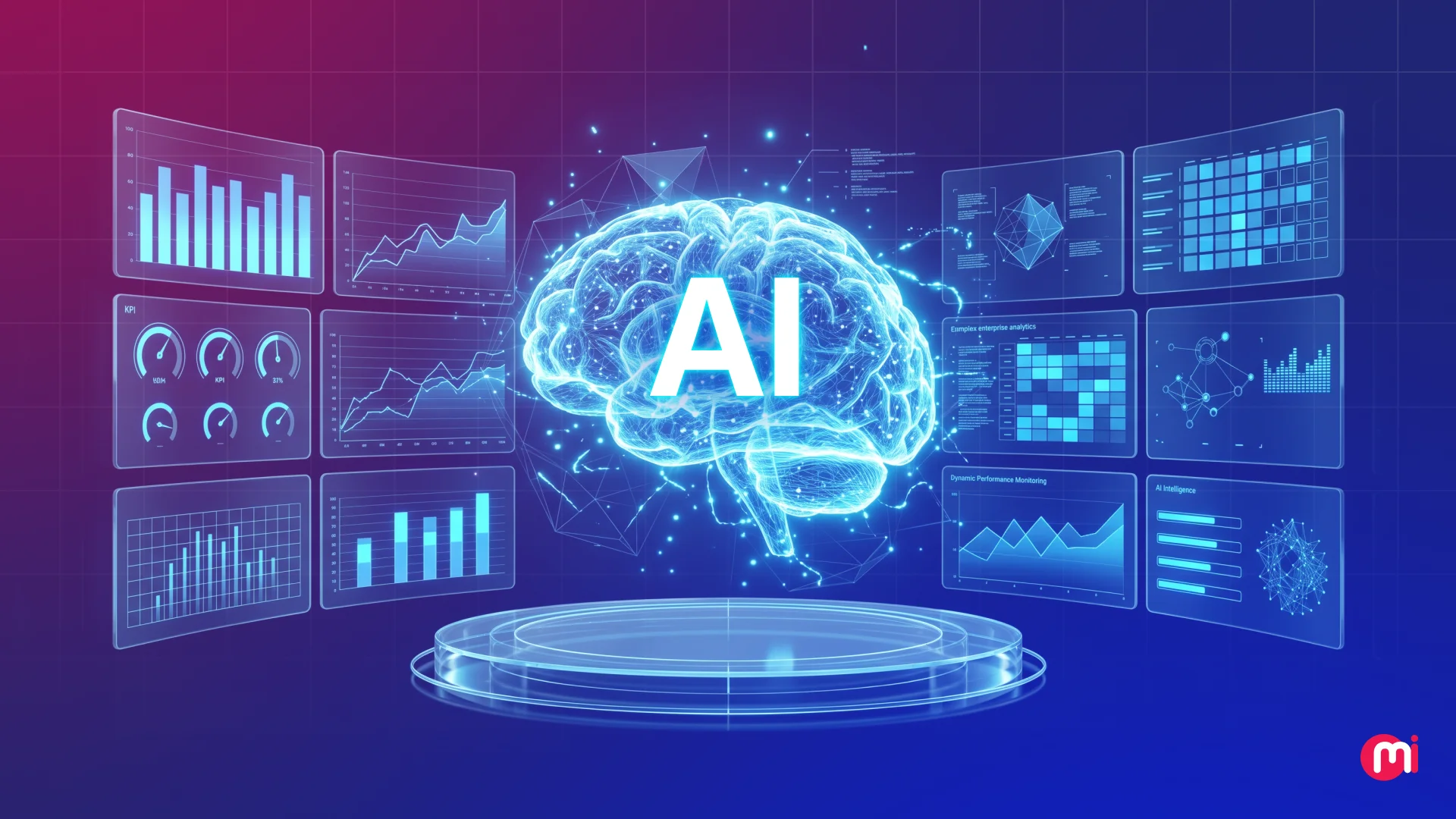
AI in Demand Forecasting: Revolutionizing Inventory Management
If you’re a business owner, chances are you’ve encountered the challenges of overstock and stockout. Predicting future demand can be tricky, leading to inventory mismanagement. However, with AI in demand forecasting, businesses can now accurately predict demand and ensure optimal inventory levels at the right time and place.
In today’s fast-paced world, where a viral social media post, a sudden weather event, or a supply chain disruption can quickly change demand patterns, AI is a game-changer. AI-powered demand forecasting tools analyze historical and current data to anticipate demands for products and services, enabling businesses to meet customer needs effectively.
This article delves into the role of AI in demand forecasting, highlighting key techniques, benefits, use cases, real-life examples, and implementation strategies. It also addresses common challenges in implementing AI in demand forecasting and provides solutions to overcome them.
Key Takeaways:
1. Demand forecasting predicts future product or service demand.
2. AI for demand forecasting uses artificial intelligence to estimate future demand.
3. AI anticipates demand through pattern recognition, real-time data integration, and external data incorporation.
4. Businesses across various industries use AI-powered demand forecasting.
5. AI implementation in demand forecasting involves defining objectives, data collection, feature engineering, and more.
6. The future of AI demand forecasting includes autonomous supply chains, hyper-personalized predictions, and integration with IoT.
What Is AI in Demand Forecasting?
AI in demand forecasting predicts future customer demand for products or services using machine learning, large datasets, data analytics, and intelligent algorithms. Unlike traditional methods that rely on past sales data, AI leverages multiple data sources such as weather patterns, economic indicators, and social media trends to make accurate predictions.
Key AI Techniques Used in Demand Forecasting:
1. Time-Series Models: LSTM networks, Prophet, ARIMA models.
2. Ensemble Methods: Combine multiple models for more reliable outputs.
3. Natural Language Processing: Interpret text data for sentiment analysis.
4. Causal AI: Explain why demand shifts occur.
AI in Demand Forecasting Model Comparison:
– ARIMA: Stable historical demand, simple model.
– Prophet: Seasonal demand, easy implementation.
– XGBoost: Structured business data, high accuracy.
– Transformers: Large-scale forecasting, highly scalable.
– LSTM: Complex sequential demand, captures long-term patterns.
Why Traditional Forecasting Falls Short:
Traditional forecasting methods have limitations in today’s complex business environment. They rely heavily on historical data, struggle to capture non-linear demand patterns, and lack responsiveness to real-time changes and external variables. AI-powered demand forecasting addresses these shortcomings by leveraging advanced techniques and real-time data integration.
Why Is AI in Demand Forecasting Important?
AI in demand forecasting enables businesses to make informed decisions based on accurate predictions. By forecasting demand in advance, companies can optimize inventory levels, prevent overstock and stockouts, reduce carrying costs, and improve supplier collaboration. Real-time insights, accurate forecasting, and improved decision-making are key benefits of AI in demand forecasting.
How Does AI Improve Demand Forecasting?
AI enhances demand forecasting by utilizing advanced pattern recognition, real-time data integration, incorporation of external data, continuous learning, and scenario planning. By analyzing vast amounts of data and predicting demand at scale, AI systems provide accurate and timely forecasts, enabling businesses to make proactive decisions.
Use Cases of AI in Demand Forecasting:
AI in demand forecasting is used across various industries, including healthcare, eCommerce, retail, manufacturing, and more. Businesses leverage AI-powered tools for dynamic inventory optimization, real-time pricing, new product forecasting, and customized demand prediction. AI in demand forecasting helps businesses optimize operations, reduce waste, and improve customer satisfaction.
What to Look for in an AI-Powered Demand Forecasting Solution:
When evaluating AI-powered demand forecasting solutions, consider factors such as data integration capabilities, scalability, model explainability, customization, real-time forecasting, user interface, vendor support, and data security. Choose a solution that aligns with your business goals and integrates seamlessly with existing systems.
How to Implement AI in Demand Forecasting:
Implementing AI in demand forecasting involves defining objectives, collecting and preprocessing data, engineering features, selecting variables, training models, conducting pilot testing, deploying and integrating with existing systems, monitoring and evaluation, and driving change management. By following a structured approach, businesses can successfully implement AI in demand forecasting.
Challenges of AI-Based Demand Forecasting and Their Solutions:
Implementing AI in demand forecasting comes with challenges such as data quality issues, integration with legacy systems, high initial investment, model interpretability concerns, organizational resistance to change, skill gaps, and model maintenance. Solutions include investing in data governance, using middleware for integration, starting with a pilot project, prioritizing explainable AI, involving stakeholders, partnering with ML experts, and setting up automated retraining pipelines.
Future of AI-Enabled Demand Forecasting:
The future of AI-powered demand forecasting involves autonomous supply chains, hyper-personalization, IoT integration, explainable AI, AI-driven decision-making, and more. Businesses can expect advancements in demand forecasting technologies that enable proactive decision-making, efficient resource allocation, and improved operational efficiency.
Signing Off:
Businesses are leveraging AI in demand forecasting to gain a competitive edge by optimizing inventory management, reducing costs, and responding swiftly to market changes. Implementing AI in demand forecasting can be a transformative process, but the benefits are significant. Partnering with an AI development company like MindInventory can help businesses build robust AI-powered solutions for demand forecasting.
FAQs on AI in Demand Forecasting:
1. How is AI demand forecasting different from traditional methods?
AI-powered demand forecasting uses real-time data and machine learning algorithms for accurate predictions, unlike traditional methods that rely on historical data.
2. What types of data are used in AI demand forecasting?
AI in demand forecasting utilizes various data sources such as sales data, pricing history, weather data, and social media sentiment for accurate predictions.
3. How much does AI demand forecasting cost?
The cost of implementing AI in demand forecasting varies based on business requirements, ranging from $40,000 to $250,000+.
4. How long does it take to implement AI in demand forecasting?
A focused pilot project can be completed in 4-12 weeks, while a full enterprise deployment may take 6-18 months.
5. Do small and mid-sized businesses benefit from AI demand forecasting?
Yes, AI forecasting platforms are accessible to businesses of all sizes, offering benefits such as improved inventory decisions and reduced waste.
6. What are the prerequisites for adopting AI in demand forecasting?
Clean data, clear objectives, organizational support, and data expertise are essential prerequisites for implementing AI in demand forecasting.
7. What is demand sensing in AI forecasting?
Demand sensing involves short-term forecasting using real-time signals, particularly useful for fast-moving consumer goods and perishables.
8. How does AI handle demand volatility and seasonality?
AI models are designed to identify seasonal patterns and handle demand fluctuations. Training models on past disruption events can improve future predictions.
9. Is AI demand forecasting expensive to implement?
While enterprise solutions may require a significant investment, the ROI from reduced costs and improved operations typically justifies the expense within a short period.
The future of demand forecasting lies in AI technologies that enable businesses to make data-driven decisions, optimize operations, and stay ahead of market trends. By embracing AI in demand forecasting, businesses can transform their operations, improve efficiency, and drive growth in a competitive market landscape.






Seattle Tech Leaders Unite for Unified Regional Strategy

UNSEEN’s Resilient Team: KEMURI’s XBOX Skipping Saga

Unveiling the Threat: How Android Malware Invades Privacy by Taking Covert Photos

Disrupting the Status Quo: Cornelis Secures $205M to Challenge Nvidia’s Reign in AI Infrastructure

Fortify Your Home: Apple Home’s Advanced Security Camera Subscription for $60/Month

Exploring the Ethics of Big Tech’s AI Slowdown: Safety Pact or Cartel?

Troubleshooting iOS 27 Update Problems: Resolving Bugs and Battery Drain

Behind the Scenes: Inside the Departure of General Motors Australia’s Former Leader

Microsoft Emphasizes Human Importance Over AI Amid Safety Worries

EU Takes Action Against Instagram and Facebook for Violating Illegal Content Rules

Warning: Facebook Creators Face Monetization Loss for Stealing and Reposting Videos

Facebook Compliance: ICE-tracking Page Removed After US Government Intervention

Facebook’s New Look: A Blend of Instagram’s Style

Facebook and Instagram to Reduce Personalized Ads for European Users

InstaDub: Meta’s AI Translation Tool for Instagram Videos

Reclaim Your Account: Facebook and Instagram Launch New Hub for Account Recovery

Meta discontinues Messenger apps for Windows and macOS

Breaking Updates: Meta Connect 2025 Unveils Latest Developments

How to Love your Android Phone again.

The LG G7 has a Big Problem.

The most Beautiful Android Games you’ve never played.

Charge your Smartphone in 5 Minutes – How Batteries are about to Change!

10 CHEAP Smartphone Gadgets that Change Everything.

Huawei Mobile Cloud – The Huawei P20 Feature you didn’t know about!

PUBG MOBILE on Android – Disastrous or Revolutionary?

Why you should buy the Galaxy S8 right now.

Customize your Android Smartphone!
-
 Facebook11 months ago
EU Takes Action Against Instagram and Facebook for Violating Illegal Content Rules
-
 Facebook11 months ago
Warning: Facebook Creators Face Monetization Loss for Stealing and Reposting Videos
-
 Facebook11 months ago
Facebook Compliance: ICE-tracking Page Removed After US Government Intervention
-
 Facebook9 months ago
Facebook’s New Look: A Blend of Instagram’s Style
-
 Facebook9 months ago
Facebook and Instagram to Reduce Personalized Ads for European Users
-
 Facebook11 months ago
InstaDub: Meta’s AI Translation Tool for Instagram Videos
-
 Facebook9 months ago
Reclaim Your Account: Facebook and Instagram Launch New Hub for Account Recovery
-
 Apple11 months ago
Meta discontinues Messenger apps for Windows and macOS
