
Mobile Tech
Preserving Privacy: The Evolution of iPhone Security in Canada

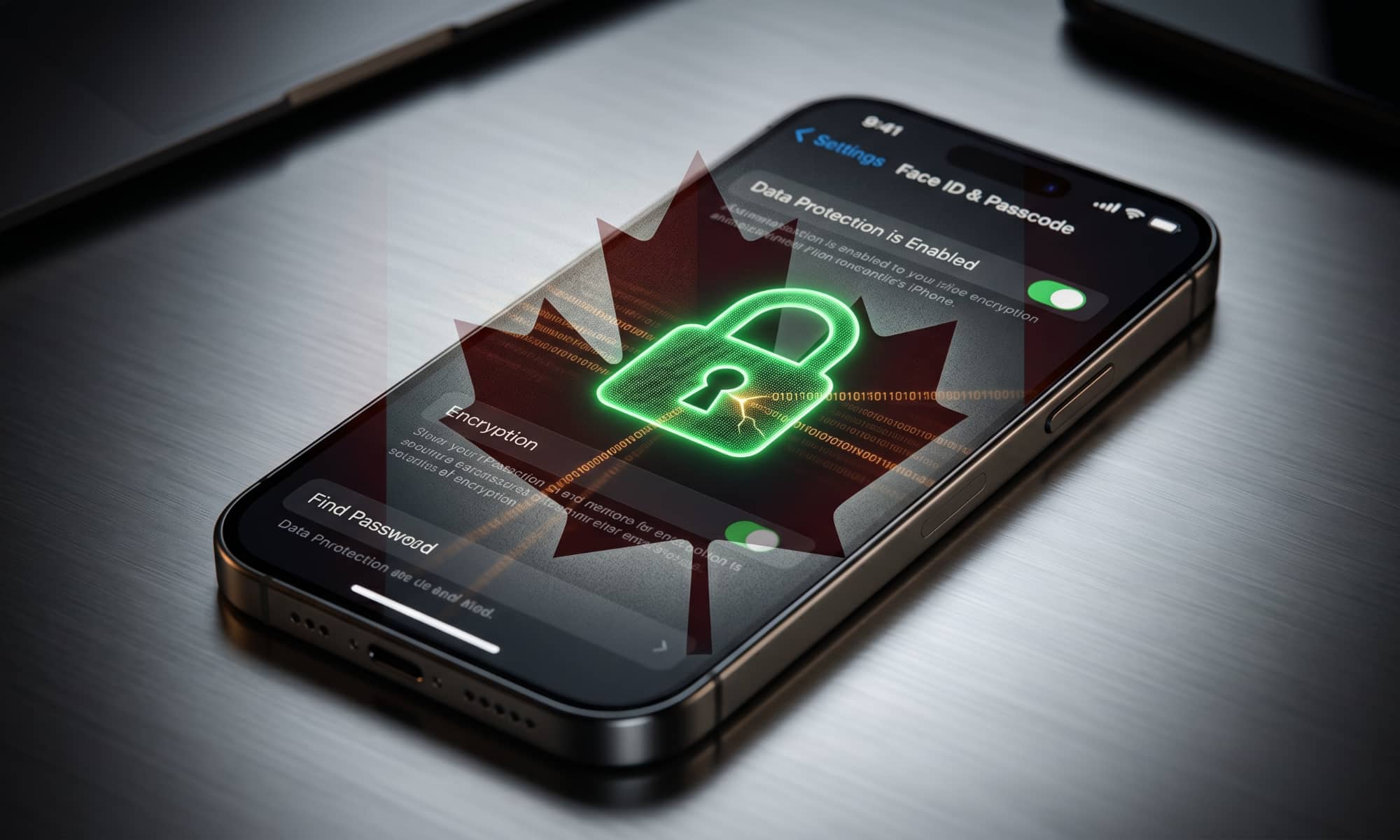
While governments and law enforcement agencies around the world have long pushed back against the security measures that Apple and other companies take to protect their users’ privacy, many of these efforts have ramped up in recent years, and now it looks like Canada is joining the fray.
In a move that at least superficially echoes Apple’s fight with the UK over its secret order to hand users’ iCloud data over to the government, Apple is now stating its opposition to Canada’s Bill C-22, a proposed new law that aims to help police and intelligence officials more easily gain access to private information when conducting investigations.
While C-22 has had no shortage of opposition among privacy advocates over the past few months for a wide assortment of reasons, this is the first time Apple has spoken out, and it’s making the same argument it’s made elsewhere: that the provisions of Bill C-22 would lead to a loss of privacy for iPhone users in the Great White North.
In a statement to CBC News yesterday, Apple said that “Bill C-22, as drafted, would undermine our ability to offer the powerful privacy and security features users expect from Apple,” and do so “at a time of rising and pervasive threats from malicious actors seeking access to user information.”
This legislation could allow the Canadian government to force companies to break encryption by inserting backdoors into their products — something Apple will never do.
Apple
Apple promises to continue cooperating with governments “to help protect public safety,” but reiterates that it won’t back down on its principles, “advocating tirelessly against any measures that would put users’ personal data at risk.”
While Apple has faced much more serious threats from other corners, particularly the UK “Technical Capability Notice” that would have forced open a back door that Apple wouldn’t have even been able to talk about, the situation in Canada is slightly more nuanced — and is resulting in a lot of back-and-forth semantics about what Bill C-22 will — and won’t — allow the government to do.
For its part, Canadian officials deny that the government is asking for “back doors.” Shannon Hiegel, director general of national security policy at Public Safety Canada, the department responsible for the bill, calls it “encryption neutral,” testifying that the government expects companies to “find safe ways to maintain their cybersecurity” through this legislation. A spokesperson for Public Safety Minister Gary Anandasangaree also issued a long statement in which the government “categorically rejects” claims that Bill C-22 introduces a back door into encryption technologies.
The legislation also does not compel companies to weaken encryption or create systemic vulnerabilities. Canada has been clear that strong encryption is essential to cybersecurity, economic growth, and the protection of Canadians’ personal information. Nothing in Bill C-22 changes that position.
Simon Lafortune, Public Safety Canada
Apple disagrees, pointing out that while Bill C-22 doesn’t explicitly demand a back door, it opens the door (pun only slightly intended) to one by giving the government the ability to order back doors to be created in the future.
An Apple official said the legal interpretation doesn’t back what the government is arguing. They compared it to saying the bill itself doesn’t cut a hole in a wall, but allows the government to order someone else to cut a hole in a wall. At the end of the day there’s still a hole in the wall, said the official.
Catharine Tunney, CBC News
In the end, this appears to be the classic “slippery slope” debate — ironically the same sort of argument that led Apple to abandon its CSAM scanning plans. The notion that just because a piece of legislation introduces a new power, it doesn’t mean that power is going to be used — or abused.
However, Apple has long maintained a strong counterpoint to such arguments when it comes to back doors themselves. When the FBI requested in 2016 that Apple create a modified version of iOS to allow it to break into the San Bernardino shooter’s iPhone, Apple CEO Tim Cook called it the “software equivalent of cancer” and “not something that should be created.” While Bill C-22 operates at one level above that — it’s not explicitly asking for a back door, simply empowering the government to ask for one — the same logic applies here. Once that Pandora’s Box is open, can it really be closed again?
As advocacy group OpenMedia points out, “Bill C-22 remains, at its core, a mass surveillance capability regime. It would compel an enormous and poorly defined set of ‘electronic service providers’ to build surveillance backdoors into their products.
Backdoors significantly weaken everyone’s digital safety, and their use cannot be limited to Canadian law enforcement alone. Hostile states, cyber criminals and anyone equipped by increasingly capable AI hacking capabilities will use the same backdoors. The 2024 Salt Typhoon attack on U.S. telecommunications networks — declared a “national defence crisis” — succeeded by targeting exactly the kind of government-mandated backdoors Bill C-22 would now require.
OpenMedia
The one silver lining here is that Bill C-22 has yet to pass, and a charitable interpretation is that some of these provisions are merely the result of the vague language that often plagues such legislation. Opposition parties are already pushing to update the bill to address some of these concerns and tighten the language and definitions, and Anandasangaree has said he’s open to reviewing those proposed amendments.












Enhancing Visibility in Your Enterprise AI Ecosystem: Tips and Strategies

Unlocking Success: The Ultimate Guide to Maximizing Your Wins with the 2024 Microsoft Office Pro Plus Lifetime License

The ULTIMATE Smartphone Unboxing!!

The Fast Lane: Apple’s CEO John Ternus and his $800,000 Porsche 935

Twitch CEO Teases GTA 6 Online Multiplayer Launch for Next Year, PC Port Release Date Uncertain

Race Against Time: Achieving Success at Disrupt 2026

The AirTag Crime Wave: Stalking, Robbery, and a Multi-Million Dollar Scam

Revving Up: The Design Evolution of V8 Power with a Release Date

The Rise of Ballbylon: A New Chapter in Ball x Pit’s Adventure

EU Takes Action Against Instagram and Facebook for Violating Illegal Content Rules

Warning: Facebook Creators Face Monetization Loss for Stealing and Reposting Videos

Facebook’s New Look: A Blend of Instagram’s Style

Facebook Compliance: ICE-tracking Page Removed After US Government Intervention

Facebook and Instagram to Reduce Personalized Ads for European Users

InstaDub: Meta’s AI Translation Tool for Instagram Videos

Reclaim Your Account: Facebook and Instagram Launch New Hub for Account Recovery

Meta discontinues Messenger apps for Windows and macOS

Breaking Updates: Meta Connect 2025 Unveils Latest Developments
The ULTIMATE Smartphone Unboxing!!

HOW GOOD can a $250 Smartphone Camera be!?

10 Android Apps you NEED to try in 2018

They could not believe how cheap this Phone is

A $50,000 Smartphone for $400?

Huawei P20 Pro Unboxing!

Huawei P20 Pro vs Samsung S9 Plus!

Huawei P20 vs P20 Pro vs iPhone 8 Plus vs S9 Battery Drain Test!

10 Android Mods that Change Everything
-
 Facebook11 months ago
EU Takes Action Against Instagram and Facebook for Violating Illegal Content Rules
-
 Facebook11 months ago
Warning: Facebook Creators Face Monetization Loss for Stealing and Reposting Videos
-
 Facebook10 months ago
Facebook’s New Look: A Blend of Instagram’s Style
-
 Facebook11 months ago
Facebook Compliance: ICE-tracking Page Removed After US Government Intervention
-
 Facebook10 months ago
Facebook and Instagram to Reduce Personalized Ads for European Users
-
 Facebook11 months ago
InstaDub: Meta’s AI Translation Tool for Instagram Videos
-
 Facebook10 months ago
Reclaim Your Account: Facebook and Instagram Launch New Hub for Account Recovery
-
 Apple11 months ago
Meta discontinues Messenger apps for Windows and macOS
