
Startups
Unveiling Ecosia’s Shift: Embracing Open Models over China’s Influence

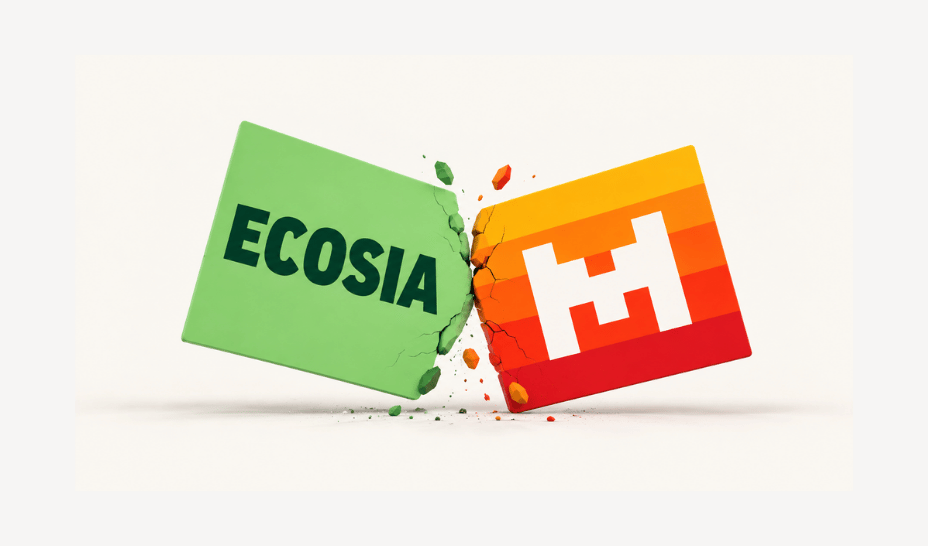
Ecosia’s Shift Towards Affordable and Energy-Efficient AI Models
Founder and CEO Christian Kroll of Ecosia clarified that the decision to drop French AI provider Mistral is not a move towards Chinese technology. Instead, it is a shift towards more affordable and energy-efficient open AI models. In a conversation with EU-Startups, Christian highlighted that Ecosia will likely be using Melious.ai in the future, a European company offering high-quality, affordable AI inference powered by green electricity.
In a recent exclusive interview, Christian shared, “We’ll probably be using Melious.ai in future. Unlike Mistral, this is a European company that offers high-quality, affordable AI inference powered by green electricity.”
Ecosia, the Berlin-based search engine, made headlines after reports that it was replacing Mistral with open models, including Chinese offerings such as Alibaba’s Qwen, Z.ai’s GLM, and Moonshot AI’s Kimi. However, Christian emphasized that the company’s focus is on open models rather than their country of origin. These models offer lower costs, greater flexibility, and reduced energy consumption, aligning with Ecosia’s environmental mission.
Addressing concerns about political censorship in Chinese AI models, Christian explained that Ecosia can switch to alternative models when dealing with sensitive subjects, such as questions about Taiwan. The company is also working to eliminate political biases from its AI-generated answers.
The models are accessed through German platform Melious, which operates on European infrastructure powered by low-carbon energy. This setup allows Ecosia to utilize internationally developed AI while keeping its infrastructure and data processing in Europe.
“Europe needs its own AI capabilities. At Melious, we run open-weight models on European infrastructure powered by clean energy, outside the reach of the US CLOUD Act. Whether a model was built in Europe, the US, or China, it’s simply a set of weights on our servers. It can’t send data back to its makers, and customer data is never retained or used for training. We’re proud to work with Ecosia to show that sovereign AI can deliver strong performance at a fair price,” CEO and co-founder Simon Jakobs told EU-Startups.
Christian also expressed concerns about Mistral’s European sovereignty, noting that its reliance on foreign investors, particularly from the United States, undermines its independence.
This decision follows a period of significant expansion for Paris-based Mistral AI. In September 2026, the company secured €3 billion in Series D funding, led by Samsung Electronics, at a valuation exceeding €21 billion. The investment followed €722 million in debt financing announced in March to develop its first large-scale data center near Paris, as well as a €1.7 billion Series C led by Dutch semiconductor equipment manufacturer ASML in September 2025.
Its latest funding round included US investors such as Andreessen Horowitz, Nvidia, and Salesforce Ventures, alongside European backers including ASML and Bpifrance. Mistral also participated in a €2.9 million investment in Italian infrastructure startup Clastix.
These investments come amid wider investment in European AI infrastructure, with financing announcements totaling approximately €6.2 billion in 2026, including Mistral’s own funding.
Christian contrasted this with Ecosia’s funding history, highlighting that the company grew largely without external financing, receiving early backing from German entrepreneur Tim Schumacher. In 2018, Ecosia adopted a steward-ownership structure that prevents the company from being sold or distributing profits to shareholders.
The switch for Ecosia reflects a broader vision for European technology, emphasizing that European companies can build competitive, independent services using open models running on European infrastructure rather than depending on individual AI developers.
However, for Mistral, this development implies a loss of trust in what is considered one of Europe’s most promising AI companies.











Blame Game: A Crimson Desert Exec Blames Critics for Low Review Scores

Unveiling Ecosia’s Shift: Embracing Open Models over China’s Influence

Unveiling the Anticipated Innovations at Apple’s ‘Welcome Home’ Event

Enhanced Features: macOS 27’s Three Key Upgrades to My Favorite Feature

The Most Bizarre Smartphone we’ve seen all year.

First Look: The Stunning New BMW M3 Design Unveiled in Exclusive Rendering

Marvel Tōkon: The Ultimate Showdown – Unveiling the Powers of Year One’s Characters

Dawn Myers’ Guide to Effortless Curly Hair Care and Styling

Revolutionizing Home Entertainment: The Next-Generation Apple TV with Enhanced Voice Control and Audio Remote

EU Takes Action Against Instagram and Facebook for Violating Illegal Content Rules

Warning: Facebook Creators Face Monetization Loss for Stealing and Reposting Videos

Facebook’s New Look: A Blend of Instagram’s Style

Facebook Compliance: ICE-tracking Page Removed After US Government Intervention

Facebook and Instagram to Reduce Personalized Ads for European Users

InstaDub: Meta’s AI Translation Tool for Instagram Videos

Reclaim Your Account: Facebook and Instagram Launch New Hub for Account Recovery

Meta discontinues Messenger apps for Windows and macOS

Breaking Updates: Meta Connect 2025 Unveils Latest Developments
The Most Bizarre Smartphone we’ve seen all year.

Best Tech under $2000 – December 2017 / January 2018!

This could be your next Smartphone.

Top 10 most INSANE Limited Edition Smartphones!

How Smart is the AI-Powered Huawei Mate 10 – with EMUI 8.0?

I used a 2012 Smartphone in 2018 – Here’s what happened.

How to send ANY file Anywhere!

NEW Oneplus 5T Sandstone White Unboxing – The Ultimate Oneplus 5T?

HUAWEI P20 – THE SMARTPHONE REVOLUTION IS HERE?
-
 Facebook12 months ago
EU Takes Action Against Instagram and Facebook for Violating Illegal Content Rules
-
 Facebook12 months ago
Warning: Facebook Creators Face Monetization Loss for Stealing and Reposting Videos
-
 Facebook10 months ago
Facebook’s New Look: A Blend of Instagram’s Style
-
 Facebook12 months ago
Facebook Compliance: ICE-tracking Page Removed After US Government Intervention
-
 Facebook10 months ago
Facebook and Instagram to Reduce Personalized Ads for European Users
-
 Facebook12 months ago
InstaDub: Meta’s AI Translation Tool for Instagram Videos
-
 Facebook10 months ago
Reclaim Your Account: Facebook and Instagram Launch New Hub for Account Recovery
-
 Apple12 months ago
Meta discontinues Messenger apps for Windows and macOS
