
Cars
Conquering the Rubicon: A Review of the 2027 Jeep Wrangler 392

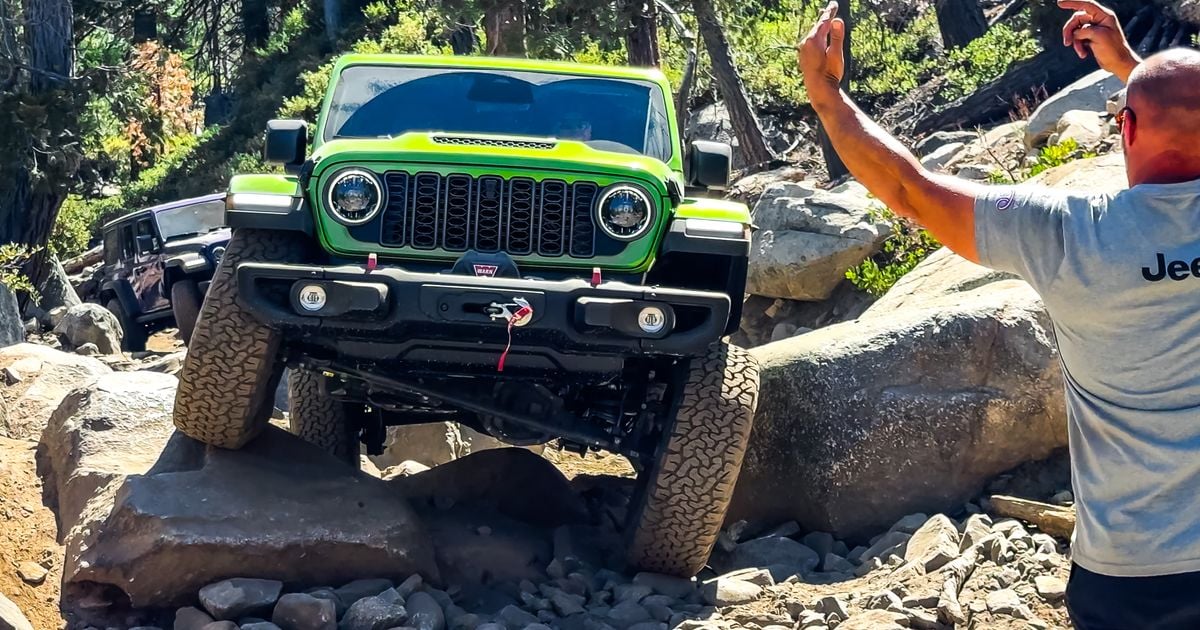
The sun is just starting to rise at 6:30 in the morning near Auburn, California, and a row of Jeeps is lined up in a parking lot, their engines warming up. Among them is my Wrangler Moab 392, equipped with a powerful 6.4-liter Hemi V8 engine. Over the next three days, I’ll be navigating some of the toughest terrain I’ve ever encountered.
I have always had a passion for off-road driving, but the Rubicon Trail was uncharted territory for me. For avid four-wheel drive enthusiasts, especially those partial to Jeeps, the Rubicon Trail holds a legendary status. I was eager to experience it firsthand, to understand its allure, to see what it takes to conquer it, and to assess the condition of the vehicle at the end of the journey.
The Rubicon Trail spans 35 kilometers through the Sierra Nevada mountains, west of Lake Tahoe. Technically, it is considered a public road, with the western end beginning at the sealed Wentworth Springs Road in Georgetown and the eastern end leading to McKinney Rubicon Springs Road near Lake Tahoe. In between lies approximately 19 kilometers of rough, unmaintained trail that can hardly be classified as a road.
The trail’s history dates back to the 1890s when it served as a stagecoach route connecting resort hotels at Wentworth Springs and Rubicon Springs, where visitors would come to soak in the mineral springs. The first car successfully traversed the trail in 1908, driven by a woman from Lake Tahoe. Following the decline of the springs’ popularity and the closure of the resorts in the late 1920s, the trail fell into disrepair.
In 1953, a group of locals from Georgetown, led by Mark A. Smith, organized a convoy of Jeeps to showcase the trail and attract tourists to their town. This initiative evolved into the annual Jeepers Jamboree and eventually led to the formation of Jeep Jamboree USA in 1982, the organization that guided us through the trail. Over the years, Jeep’s engineers have extensively used the trail for testing, and in 2003, Jeep honored the trail by naming its most capable Wrangler after it.
The Wrangler Moab 392, powered by a naturally aspirated 6.4-liter Hemi V8 engine producing 350kW of power and 637Nm of torque, paired with an eight-speed automatic transmission, is the V8 Wrangler model for 2026. Priced at US$79,995 in the US, it competes in the same price bracket as the Ford Bronco Raptor. Additionally, there is a Willys 392 variant of the Wrangler available in the US, starting at US$69,995.
The Wrangler Moab 392 comes with a 1.5-inch suspension lift, 4.56:1 axle ratios, beadlock-capable wheels, rock sliders, and a dual-mode exhaust as standard. Our vehicle was equipped with 37-inch tires and a few Mopar accessories but remained mostly stock. Beneath the surface, it features Fox dampers, and the front sway bar can be electronically disconnected to enhance wheel articulation.
Unfortunately, Australian buyers do not have access to the Wrangler Moab 392, as the Wrangler is only available in hardcore Rubicon trim in Australia, powered by a 2.0-liter four-cylinder turbo-petrol engine producing 200kW and 400Nm of torque. Priced from $81,990 before on-road costs, the Australian-spec Wrangler is limited to the Rubicon variant in both two-door and four-door configurations.
As we embarked on our journey along the Rubicon Trail, the Wrangler Moab 392 proved its mettle on the challenging terrain. With its advanced off-road capabilities, including features like the sway bar disconnect and Off-Road Plus mode, which adjusts throttle sensitivity and brake pedal feel, the Wrangler provided precise control at crawling speeds, ensuring it could navigate the rugged landscape with ease.
Utilizing Selec-Speed control, a speed-controlled hill descent system, allowed us to navigate steep descents with confidence. The V8 engine’s power delivery, coupled with its distinctive exhaust note and torquey performance in low-range, made it well-suited for the demanding terrain. Despite its thirst for fuel during the drive to the trail, the V8 engine proved surprisingly efficient while crawling through the challenging sections, consuming less than half a tank of fuel by the end of the trail.
Throughout the first day, we encountered various obstacles, starting with the Gatekeeper, a series of steep drops and large rocks that required substantial ground clearance and proper underbody protection. As we ventured deeper into the trail, traversing the Granite Bowl and encountering unpredictable terrain, the Wrangler’s off-road capabilities truly shone. The combination of advanced technology, such as the sway bar disconnect and Off-Road Plus mode, provided enhanced control and stability, allowing us to tackle the challenging obstacles with precision.
By midday, we had covered a mere 2.5 kilometers after three to four hours of driving. The slow pace and demanding nature of the trail proved to be physically taxing and mentally challenging.
The Rubicon Trail is not for the faint of heart or the inexperienced off-roader. With its treacherous terrain and unforgiving obstacles, precise line selection and controlled vehicle speed are paramount to avoiding serious damage or getting stuck. The expertise of the Jeep Jamboree guides was instrumental in guiding us through the difficult sections, providing valuable insights on wheel placement and navigating the obstacles safely. Their extensive knowledge of the trail and experience with the challenging terrain were invaluable, instilling trust and confidence in our ability to conquer the trail.
As some members of our group ventured to tackle more challenging optional obstacles like the Soup Bowl, I opted to watch and observe. The rigorous nature of the trail became increasingly evident as we encountered steep descents and challenging rock formations, testing the Wrangler’s capabilities to the limit.
Camping along the trail provided a unique experience, with the Jeep Jamboree crew handling all logistics, including tents, sleeping gear, and meals. Our first night on private property by a scenic lake offered a serene setting for a barbecue dinner under the stars. The following night at Rubicon Springs, a privately owned campsite, provided a glimpse into the area’s rich history and natural beauty, albeit with a visit from a curious bear in the late hours of the night.
Transitioning to a Wrangler equipped with a 2.0-liter turbo four-cylinder engine on the third day revealed a noticeable difference in performance and handling. The softer suspension and less responsive throttle of the four-cylinder model contrasted with the V8’s robust power delivery and precise control, highlighting the advantages of the larger engine on challenging terrain.
The ascent up Cadillac Hill, one of the trail’s most famous sections, presented a formidable challenge, with narrow pathways, steep drop-offs, and tight maneuvers requiring careful navigation. The Wrangler’s off-road prowess was put to the test, showcasing its exceptional capability to conquer the demanding terrain. Engaging the lockers on certain sections proved vital, providing enhanced traction and stability on treacherous rock steps.
Despite the grueling nature of the trail, the Wrangler held up admirably, with only minor scuffs on the front bumper, wheels, and underbody. The vehicle’s rock sliders and undercarriage absorbed the brunt of the impacts, protecting the essential components from damage. Instances where the car needed assistance to navigate challenging sections underscored the importance of having reliable recovery points and experienced guides to ensure a safe and successful journey.
The Rubicon Trail is not merely a test of a vehicle’s capabilities but also a testament to the driver’s skill and resilience. The trail’s demanding terrain and unpredictable obstacles require precision, patience, and a deep understanding of the vehicle’s capabilities. Completing the trail in a near-stock Wrangler showcased the vehicle’s exceptional off-road prowess and durability, proving that with the right equipment and expertise, even challenging trails like the Rubicon can be conquered.
The Trail Rated badge, often associated with Jeeps that have conquered the Rubicon Trail, symbolizes a vehicle’s capability across five key criteria: traction, water fording, maneuverability, articulation, and ground clearance. While completing the Rubicon Trail is not a strict requirement for earning the badge, the Wrangler’s exceptional performance on the trail exemplifies its off-road proficiency and suitability for challenging terrain.
In conclusion, tackling the Rubicon Trail was a challenging yet rewarding experience that tested both the vehicle and the driver. The trail’s unforgiving terrain and demanding obstacles showcased the Wrangler’s exceptional off-road capabilities and durability. With the guidance of experienced Jeep Jamboree guides and the support of a capable vehicle like the Wrangler Moab 392, conquering the Rubicon Trail became a memorable adventure that highlighted the importance of preparation, skill, and teamwork in navigating challenging off-road terrain.
Embarking on this journey has not only provided valuable insights into the capabilities of the Wrangler but also offered a once-in-a-lifetime experience that I would eagerly repeat. For Jeep enthusiasts and off-road aficionados, the Rubicon Trail is a must-visit destination that promises adventure, excitement, and a true test of both man and machine.













Conquering the Rubicon: A Review of the 2027 Jeep Wrangler 392

Trump administration accuses Microsoft of worker visa program abuse and restricts access

Ransomware Affiliate Betrayal: The WhatsApp RAT and Other Cyber Threats Unveiled

The Escapists: Breakout in 3D – A New Dimension of Freedom in 2027

Revolutionizing Energy Solutions for Data Centers and Military Vehicles: The Petra Power Initiative

Ultimate Travel Companion: Must-Have iPhone Apps for Stress-Free Journeys

Customized Koenigsegg CC850 Arrives in Denmark with Luxurious Gold Wheels

Revitalizing Windows: Microsoft’s Efforts to Breathe New Life into the Operating System

Unveiling the Dark Secrets of MonsterCloud’s Alleged Billing Scam: $19M in Ransoms Paid for Data Decryption

EU Takes Action Against Instagram and Facebook for Violating Illegal Content Rules

Warning: Facebook Creators Face Monetization Loss for Stealing and Reposting Videos

Facebook’s New Look: A Blend of Instagram’s Style

Facebook Compliance: ICE-tracking Page Removed After US Government Intervention

Facebook and Instagram to Reduce Personalized Ads for European Users

InstaDub: Meta’s AI Translation Tool for Instagram Videos

Reclaim Your Account: Facebook and Instagram Launch New Hub for Account Recovery

Meta discontinues Messenger apps for Windows and macOS

Breaking Updates: Meta Connect 2025 Unveils Latest Developments

Top 10 most INSANE Limited Edition Smartphones!

How Smart is the AI-Powered Huawei Mate 10 – with EMUI 8.0?

I used a 2012 Smartphone in 2018 – Here’s what happened.

How to send ANY file Anywhere!

NEW Oneplus 5T Sandstone White Unboxing – The Ultimate Oneplus 5T?

HUAWEI P20 – THE SMARTPHONE REVOLUTION IS HERE?

How OnePlus succeeded when they should have failed.

Samsung sent us THIS! #AD

Ulefone Power 3 – Quad Camera Smartphone that last 2 weeks!
-
 Facebook12 months ago
EU Takes Action Against Instagram and Facebook for Violating Illegal Content Rules
-
 Facebook12 months ago
Warning: Facebook Creators Face Monetization Loss for Stealing and Reposting Videos
-
 Facebook10 months ago
Facebook’s New Look: A Blend of Instagram’s Style
-
 Facebook12 months ago
Facebook Compliance: ICE-tracking Page Removed After US Government Intervention
-
 Facebook10 months ago
Facebook and Instagram to Reduce Personalized Ads for European Users
-
 Facebook12 months ago
InstaDub: Meta’s AI Translation Tool for Instagram Videos
-
 Facebook10 months ago
Reclaim Your Account: Facebook and Instagram Launch New Hub for Account Recovery
-
 Apple12 months ago
Meta discontinues Messenger apps for Windows and macOS
