
Security
Unveiling the Untapped Potential of Google API Keys: The Gemini AI Data Breach


Google API Keys Expose Gemini AI Data: A Security Concern
Google API keys designed for services like Maps have inadvertently exposed private data to potential attackers through the Gemini AI assistant. This revelation comes as a result of nearly 3,000 vulnerable keys discovered by researchers across various sectors, including Google itself.
The issue arose with the introduction of Google’s Gemini assistant, which caused developers to enable the LLM API in their projects. Prior to this, Google Cloud API keys were not considered sensitive and could be freely exposed online without consequences.
API keys play a crucial role in extending functionality within projects, such as embedding Maps, YouTube videos, usage tracking, and Firebase services. However, the integration of Gemini transformed Google Cloud API keys into authentication credentials for the AI assistant.
TruffleSecurity researchers identified the vulnerability, warning that malicious actors could exploit exposed API keys to access private data accessible through the Gemini API service. This unauthorized access could lead to significant financial losses, with attackers potentially incurring substantial charges through malicious API calls.
According to TruffleSecurity, these exposed API keys have remained unnoticed in public JavaScript code for years, increasing their risk profile significantly without adequate mitigation measures.
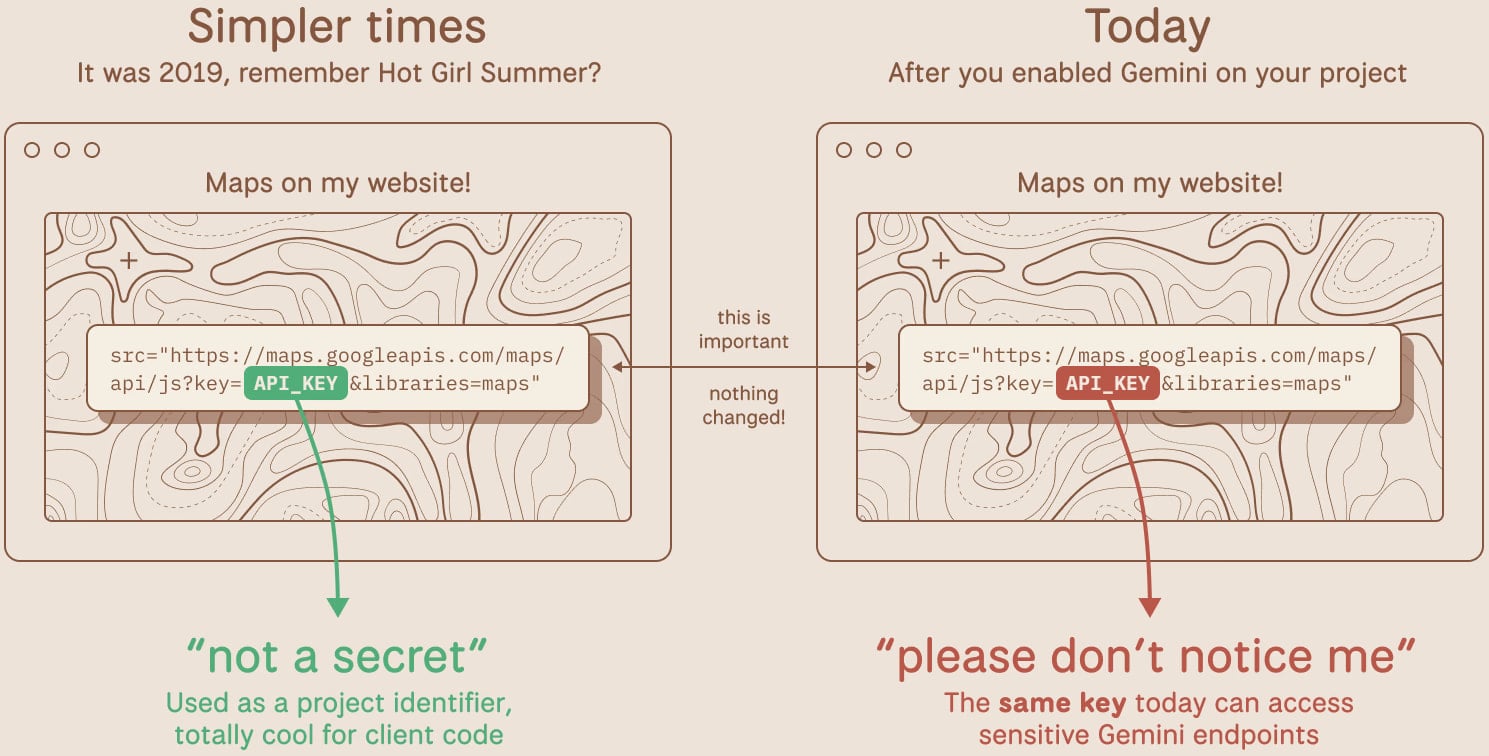
TruffleSecurity’s analysis of the November 2025 Common Crawl dataset revealed over 2,800 live Google API keys publicly exposed in code snippets. These keys were utilized by major financial institutions, security firms, and recruiting agencies. Upon identifying the issue, TruffleSecurity promptly reported it to Google, providing samples from the affected infrastructure.
One notable case involved an API key acting as an identifier since February 2023, embedded within the page source of a public-facing Google product website.
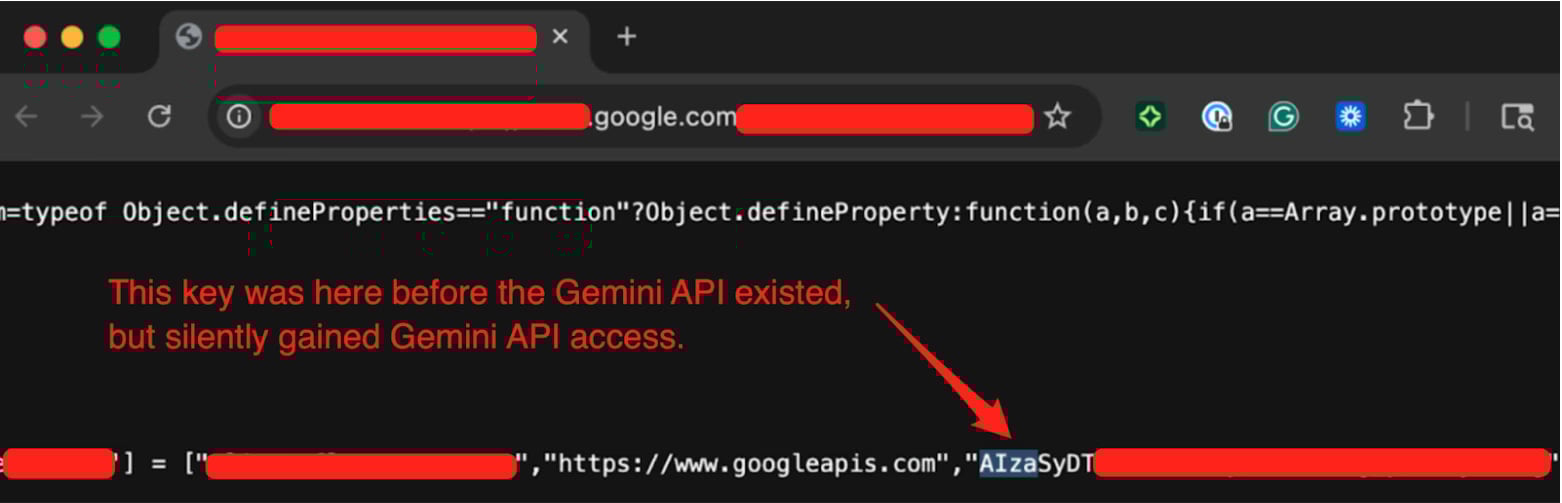
Source: TruffleSecurity
TruffleSecurity validated the vulnerability by accessing the Gemini API’s /models endpoint through the exposed key. Despite reporting the issue to Google on November 21, 2025, Google only acknowledged the flaw as “single-service privilege escalation” on January 13, 2026.
In response to the findings, Google assured BleepingComputer of proactive measures to detect and block leaked API keys attempting to access the Gemini API. This includes defaulting new AI Studio keys to Gemini-only scope, blocking leaked keys, and issuing notifications for potential leaks.
Developers are advised to review their projects for Gemini enablement, audit all API keys for exposure, and promptly rotate any compromised keys. Additionally, leveraging tools like TruffleHog can aid in detecting live, exposed keys within code repositories.

Modern IT infrastructure outpaces manual workflows, causing hidden delays and reliability issues. Discover how automated responses and intelligent workflows can optimize your operations in the new Tines guide.













Australian Court Rules Against Apple’s App Store Monopoly

MY NEW CAR?! (Q&A)

Tesla’s Cybertruck Launch Down Under: A Canceled Debut and Deposit Refunds

Microsoft’s Breakthrough in Medical Superintelligence: The Diagnostic Orchestrator Revolution

Virtue and a Sledgehammer: The Cathartic Prelude

EdTech Intuitivo secures €1.35 million funding to streamline teachers’ tasks and enter Brazilian market

Score a Deal on Apple’s Magic Keyboards for iPad – but There’s a Catch

Unfolding Innovation: Coolpad’s $150 Android Phone with iPhone Duo-like Widescreen Display

iPhone Duo Production Surges by 44% to Meet High Demand

EU Takes Action Against Instagram and Facebook for Violating Illegal Content Rules

Warning: Facebook Creators Face Monetization Loss for Stealing and Reposting Videos

Facebook’s New Look: A Blend of Instagram’s Style

Facebook Compliance: ICE-tracking Page Removed After US Government Intervention

Facebook and Instagram to Reduce Personalized Ads for European Users

InstaDub: Meta’s AI Translation Tool for Instagram Videos

Reclaim Your Account: Facebook and Instagram Launch New Hub for Account Recovery

Meta discontinues Messenger apps for Windows and macOS

Breaking Updates: Meta Connect 2025 Unveils Latest Developments
MY NEW CAR?! (Q&A)

Should you buy your Smartphones Refurbished!?

6 Amazing SECRET Android Launchers (2017 / 2018)

6 Value for Money Tech Products you NEED to try!

iPhone X Helicopter 1200ft Drop Test!! + Mous Case Review

7 UNBELIEVABLE Smartphone Magic Tricks!

Oneplus 5T vs Oneplus 1 – 3 Years Later.

Top 20 BEST Smartphones of 2017!

5 Amazing Upcoming Smartphone Features – 2018 / 2019
-
 Facebook12 months ago
EU Takes Action Against Instagram and Facebook for Violating Illegal Content Rules
-
 Facebook1 year ago
Warning: Facebook Creators Face Monetization Loss for Stealing and Reposting Videos
-
 Facebook11 months ago
Facebook’s New Look: A Blend of Instagram’s Style
-
 Facebook1 year ago
Facebook Compliance: ICE-tracking Page Removed After US Government Intervention
-
 Facebook11 months ago
Facebook and Instagram to Reduce Personalized Ads for European Users
-
 Facebook1 year ago
InstaDub: Meta’s AI Translation Tool for Instagram Videos
-
 Facebook11 months ago
Reclaim Your Account: Facebook and Instagram Launch New Hub for Account Recovery
-
 Apple1 year ago
Meta discontinues Messenger apps for Windows and macOS
