
AI
AI Dominates Beijing Race: Sony’s Robot Stuns Players with Victory

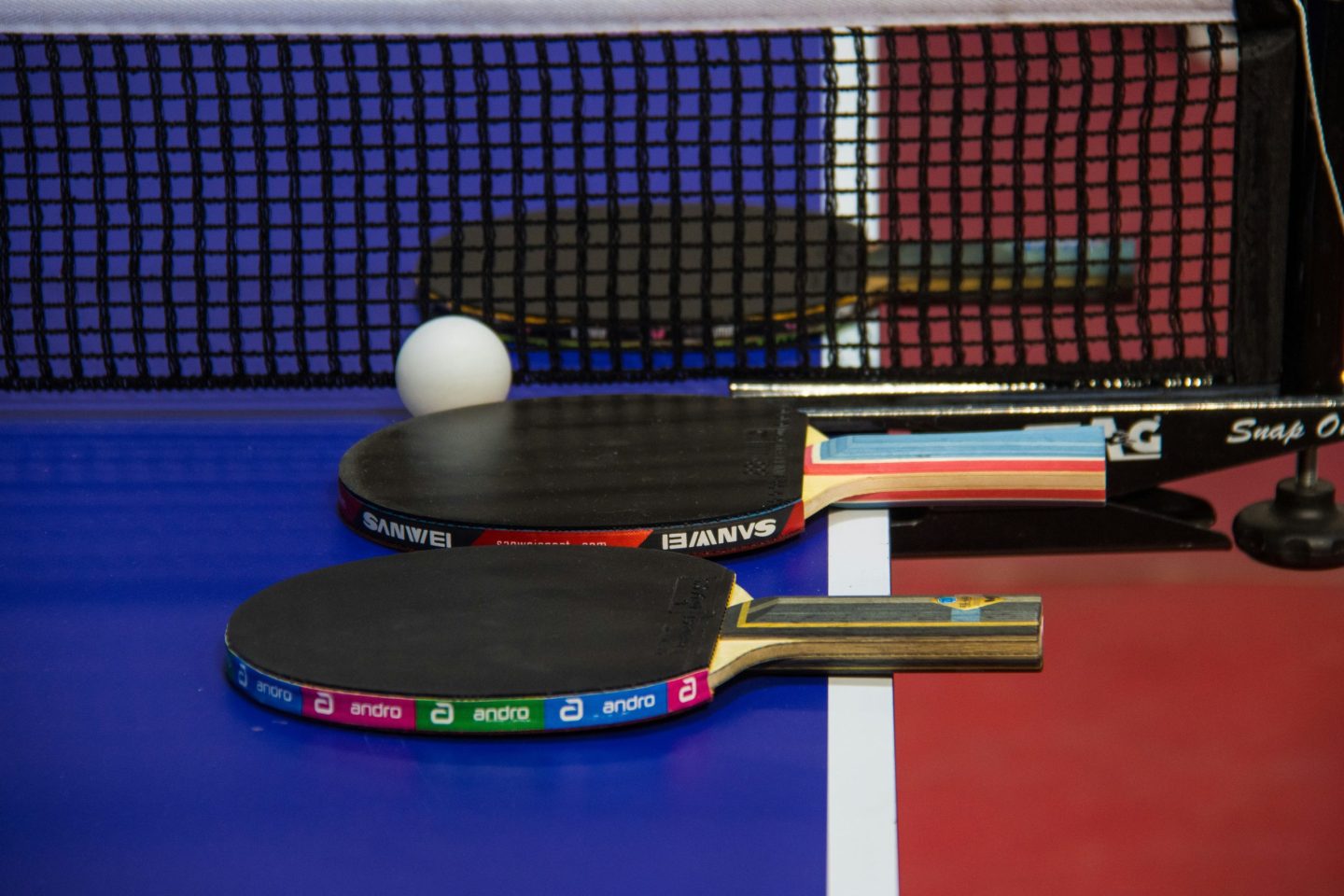
An Innovative Table Tennis Robot Defeats Human Players
An autonomous table tennis robot developed by Sony AI has recently made headlines by competing against and triumphing over high-level human players in officially sanctioned matches, as reported by Reuters. This groundbreaking system falls under the umbrella of “physical AI,” a category where artificial intelligence is leveraged to enhance the performance of real-world machines.
Named Ace, the robot was meticulously crafted to excel in the fast-paced and precision-demanding environment of competitive table tennis. By integrating high-speed perception systems with AI-driven control mechanisms, Ace is able to execute shots flawlessly under intense match conditions.
Participating in matches governed by the regulations of the International Table Tennis Federation and overseen by licensed umpires, Ace showcased its prowess by winning three out of five matches against elite players and losing only two to professional opponents in trials conducted in April 2025. Subsequent matches held in December 2025 and early 2026 resulted in victories against professional players, further solidifying Ace’s capabilities.
Unlike its predecessors from the 1980s, Ace stands out for its ability to outperform advanced human players. Peter Dürr, the project lead at Sony AI Zurich, highlighted the unique challenge posed by real-time sports like table tennis, which continue to push the boundaries of AI technology.
AI systems have excelled in digital realms such as chess and video games, where conditions are simulated. However, the development of Ace aimed to explore how robots can swiftly and accurately respond to dynamic real-world environments. The findings of this work were detailed in a study published in the esteemed journal Nature.
The technical intricacies of table tennis, including the speed and unpredictability of the ball’s movements, necessitate rapid sensing and precise coordination. Ace’s architecture comprises nine synchronized cameras and three vision systems that meticulously track the ball’s trajectory and spin. This allows the system to process visual data at an astonishing speed, capturing motion imperceptible to the human eye.
With eight joints controlling the racket – three for positioning, two for orientation, and three for shot force and speed – Ace meets the mechanical requirements for competitive play. What sets Ace apart is its training methodology; instead of learning from human demonstrations, Ace was trained in simulation, enabling the development of unique strategies that diverge from traditional human play patterns.
Professional players who faced off against Ace praised its ability to read ball spin and react swiftly. Mayuka Taira noted the robot’s unpredictability, lacking visible cues during play, while Rui Takenaka highlighted its proficiency in handling complex spins. However, the absence of emotional cues in Ace’s gameplay made it challenging for opponents to anticipate its responses.
Looking ahead, the project team is focused on enhancing Ace’s adaptability during matches. The success of Ace opens up possibilities for applying similar perception and control techniques in diverse fields like manufacturing and service robotics.
Humanoid Robots Excel in Long-Distance Race
The 2026 Beijing E-Town Humanoid Robot Half Marathon witnessed humanoid robots competing over a 21-kilometre course, surpassing human runners in a remarkable display of technological prowess. Lightning, a robot developed by Honor, completed the race in an impressive 50 minutes and 26 seconds, outpacing Olympic runner Jacob Kiplimo’s time in the Lisbon Half Marathon.
Despite encountering a minor obstacle during the race, Lightning persevered and emerged as the winner. Honor robots secured the second and third positions as well, showcasing a marked improvement from the previous year’s event. The competition aimed to test humanoid robots in large-scale, real-world scenarios.
Technologies developed for Lightning, such as structural reliability and liquid-cooling systems, hold promise for industrial applications beyond the realm of sports. The event also featured another Honor robot completing the course in 48 minutes under remote control, highlighting advancements in autonomous navigation.
For more insights on AI and big data, consider attending the AI & Big Data Expo hosted in Amsterdam, California, and London. This event, part of the TechEx series, provides a comprehensive platform to delve into cutting-edge technology trends.
Powered by TechForge Media, AI News delivers the latest updates on AI advancements and industry innovations. Explore upcoming enterprise technology events and webinars to stay informed about the ever-evolving tech landscape.











Oneplus 5T vs Samsung Galaxy Note 8!

Samsung Galaxy Note 9 – These features will make it INSANE!

Oneplus 5T vs Pixel 2 XL vs S8 vs iPhone 8 Battery life Drain Test!

Oneplus 5T vs Pixel 2 XL vs S8 vs iPhone 8 Battery Charging Speed Test!

The Affordable Next-Gen Xbox: Debunking the $1,800 Price Tag

Revelation: A New Dawn in the Helldivers Universe

Battery Life Halved by Garmin’s New Voice Controls

Revolutionizing Energy: The Future of Next-Gen Battery Life

Warhound Secures $200M Investment to Develop Advanced Military Canines Equipped with Anduril Technology

EU Takes Action Against Instagram and Facebook for Violating Illegal Content Rules

Warning: Facebook Creators Face Monetization Loss for Stealing and Reposting Videos

Facebook’s New Look: A Blend of Instagram’s Style

Facebook Compliance: ICE-tracking Page Removed After US Government Intervention

Facebook and Instagram to Reduce Personalized Ads for European Users

InstaDub: Meta’s AI Translation Tool for Instagram Videos

Reclaim Your Account: Facebook and Instagram Launch New Hub for Account Recovery

Meta discontinues Messenger apps for Windows and macOS

Breaking Updates: Meta Connect 2025 Unveils Latest Developments
Oneplus 5T vs Samsung Galaxy Note 8!
Samsung Galaxy Note 9 – These features will make it INSANE!
Oneplus 5T vs Pixel 2 XL vs S8 vs iPhone 8 Battery life Drain Test!
Oneplus 5T vs Pixel 2 XL vs S8 vs iPhone 8 Battery Charging Speed Test!

MY NEW CAR?! (Q&A)

Should you buy your Smartphones Refurbished!?

6 Amazing SECRET Android Launchers (2017 / 2018)

6 Value for Money Tech Products you NEED to try!

iPhone X Helicopter 1200ft Drop Test!! + Mous Case Review
-
 Facebook1 year ago
EU Takes Action Against Instagram and Facebook for Violating Illegal Content Rules
-
 Facebook1 year ago
Warning: Facebook Creators Face Monetization Loss for Stealing and Reposting Videos
-
 Facebook11 months ago
Facebook’s New Look: A Blend of Instagram’s Style
-
 Facebook1 year ago
Facebook Compliance: ICE-tracking Page Removed After US Government Intervention
-
 Facebook11 months ago
Facebook and Instagram to Reduce Personalized Ads for European Users
-
 Facebook1 year ago
InstaDub: Meta’s AI Translation Tool for Instagram Videos
-
 Facebook11 months ago
Reclaim Your Account: Facebook and Instagram Launch New Hub for Account Recovery
-
 Apple1 year ago
Meta discontinues Messenger apps for Windows and macOS
