
Microsoft
Exploring the Dynamics of the Microsoft and OpenAI Partnership

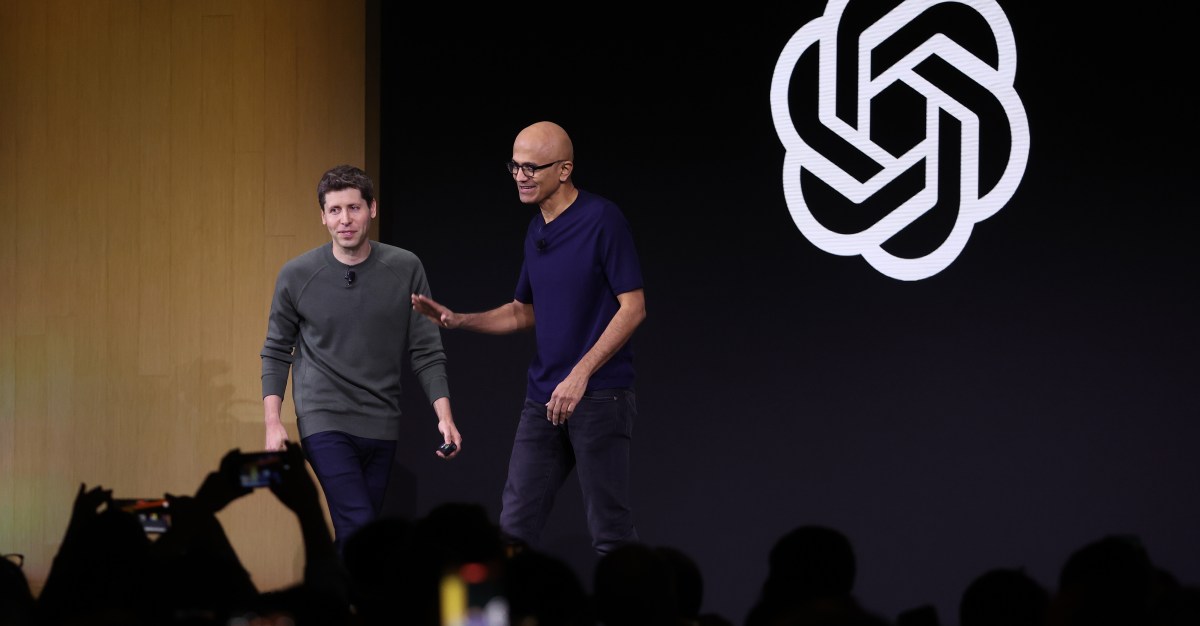
Microsoft and OpenAI recently went through a significant change in their relationship, with Microsoft announcing updates to their long-standing partnership on Monday. One of the key changes in this update is that OpenAI will now be able to offer its products and services across all cloud providers, including AWS, Microsoft’s biggest cloud rival. This move comes after Amazon struck a $50 billion deal with OpenAI, which initially aimed to make AWS a third-party provider of OpenAI Frontier.
Despite Microsoft’s initial displeasure with OpenAI partnering with Amazon, the amended agreement between Microsoft and OpenAI seems to benefit both parties. Microsoft will continue to receive 20 percent of the revenue generated by OpenAI’s ChatGPT and API platform, even from products and services offered on rival cloud platforms like AWS. This revenue sharing arrangement is one-way, meaning Microsoft no longer has to pay a revenue share back to OpenAI for Azure OpenAI services.
While Microsoft remains OpenAI’s primary cloud partner and will receive new products first on Azure, the lack of exclusivity now allows OpenAI to offer its new models on rival cloud platforms shortly after their release. This change levels the playing field for Microsoft’s Azure OpenAI service and Foundry efforts, reducing its advantage over competitors.
The removal of the artificial general intelligence (AGI) clause in the partnership agreement has also played a significant role in the restructuring of the Microsoft-OpenAI relationship. This clause had been a point of contention between the two parties for over a year, with tensions escalating during discussions about OpenAI’s potential acquisition of AI coding tool Windsurf.
Microsoft’s strategy moving forward involves developing its own AI models to reduce reliance on OpenAI. The company has seen success with models like MAI-Transcribe-1, a multilingual speech-to-text model. Additionally, Microsoft is exploring options from Anthropic that offer more powerful models for certain tasks.
Overall, the future of Microsoft’s AI initiatives seems to involve a mix of internally developed models and collaborations with companies like OpenAI and Anthropic. While the partnership between Microsoft and OpenAI remains intact, the focus has shifted towards financial arrangements rather than close collaboration on AI development. This new direction aims to streamline the relationship between the two companies, making it less complicated than before.











Exploring the Exciting Updates of iOS 27: A Look Beyond Artificial Intelligence

A $50,000 Smartphone for $400?

Ram Trucks Australia Braces for Price Increases Due to Emissions Regulations

Revving Up: Tractor Battle Adventure RPG Expands with Mod Support on Steam Workshop

Troubleshooting Guide: Unable to Access 192.168.0.1

Choosing the Right AI: Ensuring Trust in Multi-Model Translation Systems

Friday Night Baseball Madness: iPhone 18 Pro Edition

Partnership Potential: JAC & Huawei in Talks to Produce Electric Maserati Vehicles

Grand Theft Auto VI: The Soundtrack – Limited Edition Physical Release

EU Takes Action Against Instagram and Facebook for Violating Illegal Content Rules

Warning: Facebook Creators Face Monetization Loss for Stealing and Reposting Videos

Facebook’s New Look: A Blend of Instagram’s Style

Facebook Compliance: ICE-tracking Page Removed After US Government Intervention

Facebook and Instagram to Reduce Personalized Ads for European Users

InstaDub: Meta’s AI Translation Tool for Instagram Videos

Reclaim Your Account: Facebook and Instagram Launch New Hub for Account Recovery

Meta discontinues Messenger apps for Windows and macOS

Breaking Updates: Meta Connect 2025 Unveils Latest Developments
A $50,000 Smartphone for $400?

Huawei P20 Pro Unboxing!

Huawei P20 Pro vs Samsung S9 Plus!

Huawei P20 vs P20 Pro vs iPhone 8 Plus vs S9 Battery Drain Test!

10 Android Mods that Change Everything

I used the first Android Phone in the World.

DOOGEE MIX 4 UNBOXING (PROTOTYPE)!

MYSTERY UNBOXING FROM SAMSUNG!

The Truth about Huawei P20 Pro – REAL Review
-
 Facebook11 months ago
EU Takes Action Against Instagram and Facebook for Violating Illegal Content Rules
-
 Facebook11 months ago
Warning: Facebook Creators Face Monetization Loss for Stealing and Reposting Videos
-
 Facebook9 months ago
Facebook’s New Look: A Blend of Instagram’s Style
-
 Facebook11 months ago
Facebook Compliance: ICE-tracking Page Removed After US Government Intervention
-
 Facebook9 months ago
Facebook and Instagram to Reduce Personalized Ads for European Users
-
 Facebook11 months ago
InstaDub: Meta’s AI Translation Tool for Instagram Videos
-
 Facebook10 months ago
Reclaim Your Account: Facebook and Instagram Launch New Hub for Account Recovery
-
 Apple11 months ago
Meta discontinues Messenger apps for Windows and macOS
