
Microsoft
Seattle Tech Leaders Unite for Unified Regional Strategy

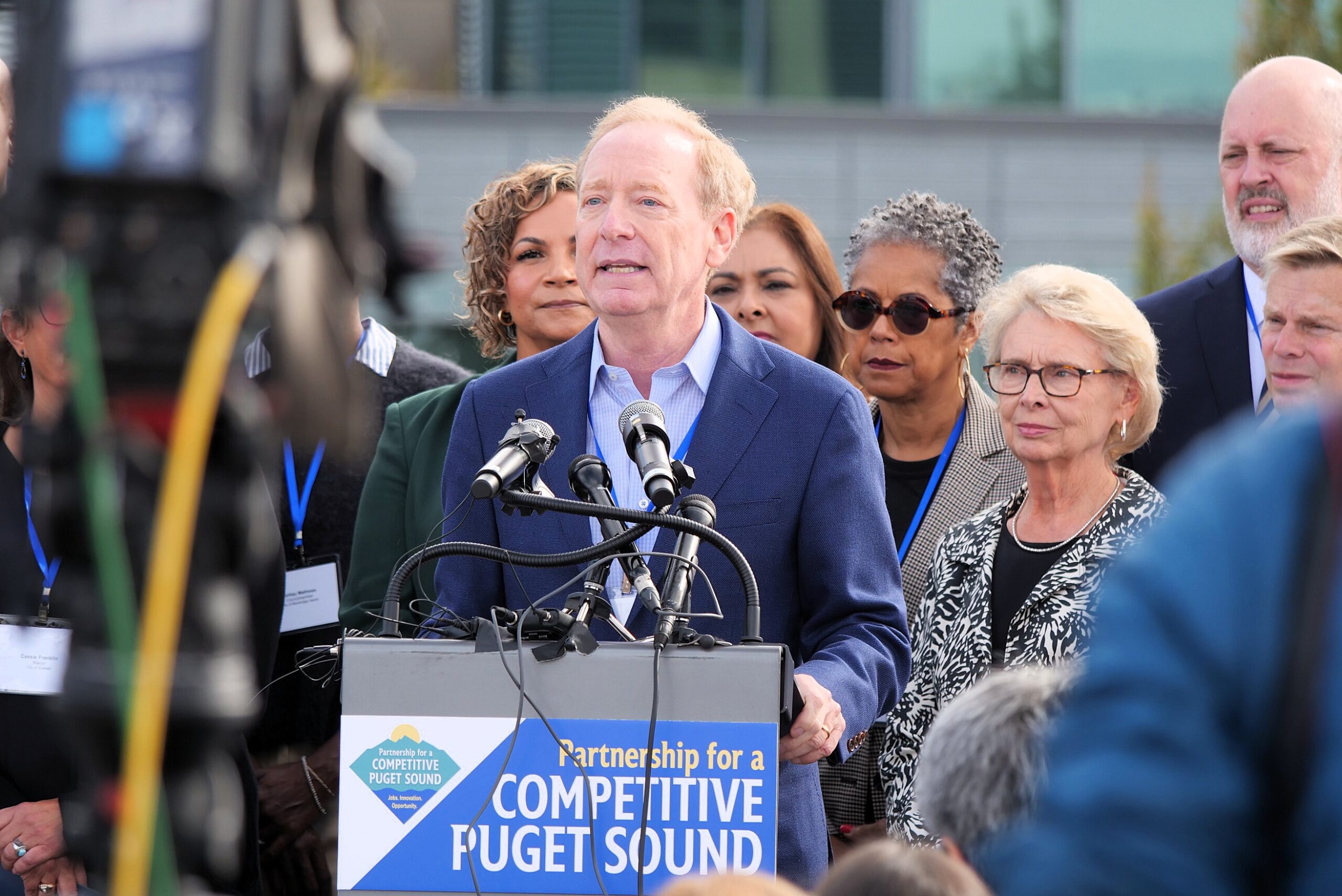
Brad Smith Urges Action to Revive Puget Sound Economy
Reflecting on the economic decline of Detroit, Cleveland, and Pittsburgh a century ago, Microsoft Vice Chair and President Brad Smith issued a warning about the current state of the Puget Sound economy. Speaking at the launch of the Partnership for a Competitive Puget Sound, Smith highlighted the need for urgent action to reverse the region’s economic slide.
The initiative, led by Challenge Seattle, aims to address the region’s job losses and declining business competitiveness. The report released by the group revealed a significant drop in employment in 2025, marking the first such decline in two decades. Additionally, Washington’s ranking in CNBC’s list of states by cost of doing business has fallen from 32nd to 47th since 2017.
Focus on Technology: The report emphasized the importance of a coordinated regional strategy for the technology sector, which accounts for a substantial portion of regional jobs and payroll. Unlike the aerospace industry, which has a clear agenda for future growth, the tech sector lacks a cohesive strategy, putting the region at risk of losing jobs and investment to other tech hubs.

To address this gap, Challenge Seattle plans to develop a tech strategy in collaboration with the Puget Sound Regional Council. The strategy will focus on retaining tech giants in the region and supporting the growth of startups. Key recommendations include providing space for AI startups, enhancing commercial infrastructure, and nurturing the region’s fusion cluster.
Challenges and Solutions: Many recommendations in the report center on improving government operations and creating a more business-friendly environment. Former Washington Gov. Chris Gregoire emphasized the need for proactive measures to prevent job losses and maintain the region’s economic strength.
Smith raised concerns about Seattle’s JumpStart payroll expense tax, labeling it as a deterrent to tech jobs. He stressed the importance of taxing items like cigarettes rather than jobs and warned about the adverse effects of making employment more costly, especially in the era of AI-driven competition.
The discussion also touched on the broader implications of tax policies on job growth and competitiveness. Smith urged a reevaluation of the payroll tax, citing its potential impact on job creation in the region.
Legislative Perspective: Senate Majority Leader Jamie Pedersen highlighted recent tax policy changes in Washington, signaling a shift towards aligning with national standards. He mentioned adjustments to the estate tax and the introduction of a millionaires tax to address income disparities.
Seattle Mayor Katie Wilson emphasized the need for a unified approach to economic challenges, calling for collaboration among various stakeholders to drive growth and innovation. She underscored the importance of storytelling and promoting the region’s strengths to attract investment and talent.











Speeding Through 749 Kilometers at 90 Kilometers per Hour

Seattle Tech Leaders Unite for Unified Regional Strategy

UNSEEN’s Resilient Team: KEMURI’s XBOX Skipping Saga

Unveiling the Threat: How Android Malware Invades Privacy by Taking Covert Photos

Disrupting the Status Quo: Cornelis Secures $205M to Challenge Nvidia’s Reign in AI Infrastructure

Fortify Your Home: Apple Home’s Advanced Security Camera Subscription for $60/Month

Exploring the Ethics of Big Tech’s AI Slowdown: Safety Pact or Cartel?

Troubleshooting iOS 27 Update Problems: Resolving Bugs and Battery Drain

Behind the Scenes: Inside the Departure of General Motors Australia’s Former Leader

EU Takes Action Against Instagram and Facebook for Violating Illegal Content Rules

Warning: Facebook Creators Face Monetization Loss for Stealing and Reposting Videos

Facebook Compliance: ICE-tracking Page Removed After US Government Intervention

Facebook’s New Look: A Blend of Instagram’s Style

Facebook and Instagram to Reduce Personalized Ads for European Users

InstaDub: Meta’s AI Translation Tool for Instagram Videos

Reclaim Your Account: Facebook and Instagram Launch New Hub for Account Recovery

Meta discontinues Messenger apps for Windows and macOS

Breaking Updates: Meta Connect 2025 Unveils Latest Developments

How to Love your Android Phone again.

The LG G7 has a Big Problem.

The most Beautiful Android Games you’ve never played.

Charge your Smartphone in 5 Minutes – How Batteries are about to Change!

10 CHEAP Smartphone Gadgets that Change Everything.

Huawei Mobile Cloud – The Huawei P20 Feature you didn’t know about!

PUBG MOBILE on Android – Disastrous or Revolutionary?

Why you should buy the Galaxy S8 right now.

Customize your Android Smartphone!
-
 Facebook11 months ago
EU Takes Action Against Instagram and Facebook for Violating Illegal Content Rules
-
 Facebook11 months ago
Warning: Facebook Creators Face Monetization Loss for Stealing and Reposting Videos
-
 Facebook11 months ago
Facebook Compliance: ICE-tracking Page Removed After US Government Intervention
-
 Facebook9 months ago
Facebook’s New Look: A Blend of Instagram’s Style
-
 Facebook9 months ago
Facebook and Instagram to Reduce Personalized Ads for European Users
-
 Facebook11 months ago
InstaDub: Meta’s AI Translation Tool for Instagram Videos
-
 Facebook9 months ago
Reclaim Your Account: Facebook and Instagram Launch New Hub for Account Recovery
-
 Apple11 months ago
Meta discontinues Messenger apps for Windows and macOS
