
Inovation
Breakthrough Superconducting Technology: Imec’s NbTiN Circuits and 30nm Interconnects

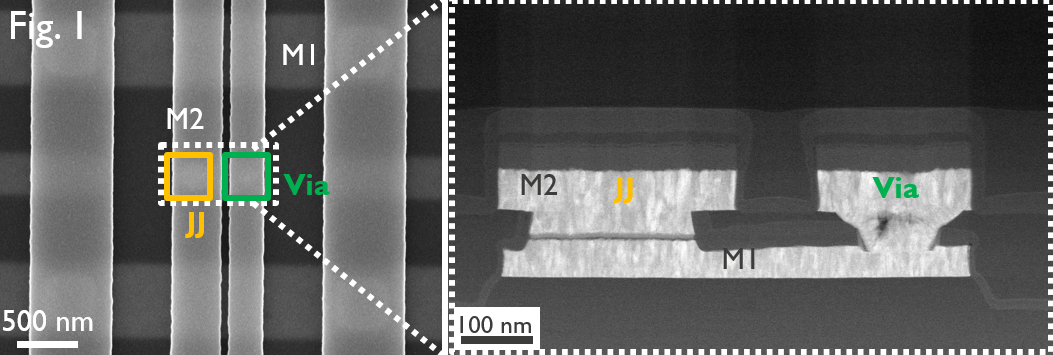
Imec Unveils Innovative 3ML NbTiN-Based Josephson Junction Circuit at ASC 2026
Imec recently showcased a cutting-edge three-metal-level (3ML) niobium-titanium-nitride (NbTiN) Josephson junction circuit at the prestigious 2026 Applied Superconductivity Conference (ASC). This revolutionary circuit design boasts an impressive circuit density of 3.8 million junctions per cm2.
The breakthrough 3ML NbTiN Josephson junction circuit introduced at ASC marks a significant advancement in superconducting technology. Notably, it features ultra-thin superconducting wires scaled down to a remarkable 30nm linewidth, underscoring Imec’s commitment to pushing the boundaries of NbTiN-based superconducting technology for next-generation High-Performance Computing (HPC) and Artificial Intelligence (AI) applications.
Pushing the Limits of Nb-Based Technology
Traditionally, niobium (Nb)-based superconducting technology has faced limitations in scalability across various domains. However, Imec’s innovative NbTiN-based circuit leverages 300mm CMOS-compatible processes to achieve competitive scaling capabilities.
By incorporating three metal levels and reducing junction diameters to as small as 150nm, along with implementing three layers of high-density and low-loss NbTiN routing (comprising wires and vias), Imec’s platform opens up possibilities for passive transmission lines that integrate inductors, ground planes, and clock or power resonators.
The groundbreaking reduction of NbTiN metal wire linewidth to 30nm represents a significant leap in superconducting technology, surpassing the capabilities of conventional Nb-based technology by a factor of ten.
Imec’s NbTiN-based technology offers tunable superconducting properties, such as critical current density (Jc) and critical current (Ic), allowing for tailored solutions across a diverse range of applications requiring Josephson junction circuits and interconnects.
Driving Innovation with a Heterogeneous Approach
Richard Rouse, Director of the Superconducting Digital Program at Imec, highlights the organization’s strategic vision: “Through our superconducting digital program, we aim to collaborate with foundries, hyperscalers, and system companies to advance NbTiN superconducting technology. Our program is structured around three key pillars: process technology, design and EDA enablement, and system-level scaling focused on 2.5D and 3D integration to facilitate the co-integration of superconducting devices with other technologies. This heterogeneous approach not only enhances capabilities in HPC and AI but also unlocks new opportunities in quantum control and readout, neuromorphic computing, and high-resolution single photon detection for applications in space exploration and biomedicine.”












Oneplus 5T vs Pixel 2 XL vs S8 vs iPhone 8 Battery life Drain Test!

Oneplus 5T vs Pixel 2 XL vs S8 vs iPhone 8 Battery Charging Speed Test!

The Affordable Next-Gen Xbox: Debunking the $1,800 Price Tag

Revelation: A New Dawn in the Helldivers Universe

Battery Life Halved by Garmin’s New Voice Controls

Revolutionizing Energy: The Future of Next-Gen Battery Life

Warhound Secures $200M Investment to Develop Advanced Military Canines Equipped with Anduril Technology

No, the iPhone Duo isn’t a miniature device

Rebirth of Resilience: The Evolution of Crisis Management in the Digital Age

EU Takes Action Against Instagram and Facebook for Violating Illegal Content Rules

Warning: Facebook Creators Face Monetization Loss for Stealing and Reposting Videos

Facebook’s New Look: A Blend of Instagram’s Style

Facebook Compliance: ICE-tracking Page Removed After US Government Intervention

Facebook and Instagram to Reduce Personalized Ads for European Users

InstaDub: Meta’s AI Translation Tool for Instagram Videos

Reclaim Your Account: Facebook and Instagram Launch New Hub for Account Recovery

Meta discontinues Messenger apps for Windows and macOS

Breaking Updates: Meta Connect 2025 Unveils Latest Developments
Oneplus 5T vs Pixel 2 XL vs S8 vs iPhone 8 Battery life Drain Test!
Oneplus 5T vs Pixel 2 XL vs S8 vs iPhone 8 Battery Charging Speed Test!

MY NEW CAR?! (Q&A)

Should you buy your Smartphones Refurbished!?

6 Amazing SECRET Android Launchers (2017 / 2018)

6 Value for Money Tech Products you NEED to try!

iPhone X Helicopter 1200ft Drop Test!! + Mous Case Review

7 UNBELIEVABLE Smartphone Magic Tricks!

Oneplus 5T vs Oneplus 1 – 3 Years Later.
-
 Facebook12 months ago
EU Takes Action Against Instagram and Facebook for Violating Illegal Content Rules
-
 Facebook1 year ago
Warning: Facebook Creators Face Monetization Loss for Stealing and Reposting Videos
-
 Facebook11 months ago
Facebook’s New Look: A Blend of Instagram’s Style
-
 Facebook1 year ago
Facebook Compliance: ICE-tracking Page Removed After US Government Intervention
-
 Facebook11 months ago
Facebook and Instagram to Reduce Personalized Ads for European Users
-
 Facebook1 year ago
InstaDub: Meta’s AI Translation Tool for Instagram Videos
-
 Facebook11 months ago
Reclaim Your Account: Facebook and Instagram Launch New Hub for Account Recovery
-
 Apple1 year ago
Meta discontinues Messenger apps for Windows and macOS
