
Security
Unstoppable VECT 2.0 Ransomware Decimates Files Larger than 131KB on Multiple Platforms

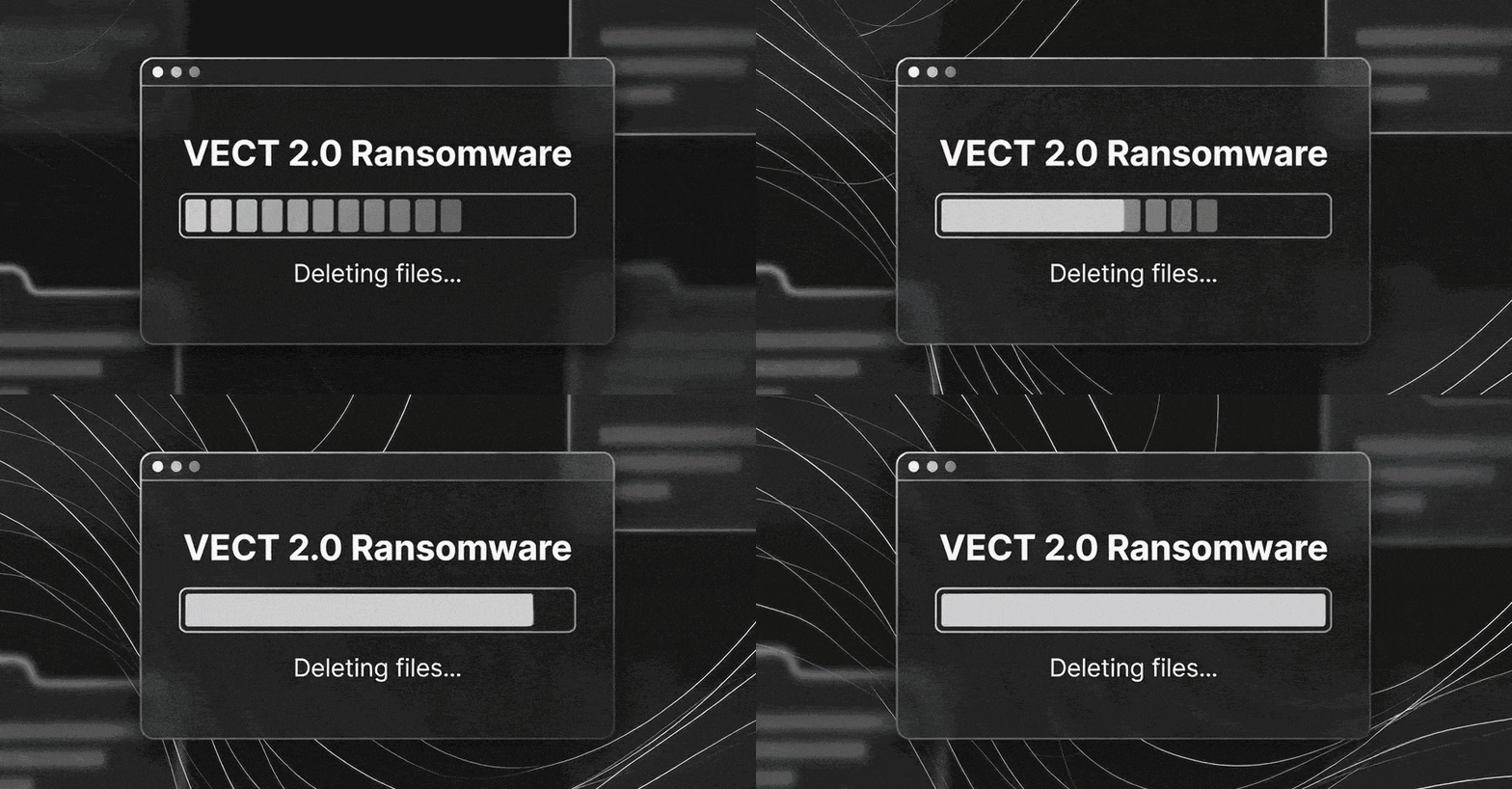
VECT 2.0: More Wiper Than Ransomware
Security experts are raising alarms about the VECT 2.0 cybercriminal operation, which behaves more like a data destruction tool than traditional ransomware due to a critical flaw in its encryption methods. This flaw renders recovery impossible, even for the attackers themselves, across Windows, Linux, and ESXi variants.
Unlike typical ransomware that encrypts files for ransom, VECT’s encryption process permanently destroys large files. This means that victims who pay the ransom will still be unable to retrieve their data, as the decryption keys are discarded by the malware during encryption.
Eli Smadja, group manager at Check Point Research, emphasized, “VECT is being marketed as ransomware, but for any file over 131KB, it functions as a data destruction tool.” This underscores the importance for organizations to focus on resilience measures such as offline backups and tested recovery procedures instead of relying on paying the ransom.
Originally launched as a ransomware-as-a-service (RaaS) operation in December 2025, VECT 2.0 offers an affiliate program with a triple-threat business model of “Exfiltration / Encryption / Extortion.” Affiliates are required to pay a $250 entry fee in Monero (XMR), with exceptions for applicants from Commonwealth of Independent States (CIS) countries.
Recent collaborations with cybercrime marketplace BreachForums and hacking group TeamPCP have further streamlined the ransomware operation, making it easier for affiliates to launch attacks by leveraging stolen data. This convergence of supply chain credential theft, RaaS operations, and dark web forum mobilization presents a new model of industrialized ransomware deployment.
Despite claims of using strong encryption methods, VECT 2.0 actually employs a weaker cipher without integrity protection, leading to the destruction of files larger than 131,072 bytes. The ransomware’s flawed design results in irreversible data loss, posing a significant threat to organizations.
The Windows version of VECT 2.0 includes anti-analysis features, safe-mode persistence mechanisms, and remote-execution capabilities for lateral spread. On the other hand, the ESXi variant enforces geofencing and anti-debugging checks, while the Linux version shares similar functionalities.
Interestingly, the geofencing feature of the ESXi variant excludes CIS countries from encryption, a departure from typical ransomware behavior. This anomaly raises questions about the origins of VECT’s codebase and the expertise level of its operators.
Check Point Research suggests that the operators of VECT may be novice actors, possibly utilizing AI-generated code in their ransomware operations. Despite its ambitious threat profile, VECT 2.0 falls short in technical implementation compared to its presentation.












Speeding Through 749 Kilometers at 90 Kilometers per Hour

Seattle Tech Leaders Unite for Unified Regional Strategy

UNSEEN’s Resilient Team: KEMURI’s XBOX Skipping Saga

Unveiling the Threat: How Android Malware Invades Privacy by Taking Covert Photos

Disrupting the Status Quo: Cornelis Secures $205M to Challenge Nvidia’s Reign in AI Infrastructure

Fortify Your Home: Apple Home’s Advanced Security Camera Subscription for $60/Month

Exploring the Ethics of Big Tech’s AI Slowdown: Safety Pact or Cartel?

Troubleshooting iOS 27 Update Problems: Resolving Bugs and Battery Drain

Behind the Scenes: Inside the Departure of General Motors Australia’s Former Leader

EU Takes Action Against Instagram and Facebook for Violating Illegal Content Rules

Warning: Facebook Creators Face Monetization Loss for Stealing and Reposting Videos

Facebook Compliance: ICE-tracking Page Removed After US Government Intervention

Facebook’s New Look: A Blend of Instagram’s Style

Facebook and Instagram to Reduce Personalized Ads for European Users

InstaDub: Meta’s AI Translation Tool for Instagram Videos

Reclaim Your Account: Facebook and Instagram Launch New Hub for Account Recovery

Meta discontinues Messenger apps for Windows and macOS

Breaking Updates: Meta Connect 2025 Unveils Latest Developments

How to Love your Android Phone again.

The LG G7 has a Big Problem.

The most Beautiful Android Games you’ve never played.

Charge your Smartphone in 5 Minutes – How Batteries are about to Change!

10 CHEAP Smartphone Gadgets that Change Everything.

Huawei Mobile Cloud – The Huawei P20 Feature you didn’t know about!

PUBG MOBILE on Android – Disastrous or Revolutionary?

Why you should buy the Galaxy S8 right now.

Customize your Android Smartphone!
-
 Facebook11 months ago
EU Takes Action Against Instagram and Facebook for Violating Illegal Content Rules
-
 Facebook11 months ago
Warning: Facebook Creators Face Monetization Loss for Stealing and Reposting Videos
-
 Facebook11 months ago
Facebook Compliance: ICE-tracking Page Removed After US Government Intervention
-
 Facebook9 months ago
Facebook’s New Look: A Blend of Instagram’s Style
-
 Facebook9 months ago
Facebook and Instagram to Reduce Personalized Ads for European Users
-
 Facebook11 months ago
InstaDub: Meta’s AI Translation Tool for Instagram Videos
-
 Facebook9 months ago
Reclaim Your Account: Facebook and Instagram Launch New Hub for Account Recovery
-
 Apple11 months ago
Meta discontinues Messenger apps for Windows and macOS
