
AI
The Significance of Optical Interconnect in AI: Lightelligence’s $10B Debut Sheds Light on Its Importance

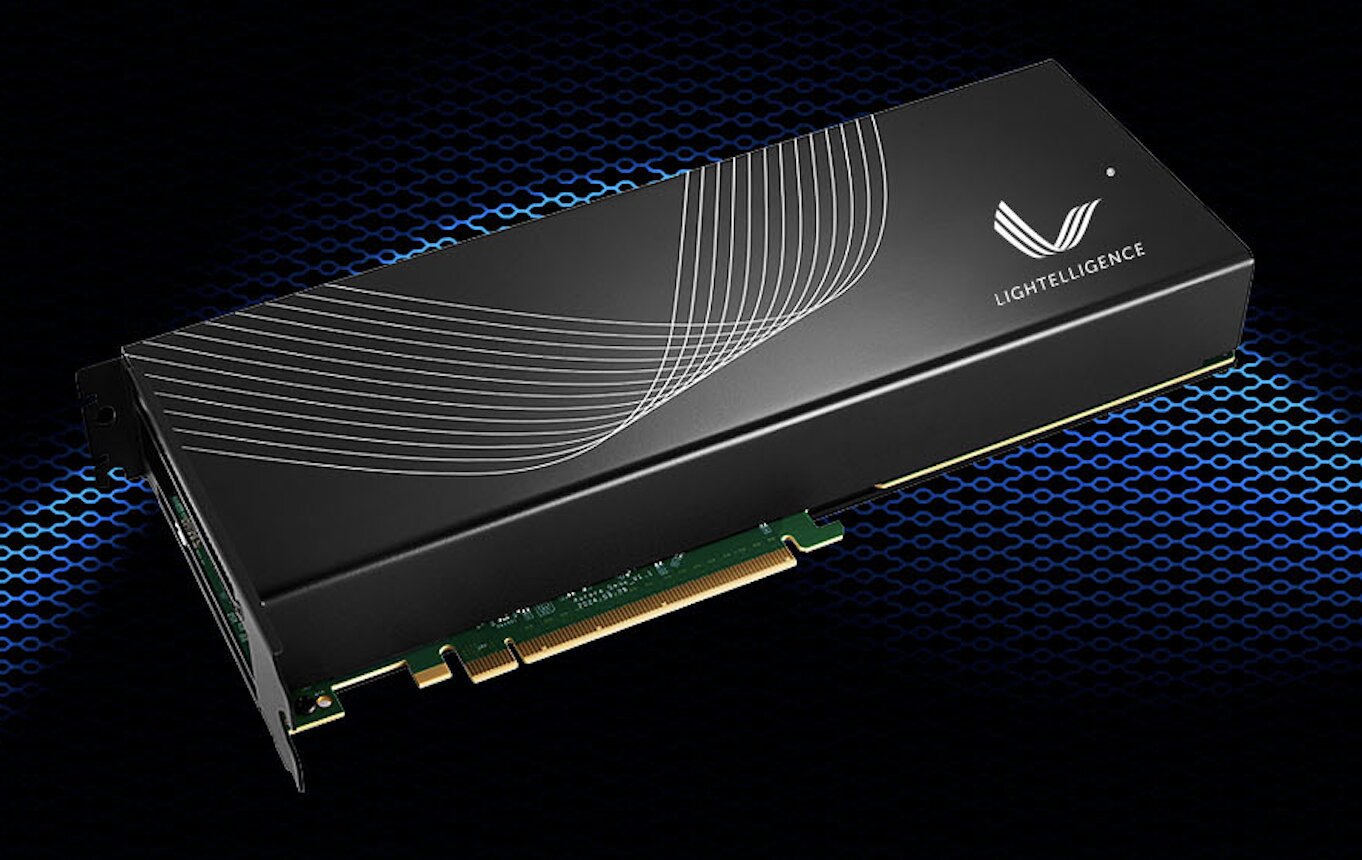
When a company generating US$15.5 million in annual revenue makes its debut on a stock exchange and its market capitalisation briefly reaches US$10 billion, investors are left wondering: what insights do they possess that the financial statements do not yet reveal?
In the case of Lightelligence, the answer lies in optical interconnect technology and the increasing belief that traditional copper wiring connecting AI chips is on the verge of becoming a significant limitation.
Lightelligence, the pioneering photonics chipmaker from mainland China to go public in Hong Kong, witnessed a remarkable surge in its share price by almost 400% during its trading debut on Tuesday.
The Shanghai-based company opened at HK$880, surpassing the offer price of HK$183.2 – the top end of its marketed range – after successfully raising HK$2.4 billion (approximately US$310 million) through its IPO. The retail portion alone was oversubscribed by nearly 5,785 times.
Exploring the Functionality of Optical Interconnect
To comprehend the enthusiasm of investors, it is essential to grasp the issue that Lightelligence aims to address. Modern AI models, particularly those fueling extensive language models and image generators, necessitate large clusters of chips operating concurrently. The efficiency of the system improves with the speed at which data can be transmitted between these chips.
Traditionally, data flows through copper electrical connections. However, as AI clusters expand in size and power consumption, copper wiring creates bottlenecks due to heat generation, energy consumption, and data transmission limitations over short distances.
Optical interconnect technology replaces these electrical signals with light. Compared to traditional electrical interconnects, optical solutions offer lower latency, higher bandwidth, and enhanced energy efficiency, akin to upgrading from a single-lane road to a freeway – facilitating more traffic, increased speed, and reduced friction.
Lightelligence’s business encompasses two primary segments: optical interconnect, utilizing optical signals to connect computing devices within a single server or across multiple servers in a cluster, and optical computing, involving data processing using photons instead of electrons.
The company’s flagship optical interconnect product, LightSphere X, is heralded as the first distributed optical circuit-switching solution for GPU supernode interconnects. Lightelligence claims that it can elevate model FLOPS utilization by over 50%, thereby lowering the total cost of ownership for computing workloads.
Analyzing the Market Position
According to Frost & Sullivan, Lightelligence stands as the inaugural entity to achieve the commercial-scale deployment of optoelectronic hybrid computing, a significant distinction in a domain predominantly occupied by research laboratories and pre-revenue startups. By March 2026, the company held 410 patents, with more than half relevant to both its optical interconnect and optical computing divisions.
In the expanding Chinese optical interconnect market, specifically the segment linking chips within a single high-performance computing node, Lightelligence secured the top position among independent providers in 2025 with an 88.3% market share. It is notable, however, that Huawei commands a substantial 98.4% share of the overall market, with Lightelligence serving as the principal third-party supplier.
By the conclusion of 2025, Lightelligence had amassed 44 commercial clients, supporting GPU clusters equipped with several thousand cards. Notable investors participating in the IPO included Alibaba, GIC, Temasek, BlackRock, Fidelity International, Schroders, Hillhouse Capital, Lenovo, and ZTE.
Deciphering the Financial Landscape
Here is where the complexity intensifies. Lightelligence disclosed revenue figures of RMB 38 million (approximately US$5.6 million) in 2023, RMB 60 million (US$8.8 million) in 2024, and RMB 106 million (US$15.5 million) in 2025, showcasing a robust compound annual growth rate of 66.9%. Revenue is escalating rapidly, but losses are ballooning at a faster pace.
In 2025, net losses expanded to RMB 1.34 billion, with the company’s asset-liability ratio standing at 473%, indicating that liabilities significantly surpass assets. Moreover, a single customer contributes 40.6% of the revenue, presenting a concentration risk demanding attention from any potential enterprise buyer or investor.
The founder’s background contributes substantially to the premium commanded. Yichen Shen published a groundbreaking paper in Nature Photonics in 2017 proposing and validating the feasibility of utilizing light in deep learning computation, a pivotal moment in optoelectronic hybrid computing. The company spawned from this research is now poised to enter a new phase with public market funding.
Frost & Sullivan projects the global AI computing and interconnect market to witness a 27% compound annual growth rate by 2031. The pivotal query that investors are essentially investing a US$10 billion premium to answer is whether Lightelligence can align its revenue growth with this trajectory and bridge the gap between its aspirations and mounting losses.
The debut today marks the initial public valuation of this wager.
(Image courtesy of Lightelligence)
Related: Inside Huawei’s strategy to synchronize thousands of AI chips as a unified computing entity
Interested in delving deeper into AI and big data insights from industry experts? Explore the AI & Big Data Expo happening in Amsterdam, California, and London. This comprehensive event is part of TechEx and co-located with other top technology gatherings. Find more details here.
AI News is brought to you by TechForge Media. Discover additional forthcoming enterprise technology events and webinars here.












Revving Up: Tractor Battle Adventure RPG Expands with Mod Support on Steam Workshop

Troubleshooting Guide: Unable to Access 192.168.0.1

Choosing the Right AI: Ensuring Trust in Multi-Model Translation Systems

Friday Night Baseball Madness: iPhone 18 Pro Edition

Partnership Potential: JAC & Huawei in Talks to Produce Electric Maserati Vehicles

Grand Theft Auto VI: The Soundtrack – Limited Edition Physical Release

The Never-Ending Battle of the Galaxy S27 Ultra Camera: A Tech Advisor’s Perspective

Motorola Signature 27: Unveiled Specs and Vibrant Colour Options – Tech Advisor

Angle Health Soars to $2.7B Valuation: Y Combinator Insurance Tech Alum Makes Waves in Health Industry

EU Takes Action Against Instagram and Facebook for Violating Illegal Content Rules

Warning: Facebook Creators Face Monetization Loss for Stealing and Reposting Videos

Facebook’s New Look: A Blend of Instagram’s Style

Facebook Compliance: ICE-tracking Page Removed After US Government Intervention

Facebook and Instagram to Reduce Personalized Ads for European Users

InstaDub: Meta’s AI Translation Tool for Instagram Videos

Reclaim Your Account: Facebook and Instagram Launch New Hub for Account Recovery

Meta discontinues Messenger apps for Windows and macOS

Breaking Updates: Meta Connect 2025 Unveils Latest Developments

Huawei P20 Pro Unboxing!

Huawei P20 Pro vs Samsung S9 Plus!

Huawei P20 vs P20 Pro vs iPhone 8 Plus vs S9 Battery Drain Test!

10 Android Mods that Change Everything

I used the first Android Phone in the World.

DOOGEE MIX 4 UNBOXING (PROTOTYPE)!

MYSTERY UNBOXING FROM SAMSUNG!

The Truth about Huawei P20 Pro – REAL Review

How to Love your Android Phone again.
-
 Facebook11 months ago
EU Takes Action Against Instagram and Facebook for Violating Illegal Content Rules
-
 Facebook11 months ago
Warning: Facebook Creators Face Monetization Loss for Stealing and Reposting Videos
-
 Facebook9 months ago
Facebook’s New Look: A Blend of Instagram’s Style
-
 Facebook11 months ago
Facebook Compliance: ICE-tracking Page Removed After US Government Intervention
-
 Facebook9 months ago
Facebook and Instagram to Reduce Personalized Ads for European Users
-
 Facebook11 months ago
InstaDub: Meta’s AI Translation Tool for Instagram Videos
-
 Facebook10 months ago
Reclaim Your Account: Facebook and Instagram Launch New Hub for Account Recovery
-
 Apple11 months ago
Meta discontinues Messenger apps for Windows and macOS
