
AI
Maximizing ROI with Physical AI Simulation in Factory Automation

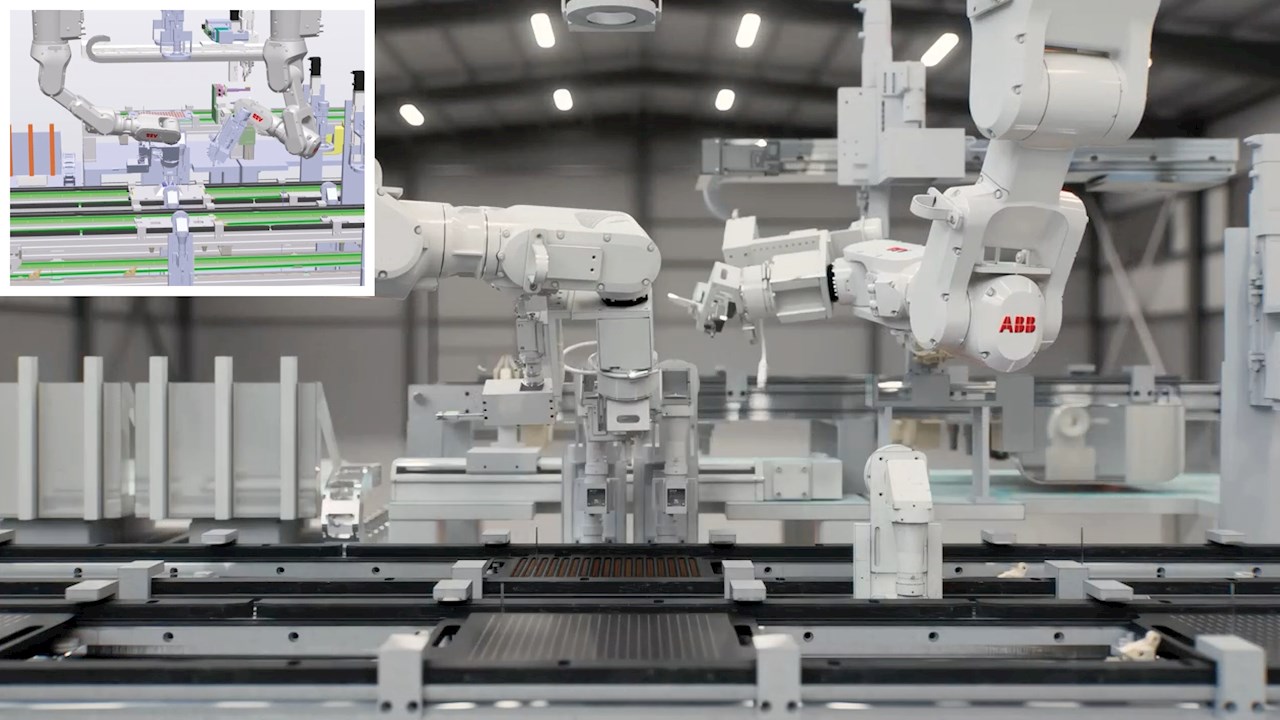
Discover how the groundbreaking collaboration between ABB and NVIDIA is revolutionizing factory automation by harnessing the power of physical AI simulation to drive tangible return on investment and overcome production challenges.
For manufacturers, deploying intelligent robotics effectively has been a persistent challenge, especially outside controlled testing environments. The key issue lies in the disconnect between digital training models and real-world factory settings, where factors like lighting, material properties, and component variations often deviate from expected behaviors.
This disparity has historically led engineering teams to rely on physical prototypes, resulting in delays in product launches and increased costs.
Closing the Gap between Digital and Physical AI Simulation
The partnership between ABB Robotics and NVIDIA aims to bridge this divide by introducing industrial-grade physical AI capabilities to manufacturing facilities. Set to launch in the latter half of 2026, RobotStudio HyperReality is already garnering significant interest from a global customer base.
By integrating NVIDIA Omniverse libraries into its RobotStudio software, ABB offers a platform for precise digital testing. This integration enables engineers to reduce deployment costs by up to 40% and expedite time-to-market by up to 50%.
Efficiency gains are realized through a workflow that allows production teams to design, test, and validate complete automation setups before physical implementation. The system exports a fully parameterized station, including robots, sensors, lighting, kinematics, and parts, as a USD file directly into the Omniverse environment.
Within this digital realm, a virtual controller operates with firmware identical to that of the physical machines, ensuring a 99% match between the digital and physical realms. Instead of manual programming, computer vision models learn from synthetic images generated within the software, enhancing precision and accuracy for industrial applications.
Marc Segura, President of ABB Robotics, expressed, “By merging RobotStudio with the realistic simulation capabilities of NVIDIA Omniverse libraries, we’ve successfully bridged the ‘sim-to-real’ gap in technology, marking a significant milestone in deploying physical AI with industrial-grade precision.”
Ensuring Factory Automation Validity Pre-Deployment
Early adopters are already validating these capabilities on active production lines. Foxconn, for instance, is utilizing the software for consumer device assembly, where frequent product changes and delicate components pose challenges for traditional automation methods.
By leveraging synthetic data for virtual training, Foxconn achieves high accuracy on the factory floor, anticipates reduced setup times, and eliminates costly physical testing.
Similarly, California-based automation provider Workr integrates its WorkrCore platform with ABB hardware trained via Omniverse. At the NVIDIA GTC 2026 event in San Jose, Workr plans to showcase systems capable of swiftly incorporating new parts without specialized programming skills.
Deepu Talla, VP of Robotics and Edge AI at NVIDIA, noted, “The industrial sector requires high-fidelity simulation to bridge the gap between virtual training and large-scale deployment of AI-driven robotics.”
“Integrating NVIDIA Omniverse libraries into RobotStudio brings advanced simulation and accelerated computing to ABB’s virtual controller technology, accelerating how manufacturers deploy complex products to market.”
The hardware landscape is evolving towards edge computing, with ABB exploring the integration of NVIDIA’s Jetson edge platform into its Omnicore controllers. This integration could facilitate real-time inference across existing robotic fleets.
Embracing digital-first simulation for physical AI could slash setup and commissioning times by up to 80%, a crucial shift as AI transitions from software applications to hardware operations. Successful adoption hinges on preparing data pipelines and upskilling engineering teams to work with synthetic data effectively.
Explore more: Agentic AI in finance accelerates operational automation.
Interested in learning about AI and big data from industry experts? Dive into the AI & Big Data Expo in Amsterdam, California, and London. This comprehensive event is part of TechEx and co-located with other leading tech events like the Cyber Security & Cloud Expo. For more details, click here.
AI News is brought to you by TechForge Media. Discover other upcoming enterprise tech events and webinars here.









Exploring the Exciting Updates of iOS 27: A Look Beyond Artificial Intelligence

A $50,000 Smartphone for $400?

Ram Trucks Australia Braces for Price Increases Due to Emissions Regulations

Revving Up: Tractor Battle Adventure RPG Expands with Mod Support on Steam Workshop

Troubleshooting Guide: Unable to Access 192.168.0.1

Choosing the Right AI: Ensuring Trust in Multi-Model Translation Systems

Friday Night Baseball Madness: iPhone 18 Pro Edition

Partnership Potential: JAC & Huawei in Talks to Produce Electric Maserati Vehicles

Grand Theft Auto VI: The Soundtrack – Limited Edition Physical Release

EU Takes Action Against Instagram and Facebook for Violating Illegal Content Rules

Warning: Facebook Creators Face Monetization Loss for Stealing and Reposting Videos

Facebook’s New Look: A Blend of Instagram’s Style

Facebook Compliance: ICE-tracking Page Removed After US Government Intervention

Facebook and Instagram to Reduce Personalized Ads for European Users

InstaDub: Meta’s AI Translation Tool for Instagram Videos

Reclaim Your Account: Facebook and Instagram Launch New Hub for Account Recovery

Meta discontinues Messenger apps for Windows and macOS

Breaking Updates: Meta Connect 2025 Unveils Latest Developments
A $50,000 Smartphone for $400?

Huawei P20 Pro Unboxing!

Huawei P20 Pro vs Samsung S9 Plus!

Huawei P20 vs P20 Pro vs iPhone 8 Plus vs S9 Battery Drain Test!

10 Android Mods that Change Everything

I used the first Android Phone in the World.

DOOGEE MIX 4 UNBOXING (PROTOTYPE)!

MYSTERY UNBOXING FROM SAMSUNG!

The Truth about Huawei P20 Pro – REAL Review
-
 Facebook11 months ago
EU Takes Action Against Instagram and Facebook for Violating Illegal Content Rules
-
 Facebook11 months ago
Warning: Facebook Creators Face Monetization Loss for Stealing and Reposting Videos
-
 Facebook9 months ago
Facebook’s New Look: A Blend of Instagram’s Style
-
 Facebook11 months ago
Facebook Compliance: ICE-tracking Page Removed After US Government Intervention
-
 Facebook9 months ago
Facebook and Instagram to Reduce Personalized Ads for European Users
-
 Facebook11 months ago
InstaDub: Meta’s AI Translation Tool for Instagram Videos
-
 Facebook10 months ago
Reclaim Your Account: Facebook and Instagram Launch New Hub for Account Recovery
-
 Apple11 months ago
Meta discontinues Messenger apps for Windows and macOS
