
Security
Google’s Enhanced Gemini AI: A Powerful Tool in the Fight Against Malicious Ads


Google’s Gemini AI Fighting Malicious Ads: A Deep Dive
Google has ramped up its utilization of Gemini AI models to combat harmful ads on its advertising platforms, as scammers and threat actors continuously evolve their tactics to evade detection.
In a recent update, Google revealed that it has successfully blocked or removed 8.3 billion ads and suspended 24.9 million advertiser accounts in 2025, with 602 million ads associated with scams being taken down.
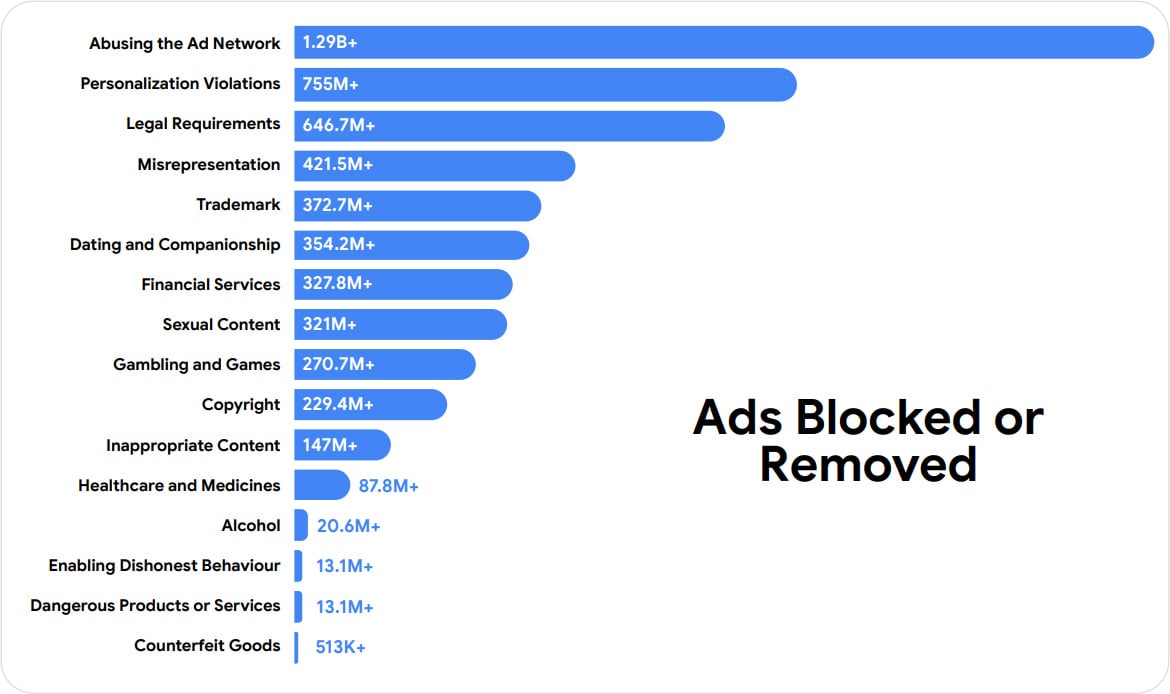

Malvertising remains a significant issue on Google’s ad network, with attackers utilizing ads that mimic legitimate brands and services to distribute malware, steal cryptocurrency, or direct users to phishing sites.
These malicious campaigns often employ cloaking techniques and URL redirects to appear as trusted sites, including leveraging Google’s domains and those of legitimate software downloads and authentication portals.
Recent malicious campaigns highlighted by BleepingComputer include fake login pages targeting Google Ads accounts, distributing malware through ads posing as tools like Google Authenticator, and displaying ads for fraudulent cryptocurrency platforms that drain visitors’ wallets.
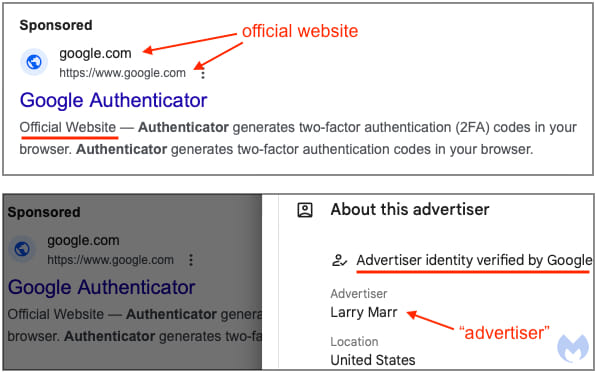
Source: Malwarebytes
Google reports that cybercriminals are now leveraging generative AI in their campaigns, enabling them to rapidly scale and execute more sophisticated operations.
“Bad actors are leveraging generative AI to produce deceptive ads at scale, and Gemini aids us in real-time detection and blocking. By the end of the previous year, the majority of Responsive Search Ads in Google Ads underwent instant review, with harmful content being blocked upon submission – a feature set to expand to more ad formats this year,” explained Keerat Sharma, VP & General Manager, Ads Privacy and Safety.
To counter these threats, Google emphasizes its reliance on Gemini AI-powered systems to automate the identification and prevention of malicious ads before they reach users.
While previous detection systems focused on analyzing keywords for malicious intent, Gemini can now analyze billions of signals, including advertiser behavior, account history, campaign patterns, and intent, to assess the malicious nature of an ad.
In the US, Google removed 1.7 billion ads and suspended 3.3 million advertiser accounts in 2025, with “abusing the ad network” and “misrepresentation” ranking as the top policy violations.
Google’s integration of artificial intelligence has significantly enhanced its ability to address malicious and scam ads that slip through initial reviews, enabling faster processing of user reports compared to previous years.
Google also notes that the increased accuracy of its AI models has led to an 80% reduction in incorrect advertiser suspensions.
The company plans to further expand Gemini’s implementation across various ad formats and enforcement systems, with the goal of preemptively blocking malicious campaigns during the submission phase.

Automated pentesting confirms vulnerabilities while BAS determines the effectiveness of your controls. Many teams only focus on one, neglecting the other.
This whitepaper outlines six validation surfaces, identifies coverage gaps, and equips practitioners with three key questions for evaluating any tool.













Exploring the Exciting Updates of iOS 27: A Look Beyond Artificial Intelligence

A $50,000 Smartphone for $400?

Ram Trucks Australia Braces for Price Increases Due to Emissions Regulations

Revving Up: Tractor Battle Adventure RPG Expands with Mod Support on Steam Workshop

Troubleshooting Guide: Unable to Access 192.168.0.1

Choosing the Right AI: Ensuring Trust in Multi-Model Translation Systems

Friday Night Baseball Madness: iPhone 18 Pro Edition

Partnership Potential: JAC & Huawei in Talks to Produce Electric Maserati Vehicles

Grand Theft Auto VI: The Soundtrack – Limited Edition Physical Release

EU Takes Action Against Instagram and Facebook for Violating Illegal Content Rules

Warning: Facebook Creators Face Monetization Loss for Stealing and Reposting Videos

Facebook’s New Look: A Blend of Instagram’s Style

Facebook Compliance: ICE-tracking Page Removed After US Government Intervention

Facebook and Instagram to Reduce Personalized Ads for European Users

InstaDub: Meta’s AI Translation Tool for Instagram Videos

Reclaim Your Account: Facebook and Instagram Launch New Hub for Account Recovery

Meta discontinues Messenger apps for Windows and macOS

Breaking Updates: Meta Connect 2025 Unveils Latest Developments
A $50,000 Smartphone for $400?

Huawei P20 Pro Unboxing!

Huawei P20 Pro vs Samsung S9 Plus!

Huawei P20 vs P20 Pro vs iPhone 8 Plus vs S9 Battery Drain Test!

10 Android Mods that Change Everything

I used the first Android Phone in the World.

DOOGEE MIX 4 UNBOXING (PROTOTYPE)!

MYSTERY UNBOXING FROM SAMSUNG!

The Truth about Huawei P20 Pro – REAL Review
-
 Facebook11 months ago
EU Takes Action Against Instagram and Facebook for Violating Illegal Content Rules
-
 Facebook11 months ago
Warning: Facebook Creators Face Monetization Loss for Stealing and Reposting Videos
-
 Facebook9 months ago
Facebook’s New Look: A Blend of Instagram’s Style
-
 Facebook11 months ago
Facebook Compliance: ICE-tracking Page Removed After US Government Intervention
-
 Facebook9 months ago
Facebook and Instagram to Reduce Personalized Ads for European Users
-
 Facebook11 months ago
InstaDub: Meta’s AI Translation Tool for Instagram Videos
-
 Facebook10 months ago
Reclaim Your Account: Facebook and Instagram Launch New Hub for Account Recovery
-
 Apple11 months ago
Meta discontinues Messenger apps for Windows and macOS
