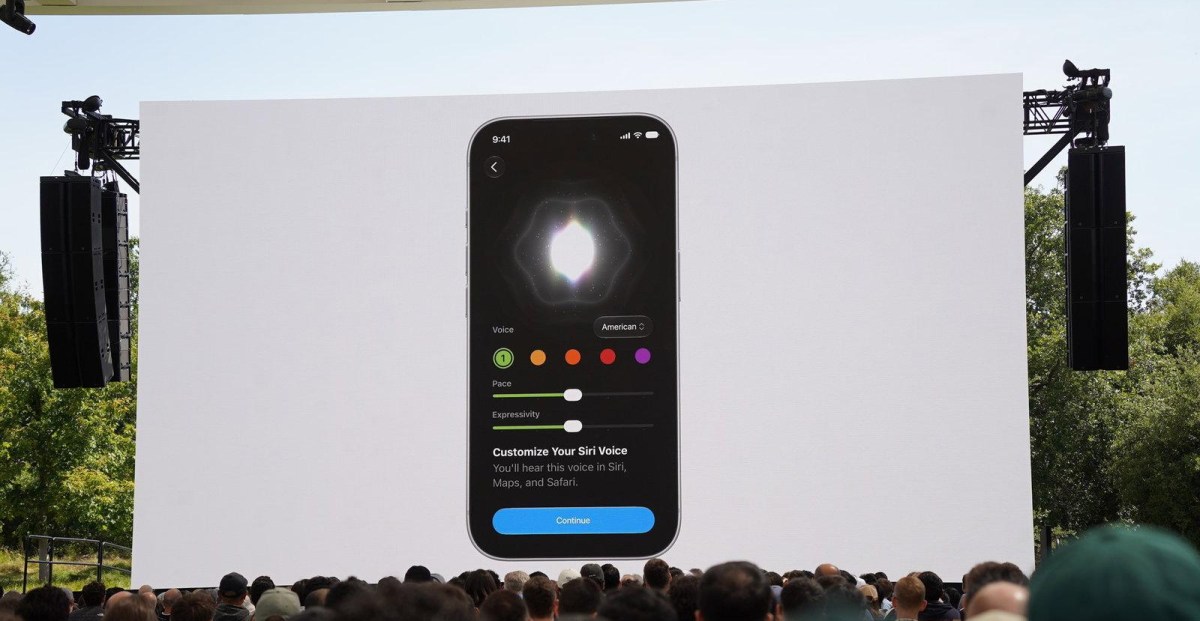
Apple has made bold promises about AI at its annual developer conference, with CEO Tim Cook stating that the company is set to introduce new technologies and innovations that will push the boundaries of what is possible. However, the focus of its announcements, particularly around the new “Siri AI,” seems to be more about catching up with competitors.
After years of neglecting Siri and delaying its AI plans until 2025, Apple has now shifted its focus to the technology. The new Siri is being marketed as an all-encompassing virtual assistant that connects all Apple devices, offering multimodal features, a dedicated app, and enhanced AI capabilities. Privacy is a key emphasis, with Apple highlighting that user data for agentic tasks will be processed on-device and through private cloud compute before being discarded.
Unlike some of its competitors, Apple is not aiming to compete directly with advanced AI models like OpenAI or Anthropic. Instead, the new Siri is powered by Apple foundation models primarily supported by Google Gemini, positioning AI as a practical and user-friendly addition to existing devices. Craig Federighi, Apple’s SVP of software engineering, emphasized the company’s focus on creating intuitive products that cater to individual needs.
Apple’s consistent lag in the AI race is no secret.
Despite efforts to make AI less intimidating, Apple’s strategy aligns with industry trends. However, the delayed launch of the new Siri, scheduled for later this year in beta (with no timeline for the EU and China), raises questions about the impact of Apple’s belated AI strategy.
The new Siri aims to seamlessly integrate information from various sources, offering features like scheduling hangouts, managing calendar appointments, and providing real-time updates. The Dynamic Island feature displays AI-powered information cards on world events, weather, and personal schedules, showcasing the potential of the enhanced AI capabilities.
One notable advancement is Siri’s onscreen awareness, demonstrated through tasks like identifying locations in photos and generating driving routes. Apple has also expanded its focus on visual intelligence, enabling AI-edited images and integrating Siri into the Photos app for enhanced user experiences.
Apple’s AI capabilities extend to practical solutions like managing Safari tabs, generating strong passwords, and facilitating seamless interactions through prompts and reminders. The company’s emphasis on user privacy and security aims to address concerns related to AI technology.
Apple’s potential success in the AI race hinges on the strength of its ecosystem and user trust in its products.
While Apple’s recent AI advancements are promising, they still lack originality compared to competitors. The company’s focus on complementing existing products rather than revolutionizing them sets its AI strategy apart from industry giants like Google and Microsoft, who target enterprise users.