
Tech News
Maximizing Your Android Battery Life: Avoid These 6 Drain-Causing Settings

Summary provided by Smart Answers AI
In summary:
- Tech Advisor has uncovered hidden Android settings that have a significant impact on battery life, surpassing the usual fixes like adjusting screen brightness.
- Main battery drainers include background app activity, Always-On Display, fixed 120Hz refresh rates, constant location access, and the higher power consumption of 5G compared to LTE.
- Solutions involve limiting non-essential app permissions, enabling adaptive refresh rates, and adjusting Battery Saver activation to 30-40% instead of the default 15%. Detailed instructions are provided below.
Your phone should ideally last all day without needing a charger. If it doesn’t, the issue may not be what you think. While most battery advice focuses on adjusting screen brightness, there are other hidden settings that could be draining your battery.
The settings causing the most damage are not easily visible. These hidden features continue to run in the background, pinging servers, scanning for devices, and quietly depleting your battery even when your screen is off.
These settings are often enabled by default on many Android phones. By spending a few minutes adjusting them, you can potentially reclaim hours of standby time. Here is where you should focus your attention.
1. Disable background activity for unnecessary apps
Nikhil Azza / Foundry
By default, every installed app on Android has permission to run in the background. This means that apps like photo editors, games, and discount coupon apps are constantly refreshing themselves in the background, even when not needed.
Visit Settings > Apps, select an app, tap on Battery/Power, and set it to Restricted. This will limit its background activity significantly. Repeat this process for all apps that do not require live updates, such as games and lifestyle apps.
I gained over an hour of screen-on time
Most of these apps can be restricted without affecting their functionality when in use. For apps that do need to run in the background for notifications, like messaging apps, leave them on Unrestricted/No Restrictions.
Restricting around 35 apps to Restricted mode resulted in gaining over an hour of screen-on time for me. This simple change had a significant impact on my battery life.
2. Review apps with location permissions
Nikhil Azza / Foundry
Many apps have permission to access your location at all times, even when not in use. This continuous access to location data can impact your battery life significantly.
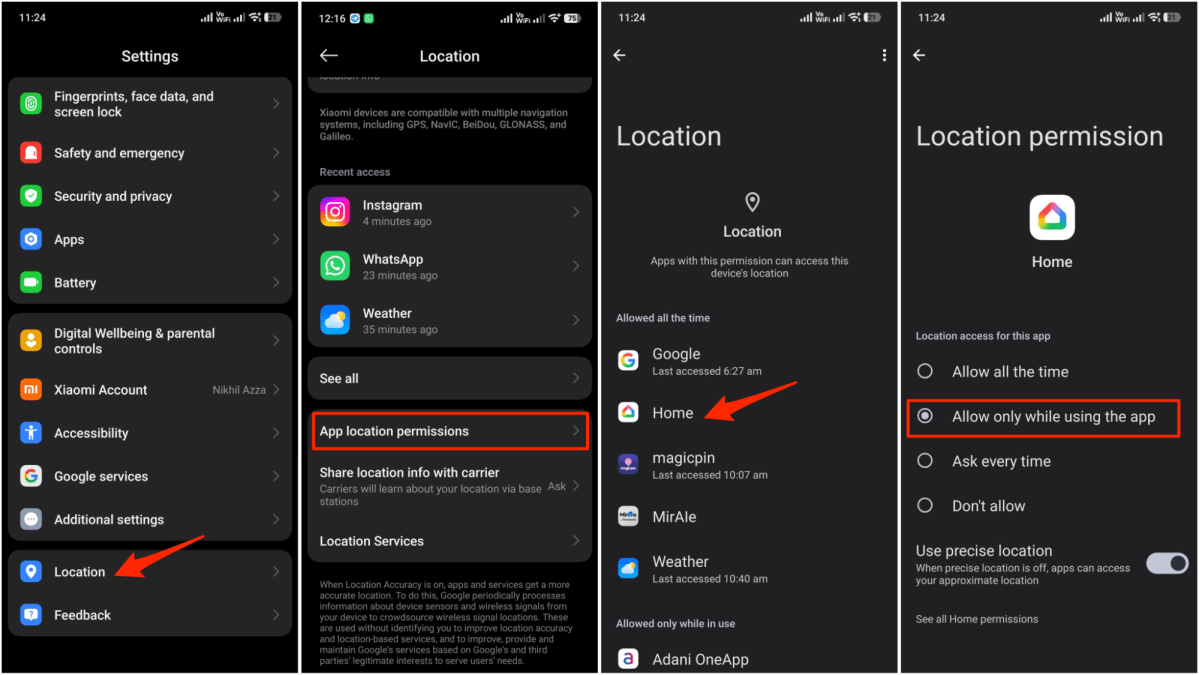
Head to Settings > Location > App location permissions, then select “Allowed all the time/Apps that can always access location.” These apps are currently using your location data in the background, even when not actively being used.
Apps like Instagram, Deliveroo, shopping apps, and travel apps do not need constant access to your location. Set them to “Only while using” to preserve battery life without affecting their functionality.
If you have a long list of apps, start with those installed in the last three months as they tend to request broader permissions by default. Adjusting these settings can make a noticeable difference in battery performance.
3. Evaluate the impact of 5G on battery life
Nikhil Azza / Foundry
The 5G modem consumes more power than the 4G LTE modem due to the nature of the hardware. In areas with patchy 5G coverage, the constant search for a signal can further drain the battery.
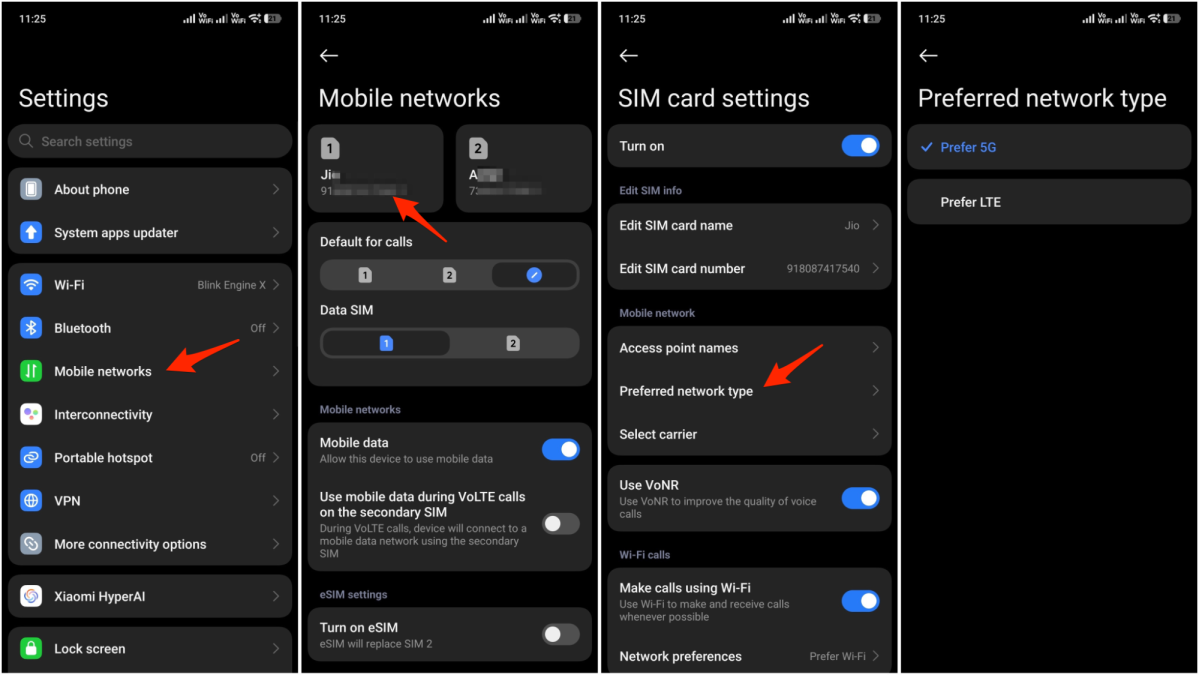
Research indicates that 5G can drain between 6% and 11% more battery compared to LTE, based on real-world usage. Consider switching to LTE if you spend most of your time indoors, as the speed difference is negligible for indoor activities.
Adjusting this setting can have a noticeable impact on battery life, especially in areas with limited 5G coverage where the modem expends extra power searching for a signal.
4. Manage Always-On Display settings
Nikhil Azza / Foundry
Always-On Display may seem useful for displaying time and notifications, but it can consume additional battery power, especially if the display is more active.
Depending on the implementation, Always-On Display can drain more power, especially on phones where more of the screen is active. Consider turning it off if your battery is struggling to last through the day.
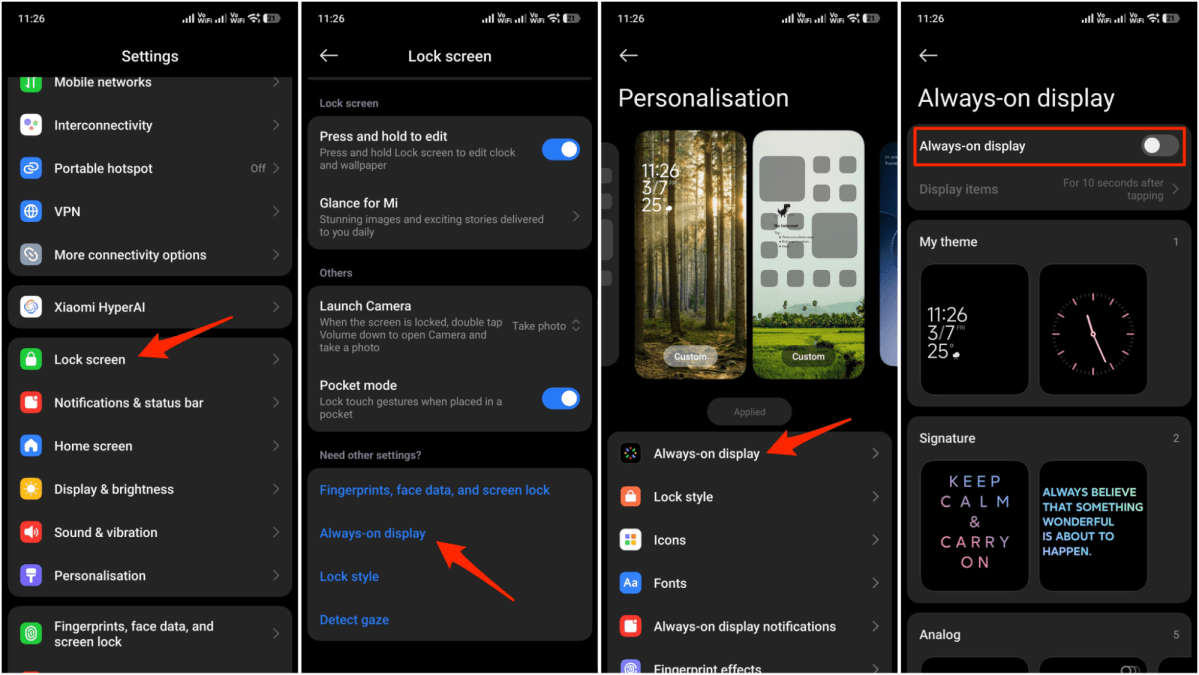
Visit Settings > Lock screen > Always on display and disable it for a week. If you don’t miss it, keep it turned off to save battery life.
5. Optimize your refresh rate
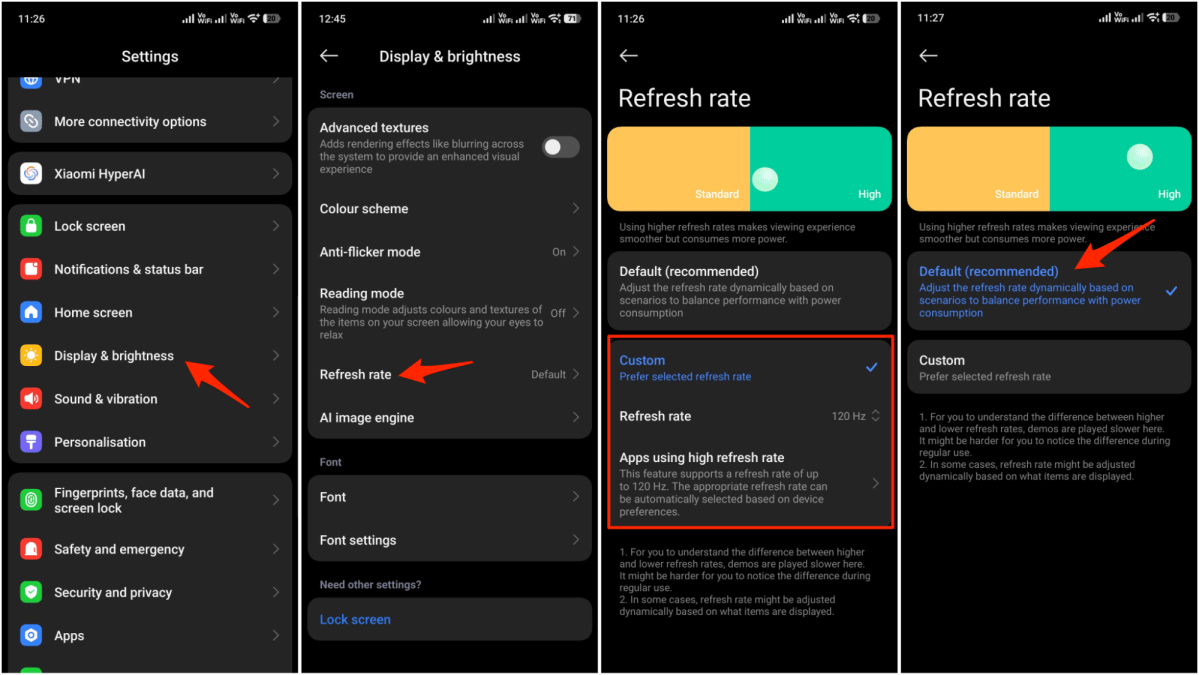
Nikhil Azza / Foundry
Most flagship Android phones come with adaptive refresh rates that adjust between 1Hz and 120Hz based on screen activity. However, some phones default to a fixed 120Hz, which can impact battery life.
Check your refresh rate in Settings > Display > Refresh Rate. If it’s set to a fixed 120Hz, consider switching to adaptive to conserve battery without compromising visual performance.












The Surprising Decision: Tim Cook’s Early Departure Before iPhone Duo Launch

BMW’s Survey Reveals Surprising EV Range Preferences Among Americans

Enhancing Efficiency: The Power of Windows Search in Windows 11

Revving Up for Forza Horizon 6: Drift Edition on PS5 with Epic Expansion Pack

Advancing Robotics and Automation: DOE’s National Laboratory Projects

Maximizing AI ROI: A Comprehensive Guide to Metrics, Formulas, and Frameworks

Oppo Find X10 Unveiled: Global Launch Set for October 21st

AI Leaderboard Arena Surges to $3.1B Valuation in Record Time

Outpacing OpenAI: Meta’s Rise to the Top in the AI Agent Race

EU Takes Action Against Instagram and Facebook for Violating Illegal Content Rules

Warning: Facebook Creators Face Monetization Loss for Stealing and Reposting Videos

Facebook’s New Look: A Blend of Instagram’s Style

Facebook Compliance: ICE-tracking Page Removed After US Government Intervention

Facebook and Instagram to Reduce Personalized Ads for European Users

InstaDub: Meta’s AI Translation Tool for Instagram Videos

Reclaim Your Account: Facebook and Instagram Launch New Hub for Account Recovery

Meta discontinues Messenger apps for Windows and macOS

Breaking Updates: Meta Connect 2025 Unveils Latest Developments

I used a 2012 Smartphone in 2018 – Here’s what happened.

How to send ANY file Anywhere!

NEW Oneplus 5T Sandstone White Unboxing – The Ultimate Oneplus 5T?

HUAWEI P20 – THE SMARTPHONE REVOLUTION IS HERE?

How OnePlus succeeded when they should have failed.

Samsung sent us THIS! #AD

Ulefone Power 3 – Quad Camera Smartphone that last 2 weeks!

EPIC Smartphone FAILS that people will never forget.

The Best Android Launcher of 2018?
-
 Facebook12 months ago
EU Takes Action Against Instagram and Facebook for Violating Illegal Content Rules
-
 Facebook12 months ago
Warning: Facebook Creators Face Monetization Loss for Stealing and Reposting Videos
-
 Facebook10 months ago
Facebook’s New Look: A Blend of Instagram’s Style
-
 Facebook12 months ago
Facebook Compliance: ICE-tracking Page Removed After US Government Intervention
-
 Facebook10 months ago
Facebook and Instagram to Reduce Personalized Ads for European Users
-
 Facebook12 months ago
InstaDub: Meta’s AI Translation Tool for Instagram Videos
-
 Facebook10 months ago
Reclaim Your Account: Facebook and Instagram Launch New Hub for Account Recovery
-
 Apple12 months ago
Meta discontinues Messenger apps for Windows and macOS
