
AI
Unlocking the Potential: Samsung Health AI Models Analyze Wearable Biosignal Data

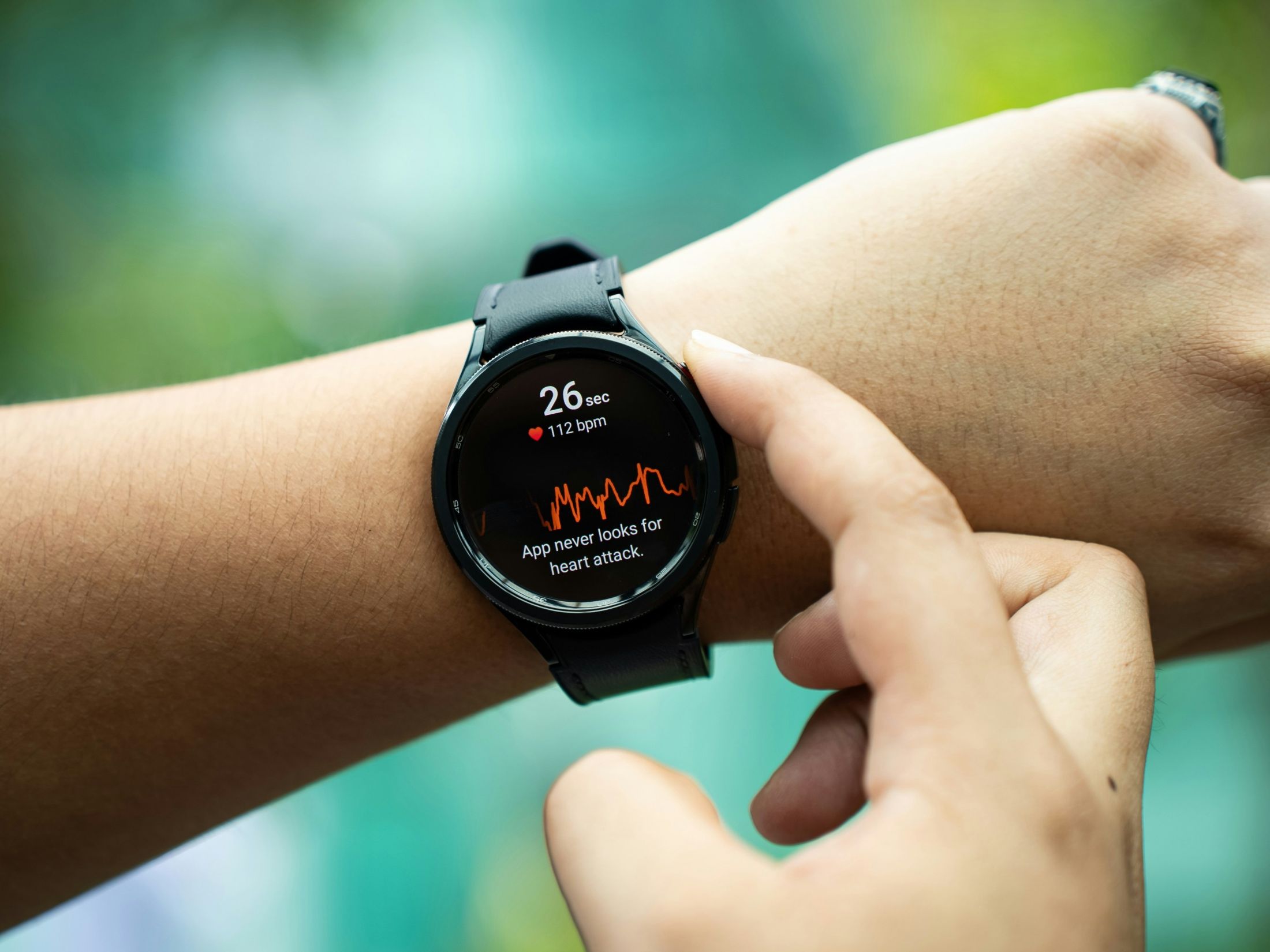
Samsung Research America’s Digital Health Team recently unveiled two groundbreaking AI foundation models specifically designed to analyze data from wearable biosignals. These models focus on data collected by smartwatches, including heart activity, sleep patterns, and physical activity levels.
During the Health Forum at Galaxy Unpacked in July 2026, Samsung outlined its Connected Care vision, emphasizing a future of proactive, personalized, and interconnected healthcare. This vision is supported by advanced health technology and strategic partnerships within the healthcare industry. Samsung positions these health foundation models as key components of innovative consumer health experiences.
Sharanya Desai, the Head of Digital Health Algorithms at Samsung Research America, highlighted the significance of this research, stating that it establishes the technical foundation for delivering efficient, precise, and continuous health insights through a health foundation model.
Desai further stated, “We are dedicated to the ongoing development and enhancement of health foundation models capable of processing various biosignals and health attributes using limited sensors and computational resources.”
Exploring Samsung’s Health AI Foundation Models
The health foundation models leverage self-supervised learning to identify patterns in unlabeled biosignal data. Samsung explains that by pretraining on extensive health datasets, these models can support various tasks such as biosignal analysis, biomarker development, and health prediction.
Samsung’s research encompasses two distinct models with specific objectives. The xMAE model focuses on learning temporal relationships between different biosignals, while the HiMAE model analyzes health patterns across multiple time scales in wearable time-series data.
According to Samsung, xMAE was accepted at the International Conference on Machine Learning, while HiMAE received acceptance at the International Conference on Learning Representations. Both models concentrate on physiological relationships and temporal structures within biosignal data.
These models address various aspects of wearable data analysis. xMAE connects two cardiac signals that measure related activities through distinct mechanisms, while HiMAE evaluates data at short and long intervals, enabling a single pretrained model to support classification, prediction, and data generation.
xMAE: Bridging Continuous PPG Data with ECG Signals
Electrocardiograms (ECGs) directly measure the heart’s electrical activity. Samsung highlights the utility of ECG in monitoring heart rate, heart-rate variability, and identifying abnormal heart rhythms associated with conditions like atrial fibrillation.
In contrast, Photoplethysmography (PPG) detects changes in blood flow and can passively run through sensors in wearable devices, such as smartwatches. Both signals stem from cardiac activity but occur with a time delay, akin to hearing thunder after seeing lightning. xMAE captures this temporal relationship by reconstructing masked segments of an ECG signal from PPG data.
The model’s design aims to analyze cardiovascular health features through continuously measured PPG data without the need for separate manual ECG measurements. The model’s pretraining utilized approximately 9,400 hours of ECG and PPG data.
Subbu Venkatraman, the Head of the Digital Health Research Lab at Samsung Research America, emphasized the dynamic nature of biosignals with unique time-varying physiological properties. He highlighted the research’s key contribution in demonstrating the feasibility of health foundation models that capture inter-signal relationships and their underlying temporal structures.
Samsung’s extensive testing revealed that xMAE outperformed unimodal biosignal models and existing multimodal learning methods in 15 out of 19 evaluation tasks, including cardiovascular disease prediction, abnormality detection, and sleep staging. The company also noted the potential for using the learned features across various sensor devices, body locations, and data environments.
HiMAE: Analyzing Wearable Data Across Time Scales
Wearable data can convey diverse information over different time periods. Short segments may reflect rapid changes like heartbeats, while longer segments may reveal patterns evolving over time, such as sleep or physical activity.
HiMAE employs multiple encoders to analyze short and long data segments separately, enabling the model to identify the necessary time scale for a particular health task. This approach allows for different health analyses, such as heart-rate monitoring and sleep prediction, to leverage relevant portions of the time-series data.
The training methodology involves reconstructing masked portions of wearable data, enabling HiMAE to learn patterns from biosignals even with limited labeled data. The model supports classification, prediction, and data generation from a single pretrained system.
Samsung highlighted that HiMAE achieved exceptional performance with a smaller model size compared to existing models and could deliver results in less than a millisecond on a smartwatch-class central processing unit. This rapid processing capability allows for on-device analysis, eliminating the need for cloud servers and enabling diagnostic marker extraction, predictive health classifications, and user guidance directly from consumer hardware.
For more information on AI and big data: Explore the upcoming AI & Big Data Expo events in Amsterdam, California, and London, co-located with other leading technology events as part of TechEx, including the Cyber Security & Cloud Expo.
This article is powered by TechForge Media. Discover more upcoming enterprise technology events and webinars here.












Unleashing Power: The Mercedes-AMG GT 63 Pro Hits Malaysian Roads at RM 2.09 million

Revised Game++: Conquering Bugs and Keeping Pants Intact

Power Players: Europe’s Top AI Influencers

Beware: The Secret iOS 27 Setting That’s Sapping Your Battery Life

Concept Smartphones that are better than Real Smartphones

Unwrapping the Power: A Digital Look at BMW’s Electric M3 Body Wrap

Shadow Ops: Covert Extraction

Mastering the Fundamentals of Business Auditing

Apple Unveils Stunning Images Captured with ‘iPhone Duo’ Camera

EU Takes Action Against Instagram and Facebook for Violating Illegal Content Rules

Warning: Facebook Creators Face Monetization Loss for Stealing and Reposting Videos

Facebook’s New Look: A Blend of Instagram’s Style

Facebook Compliance: ICE-tracking Page Removed After US Government Intervention

Facebook and Instagram to Reduce Personalized Ads for European Users

InstaDub: Meta’s AI Translation Tool for Instagram Videos

Reclaim Your Account: Facebook and Instagram Launch New Hub for Account Recovery

Meta discontinues Messenger apps for Windows and macOS

Breaking Updates: Meta Connect 2025 Unveils Latest Developments
Concept Smartphones that are better than Real Smartphones

Samsung Galaxy SII Unboxing!

The SECRET to Maximise Smartphone Battery Life?

We Designed the Ultimate Gaming Smartphone of 2018!

Using the Cheapest Smartphone in the World.

Samsung Galaxy S9+ Unboxing! (Clone)

Unboxing the First Ever Samsung Galaxy S!!

Huawei P Smart – Huawei’s new Killer Budget Smartphone!

MYSTERY Package from Xiaomi – HUGE UNBOXING!
-
 Facebook11 months ago
EU Takes Action Against Instagram and Facebook for Violating Illegal Content Rules
-
 Facebook12 months ago
Warning: Facebook Creators Face Monetization Loss for Stealing and Reposting Videos
-
 Facebook10 months ago
Facebook’s New Look: A Blend of Instagram’s Style
-
 Facebook12 months ago
Facebook Compliance: ICE-tracking Page Removed After US Government Intervention
-
 Facebook10 months ago
Facebook and Instagram to Reduce Personalized Ads for European Users
-
 Facebook12 months ago
InstaDub: Meta’s AI Translation Tool for Instagram Videos
-
 Facebook10 months ago
Reclaim Your Account: Facebook and Instagram Launch New Hub for Account Recovery
-
 Apple12 months ago
Meta discontinues Messenger apps for Windows and macOS
