
Microsoft
AI Leadership: Musk v. Altman and the Battle for Control

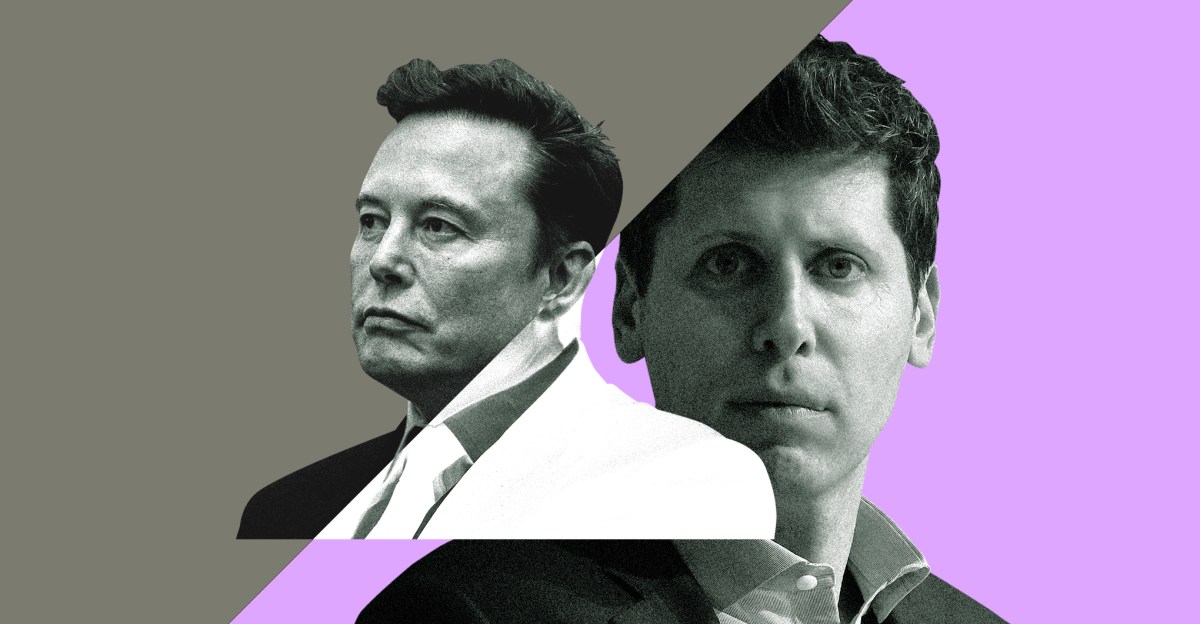
The highly anticipated tech trial of the year, Musk v. Altman, revolved around a power struggle for control. Elon Musk contended that Sam Altman, his co-founder at the influential company OpenAI, should not have authority over the future of artificial intelligence (AI). Altman’s legal team, on the other hand, questioned Musk’s credibility. After just two hours of deliberation, a jury reached a verdict on Monday, dismissing Musk’s claims due to the statute of limitations.
The trial, while legally inconclusive, shed light on a broader issue: a lack of trustworthiness among key figures in the tech industry. Some of the most influential individuals in tech appear to struggle with honesty in their dealings with each other. This raises concerns about why they are in charge of a trillion-dollar industry poised to reshape people’s lives.
Both Musk and Altman testified that OpenAI was established to prevent powerful AI from falling into the wrong hands. The founding team expressed concerns about who would control artificial general intelligence (AGI), a term used to describe AI that matches or surpasses human intelligence. They specifically feared Google DeepMind and its leader, Demis Hassabis. Altman admitted to contemplating whether anything could halt the development of AI, ultimately deciding it was impossible and preferring that a different entity, not Google, achieve this feat.
Co-founders Greg Brockman and Ilya Sutskever strongly opposed the idea of one person having sole control, even risking a lucrative deal that they believed could lead to an “AI dictatorship” under Musk. In an email to Altman, they questioned his motives and commitment to the cause of AGI, expressing doubts about his judgment.
The trial’s focus was on a pivotal event known as “the blip,” a five-day period in November 2023 when Altman was removed as CEO of OpenAI by the board. Sutskever had meticulously planned Altman’s removal, presenting a detailed memo alleging a pattern of deceit, undermining of executives, and fostering discord within the leadership team. This internal conflict had broader implications for the public deployment of AI systems, as testified by then-CTO Mira Murati, who revealed that Altman had misled her about skipping a safety review for an AI model.
During the court proceedings, Musk, now heading the competing lab xAI under his company SpaceX, also faced scrutiny. Joshua Achiam, OpenAI’s chief futurist, testified that Musk’s race against Google led him to adopt a reckless approach to achieving AGI. Concerns raised by Achiam and others were dismissed by Musk, who argued that OpenAI’s transition to a for-profit model incentivized overlooking safety measures, although his own xAI approach lacked a robust safety framework. Musk’s relentless pursuit of control over OpenAI was highlighted, with OpenAI’s attorneys emphasizing his desire for dominion over AGI.
In the eyes of some observers, the untrustworthiness of Musk and Altman was so significant that their proximity could lead to catastrophic consequences.
OpenAI did not provide an immediate response to requests for comments, while Musk announced on X that he intended to file an appeal.
The public’s perception of AI is at an all-time low, with many expressing concerns over job displacement and the environmental impact of data centers. Protests against AI development have turned violent, with some individuals attempting to target Altman’s residence. Tech CEOs admit to preparing for worst-case scenarios, highlighting the lack of control individuals feel over how AI is used in their lives.
The trial revealed a rare moment of cooperation between Altman and Musk when they approached Microsoft CEO Satya Nadella in 2015 to advocate for the establishment of a regulatory agency for AI safety. However, Nadella rejected the idea, emphasizing the need for research funding rather than oversight. This incident underscored the challenges in achieving consensus on regulatory measures within the AI industry.
In conclusion, the Musk v. Altman trial showcased the complex dynamics and ethical dilemmas within the AI industry. While both individuals sought to position themselves as guardians of AI ethics, the trial exposed their shortcomings and the industry’s lack of transparency. It also highlighted the urgent need for external oversight and regulatory frameworks to address the ethical implications of AI advancements.











Top 10 most INSANE Limited Edition Smartphones!

European Launch: Customize Your 2027 BMW X5 50e, M60e, and iX5 60 Models Now!

Unifying the Developer Ecosystem: Insights from GitHub COO Kyle Daigle

Shining a Light on Amazon’s Kindle Light Leak Issue

The Talos Principle 3: Unveiling the Gameplay

Samsung Unveils Sneak Peek of Next-Gen Galaxy Z Fold 8

Embracing the Widescreen Phone Revival: Why Oppo Could Lead the Way

The Revolutionary Success of Jev: A $7.5B AI Model in Record Time

Apple TV 4K: A Vintage First-Gen Retrospective

EU Takes Action Against Instagram and Facebook for Violating Illegal Content Rules

Warning: Facebook Creators Face Monetization Loss for Stealing and Reposting Videos

Facebook’s New Look: A Blend of Instagram’s Style

Facebook Compliance: ICE-tracking Page Removed After US Government Intervention

Facebook and Instagram to Reduce Personalized Ads for European Users

InstaDub: Meta’s AI Translation Tool for Instagram Videos

Reclaim Your Account: Facebook and Instagram Launch New Hub for Account Recovery

Meta discontinues Messenger apps for Windows and macOS

Breaking Updates: Meta Connect 2025 Unveils Latest Developments
Top 10 most INSANE Limited Edition Smartphones!

How Smart is the AI-Powered Huawei Mate 10 – with EMUI 8.0?

I used a 2012 Smartphone in 2018 – Here’s what happened.

How to send ANY file Anywhere!

NEW Oneplus 5T Sandstone White Unboxing – The Ultimate Oneplus 5T?

HUAWEI P20 – THE SMARTPHONE REVOLUTION IS HERE?

How OnePlus succeeded when they should have failed.

Samsung sent us THIS! #AD

Ulefone Power 3 – Quad Camera Smartphone that last 2 weeks!
-
 Facebook12 months ago
EU Takes Action Against Instagram and Facebook for Violating Illegal Content Rules
-
 Facebook12 months ago
Warning: Facebook Creators Face Monetization Loss for Stealing and Reposting Videos
-
 Facebook10 months ago
Facebook’s New Look: A Blend of Instagram’s Style
-
 Facebook12 months ago
Facebook Compliance: ICE-tracking Page Removed After US Government Intervention
-
 Facebook10 months ago
Facebook and Instagram to Reduce Personalized Ads for European Users
-
 Facebook12 months ago
InstaDub: Meta’s AI Translation Tool for Instagram Videos
-
 Facebook10 months ago
Reclaim Your Account: Facebook and Instagram Launch New Hub for Account Recovery
-
 Apple12 months ago
Meta discontinues Messenger apps for Windows and macOS
