INTERPOL Operation Ramz: Crackdown on Cybercrime in the Middle East and North Africa
During INTERPOL’s recent Operation Ramz, over 200 individuals were apprehended for engaging in cybercrime activities across the Middle East and North Africa region.
Law enforcement authorities also uncovered and identified 382 additional suspects in 13 countries, including Algeria, Bahrain, Egypt, Iraq, Jordan, Lebanon, Libya, Morocco, Oman, Palestine, Qatar, Tunisia, and the UAE.
Aside from the arrests, a total of 53 servers used for carrying out phishing, malware, and online fraud were seized. These criminal activities impacted at least 3,867 confirmed victims, as revealed through the analysis of nearly 8,000 intelligence packages extracted from the confiscated servers.
INTERPOL’s official statement emphasized the operation’s focus on eradicating phishing and malware threats, as well as combating cyber scams that have inflicted significant financial losses in the region.
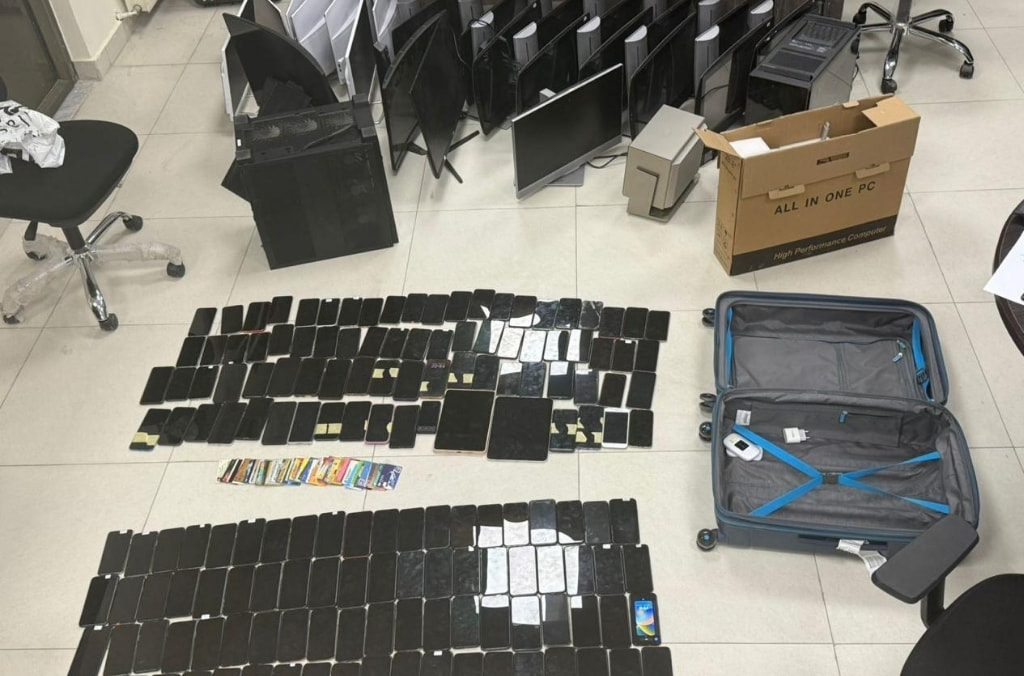
Seized devices in Jordan Source: INTERPOL
INTERPOL collaborated with various private cybersecurity firms, including Kaspersky, Group-IB, The Shadowserver Foundation, Team Cymru, and TrendAI, to trace and dismantle the malicious infrastructure.
Noteworthy achievements of ‘Operation Ramz’ encompass:
Securing compromised devices unknowingly involved in malware dissemination in Qatar
Dismantling an investment scam ring in Jordan, where 15 trafficked workers were coerced into running fraudulent schemes; resulting in the arrest of two organizers
Disabling a malware-infected server harboring sensitive data in Oman
Shutting down a phishing-as-a-service platform in Algeria and apprehending a key suspect
Confiscating devices and banking information associated with phishing operations in Morocco, leading to multiple suspects facing legal scrutiny
This marks the third significant crackdown on cybercrime conducted by INTERPOL this year.
In a previous operation named ‘Operation Synergia III’ in March, authorities successfully sinkholed 45,000 malicious IP addresses, seized 212 devices and servers, and arrested 94 individuals across 72 countries for involvement in phishing, hacking, fraud, and malware distribution.
Earlier in February, INTERPOL announced the apprehension of 651 suspects across 16 African nations as part of ‘Operation Red Card 2.0,’ targeting investment fraud, mobile money scams, and fake loan apps linked to over $45 million in losses.
Automated pentesting tools offer valuable insights but are primarily designed to assess an attacker’s ability to navigate through a network. They may not adequately test the efficacy of your security controls, detection mechanisms, or cloud configurations.
Explore the essential 6 surfaces that require validation in this comprehensive guide.