
Security
Browsing with Danger: The Rise of Browser Attacks


Each year, the Verizon Data Breach Investigations Report acts as a crucial benchmark for the industry, offering not just key statistics but also important convergence signals. When multiple data sources independently highlight a shift in attacker behavior, it’s a sign to take notice.
As a contributor to the 2026 Verizon DBIR, the Keep Aware team had early insights into this convergence.
This article delves into the specific areas where the data from the 2026 DBIR aligns with Keep Aware’s browser telemetry, revealing insights that network and endpoint tools may overlook.
Shadow AI: A Rising Enterprise Risk
Shadow AI emerged as the third most common non-malicious insider action in DLP datasets, showing a significant increase from the previous year, as noted in the Verizon DBIR. This trend indicates that employees are not intentionally leaking data but are instead utilizing the quickest tools available, often resorting to personal AI services like ChatGPT without organizational approval.
One notable finding is the prevalence of unauthorized AI usage in corporate environments, with a large number of users accessing AI services through personal accounts on company devices. Keep Aware’s browser telemetry offers insights into how these services are being utilized, highlighting the risks associated with such usage.
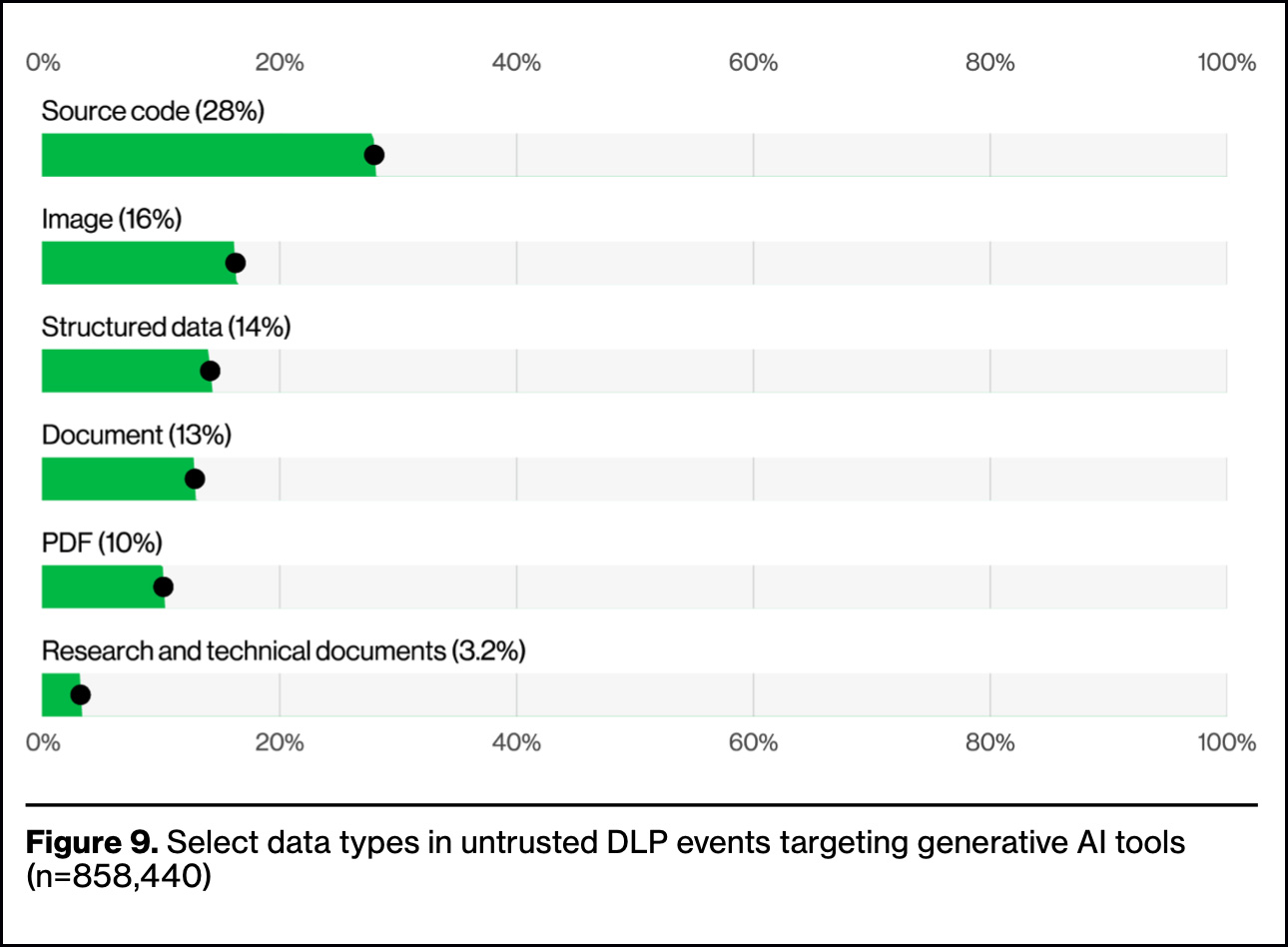
Employees frequently transfer sensitive data to AI tools like ChatGPT and Gemini, posing a significant risk.
Keep Aware’s free AI audit offers a comprehensive assessment of data leaving your organization through various apps, helping prevent potential breaches.
Get your free AI audit
Credential Abuse and the Browser’s Vulnerabilities
The 2026 DBIR highlighted that 39% of breaches involve credential abuse. Data from Keep Aware’s 2025 findings underscores browser-based credential theft as a prominent attack vector, indicating that such theft could lead to successful breaches in the future.
What exacerbates this threat is that traditional security tools often fail to detect these attacks. Keep Aware’s analysis revealed that a significant number of phishing sites went unnoticed by standard security measures, emphasizing a critical detection gap in existing security protocols.
Furthermore, all observed credential theft attempts bypassed non-browser security controls, underscoring the importance of browser-level security in detecting and preventing such attacks.
Browser Extensions: A Growing Security Concern
Browser add-ons have the capability to access and manipulate webpage content, potentially compromising data security. The 2026 DBIR noted that many enterprises have users with unauthorized AI extensions installed, but the issue extends beyond AI tools.
Keep Aware’s extension analysis revealed a substantial percentage of high-risk browser extensions, indicating a broader problem. Surprisingly, a large number of risky extensions fall under the “productivity” category in browser marketplaces, rendering category-based allowlisting ineffective against this threat.
ClickFix and the Rise of Browser-Based Social Engineering
Both the 2026 DBIR and Keep Aware’s State of Browser Security Report highlight ClickFix as a concerning trend in browser-based social engineering. While ClickFix constitutes a small percentage of detected attacks, it signifies a shift towards more sophisticated social engineering tactics in browsers.
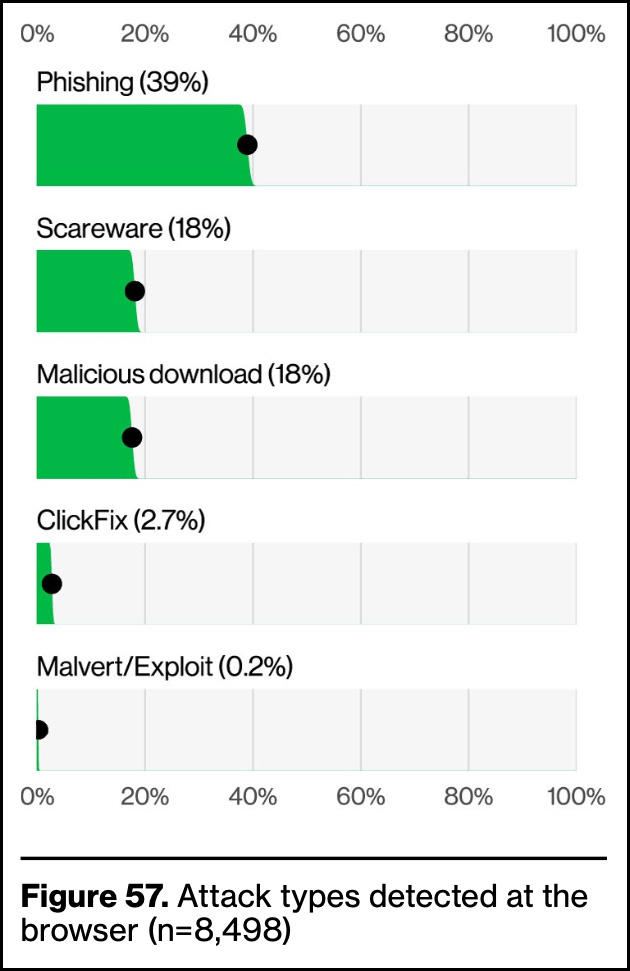
ClickFix involves deceptive tactics to trick users into executing malicious code, starting in the browser and extending to the endpoint. This technique underscores the need for enhanced browser security to combat evolving social engineering threats.
The Human Element in Browser Security
According to the 2026 DBIR, a significant percentage of breaches involve human error, with phishing playing a key role. Keep Aware’s data reveals that a substantial portion of browser attacks are attributed to phishing and social engineering tactics.
While the human element is often seen as a training issue, attackers continuously refine their social engineering strategies. Browser-level visibility shifts the focus to detecting threats at the point of user interaction, offering a proactive approach to mitigating risks.
Implications for Security Teams
Shadow AI, credential theft, malicious extensions, and browser-based social engineering tactics all operate within the browser environment, necessitating heightened security measures at the browser layer. Relying solely on network and endpoint security tools leaves critical blind spots that attackers exploit.
The browser is no longer just a tool but a vital workspace for most enterprise users. Securing it is imperative to safeguard sensitive data and prevent breaches.
For organizations lacking visibility into browser activity, understanding this gap is crucial before it’s exploited by malicious actors. Request a demo of Keep Aware to uncover what your current security tools may be missing.
Keep Aware contributed data to the Verizon 2026 Data Breach Investigations Report. Access Keep Aware’s 2026 State of Browser Security Report for further insights.
Sponsored and authored by Keep Aware.













Unveiling the 2028 BMW M5: A High-Speed Test Drive

War Dogs, Mushroom Mayhem, and Mastermind Heists: The Thrilling PC Gaming Lineup of the Week

Garmin Cirqa: The Ultimate Whoop Competitor?

Last Chance: Apply Now for Your Disrupt 2026 Side Event!

Revolutionizing Logistics: MG Ship Introduces AI Route Optimization for Accelerated Returns

2027 Hyundai Santa Fe E-Range: Extended-Range Electric Model Coming to Australia

Sephiroth Takes Center Stage in Final Fantasy Resonance Demo Launch Trailer

Score a Discount on Xiaomi’s Poco F9 Ultra with £230 Off on Amazon – Tech Advisor

Breaking Through: The Future of Legal Expertise in Innovation

EU Takes Action Against Instagram and Facebook for Violating Illegal Content Rules

Warning: Facebook Creators Face Monetization Loss for Stealing and Reposting Videos

Facebook Compliance: ICE-tracking Page Removed After US Government Intervention

Facebook’s New Look: A Blend of Instagram’s Style

Facebook and Instagram to Reduce Personalized Ads for European Users

InstaDub: Meta’s AI Translation Tool for Instagram Videos

Reclaim Your Account: Facebook and Instagram Launch New Hub for Account Recovery

Meta discontinues Messenger apps for Windows and macOS

Breaking Updates: Meta Connect 2025 Unveils Latest Developments

Our Bezel-less future! Q&A 5.0

The $200 OnePlus phone? Lenovo S5 is HERE!

OnePlus 6 vs Samsung Galaxy S9 Plus

Honor 10 UNBOXING!

OnePlus 6 vs iPhone X Camera Test Comparison

MYSTERY Package from Xiaomi – MASSIVE UNBOXING!

The BEASTLY 2018 Gaming Setup.

10 Android Apps you should try RIGHT NOW!

The TRUTH about the OnePlus 6 – REAL Review
-
 Facebook11 months ago
EU Takes Action Against Instagram and Facebook for Violating Illegal Content Rules
-
 Facebook11 months ago
Warning: Facebook Creators Face Monetization Loss for Stealing and Reposting Videos
-
 Facebook11 months ago
Facebook Compliance: ICE-tracking Page Removed After US Government Intervention
-
 Facebook9 months ago
Facebook’s New Look: A Blend of Instagram’s Style
-
 Facebook9 months ago
Facebook and Instagram to Reduce Personalized Ads for European Users
-
 Facebook11 months ago
InstaDub: Meta’s AI Translation Tool for Instagram Videos
-
 Facebook9 months ago
Reclaim Your Account: Facebook and Instagram Launch New Hub for Account Recovery
-
 Apple11 months ago
Meta discontinues Messenger apps for Windows and macOS
