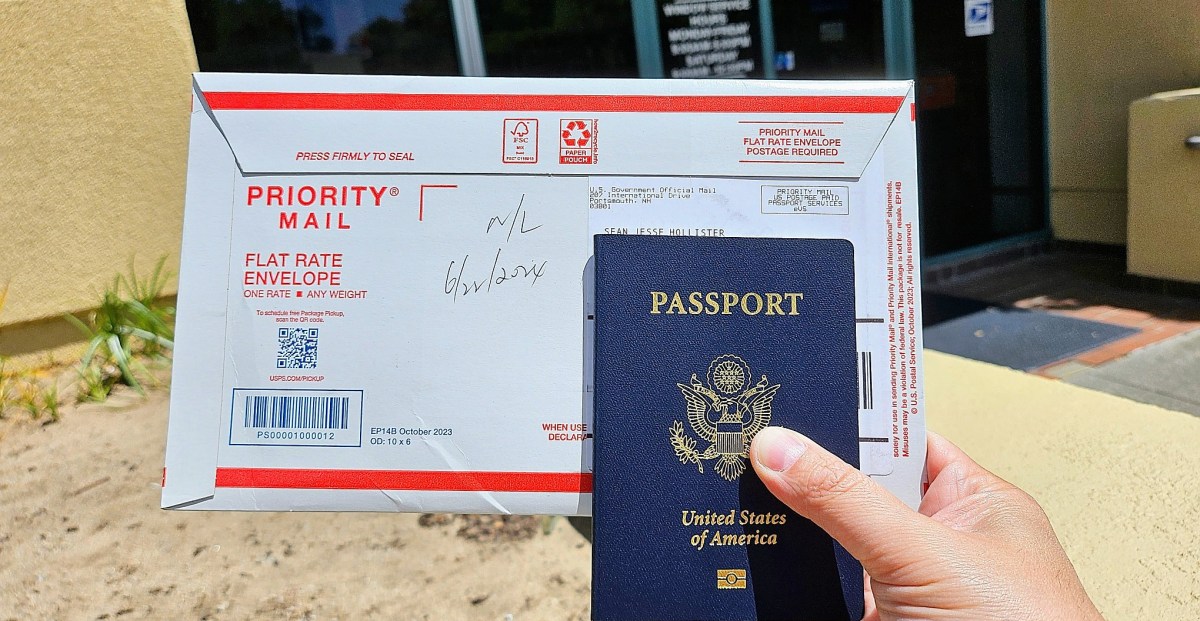
Typing a few letters and numbers into my web browser, I find myself gaping at the identity documents of complete strangers. The passport of a young woman from Germany. The passport of a man from Spain with glasses resting on his head. The front and back of another man’s driver’s license, a stereotypically goofy expression on his face.
They were all sitting unprotected at public URLs, with no password or access control of any sort. If I sent you a link, you could have looked at someone’s passport.
“We have to do something about it as fast as possible, because people will find this and resell it. It will do damage,” Sammy Azdoufal told me in May.
Azdoufal is the security researcher who used Claude Code to help discover that every DJI Romo robot vacuum cleaner and a million baby monitors and security cameras were embarrassingly easy to hack. This time, he says he discovered over 985,000 photo IDs sitting on the public internet for any half-decent hacker to steal.
If you’ve visited a cannabis club in Spain, Azdoufal says, chances are your photo ID was among them — and possibly your phone number, address, your favorite strains of cannabis, and how much you consumed each month while there. Azdoufal says celebrities are in the database, too, and visitors from all over the world, including 30,000 from the United States. “They have famous people,” says Azdoufal. “People who don’t want everyone to know they smoke weed.”
Here’s a rough summary of the user base that Azdoufal’s automated tool was able to see and the names of some of the clubs:
It’s not the clubs that didn’t protect these identity documents. An Irish company called Cannabis Club Systems (CCS), formally Nefos Solutions, develops and provides the software these clubs use for sales, accounting, and admissions, including a verification system where receptionists upload your IDs and selfies to Nefos’ cloud.
Traditionally, you’d need to provide a photo ID every time you wanted to get into a club. But with the verification system, the receptionist can pull up your stored identity documents and check if your face matches. There’s also an optional app called PuffPal that lets clubs scan a QR code for faster entry.
But when Azdoufal decompiled that PuffPal app, he explains in his report, he discovered that Nefos had no meaningful level of security. He discovered a secret key for the Stripe payments platform sitting inside the app in plain text. He discovered he could pull up any member’s profile just by changing one number. If those profiles included their phone number, home address, passport, and weed preferences, he now had access to them too.
And then, he discovered that those passports, drivers licenses, and photo IDs were stored at public URLs as simple as this: https://ccsnubev2.com/v8/images/_{club}/ID/{user_id}-front.jpg
Those clubs were uploading 5,000 new photo IDs with these insecure URLs every day, Azdoufal tells me.
He also found an admin portal accessible via the public internet — and that the cannabis clubs had a trivial level of security on their own accounts, using passwords that could theoretically be cracked in minutes with a modern GPU. Private chat messages between clubs and members through the PuffPal app were also vulnerable.
The good news: Roughly a month after we reached out to Nefos, the company seems to finally be taking meaningful action. The company says it’s shutting down its entire PuffPal system and vulnerable APIs until they can be fixed — in Azdoufal’s latest tests on June 10th, passport images and personal data seem to be secure. Nefos has also informed local authorities and says it will take responsibility to make fixes, pay fines, and tell users what happened.
In a phone interview, Nefos cofounder Andreas Nilsen tells The Verge that he’s in touch with Ireland’s Data Protection Commission (DPC) about the data breach — a fact that DPC spokesperson Evan O’Leary confirmed to us by email. “We have to communicate to everyone that was potentially exposed,” Nilsen tells me, saying he hopes the DPC can show his company how to do that properly. Nilsen claims there’s currently no evidence that any outsider accessed the data other than Azdoufal.
But it took far too long for Nefos to take the threat seriously. It took five days and the threat of a story before the company replied to us, long after Azdoufal reached out. Then, Nefos began by papering over the holes instead of risking business.
I was prepared to write this story at the beginning of June, after Azdoufal told me Nefos had finally locked down the passport images.
On June 4th, I surprised Azdoufal by revealing that his passport was once again accessible online without any protection. This was due to Nefos allowing cannabis clubs to use the PuffPal app, resulting in complaints about locked-down images not displaying correctly. As a result, Nefos decided to unlock the images to prioritize customer satisfaction over security concerns.
Azdoufal later discovered on June 9th that while Nefos had secured passport images and photo IDs with tokens, other personal information in user profiles, such as passport numbers, phone numbers, email addresses, and home addresses, remained easily accessible. A simple command line entry could retrieve a wealth of personal data from Nefos’ servers. After being notified of this security flaw, Nefos promptly closed the vulnerability.
The company’s negligence in ensuring user data security was questioned, with Nilsen acknowledging that the responsibility ultimately rested with Nefos. He attributed the security vulnerabilities to outsourcing firm 9Series, which developed the PuffPal app and created the vulnerable APIs used to access unprotected data from Nefos’ user database.
Following the incident, Nefos informed clubs that PuffPal would be offline, preventing members from using QR codes for entry. However, IDs could still be accessed from Nefos’ servers by scanning RFID cards or entering phone numbers. Nilsen stated that PuffPal would not be relaunched without proper security measures in place, and Nefos was severing ties with 9Series to develop a new app with enhanced security features.
Nilsen acknowledged the legal obligation under EU law to disclose data breaches within 72 hours, which Nefos failed to do. He anticipated potential penalties for this violation. Additionally, he referenced a recent incident involving the UK Visa Portal exposing passports due to a security flaw, emphasizing the importance of cybersecurity awareness.
In conclusion, the article highlights the security lapses in the PuffPal app, the actions taken by Nefos to address the vulnerabilities, and the company’s commitment to enhancing security measures moving forward. The narrative underscores the significance of cybersecurity in safeguarding personal data and emphasizes the need for stringent security protocols in digital platforms. Transform the following:
Original: The cat is on the mat.
Transformed: On the mat is where the cat is.