
Startups
Navigating the complexities of AI-induced psychosis: Understanding the debate

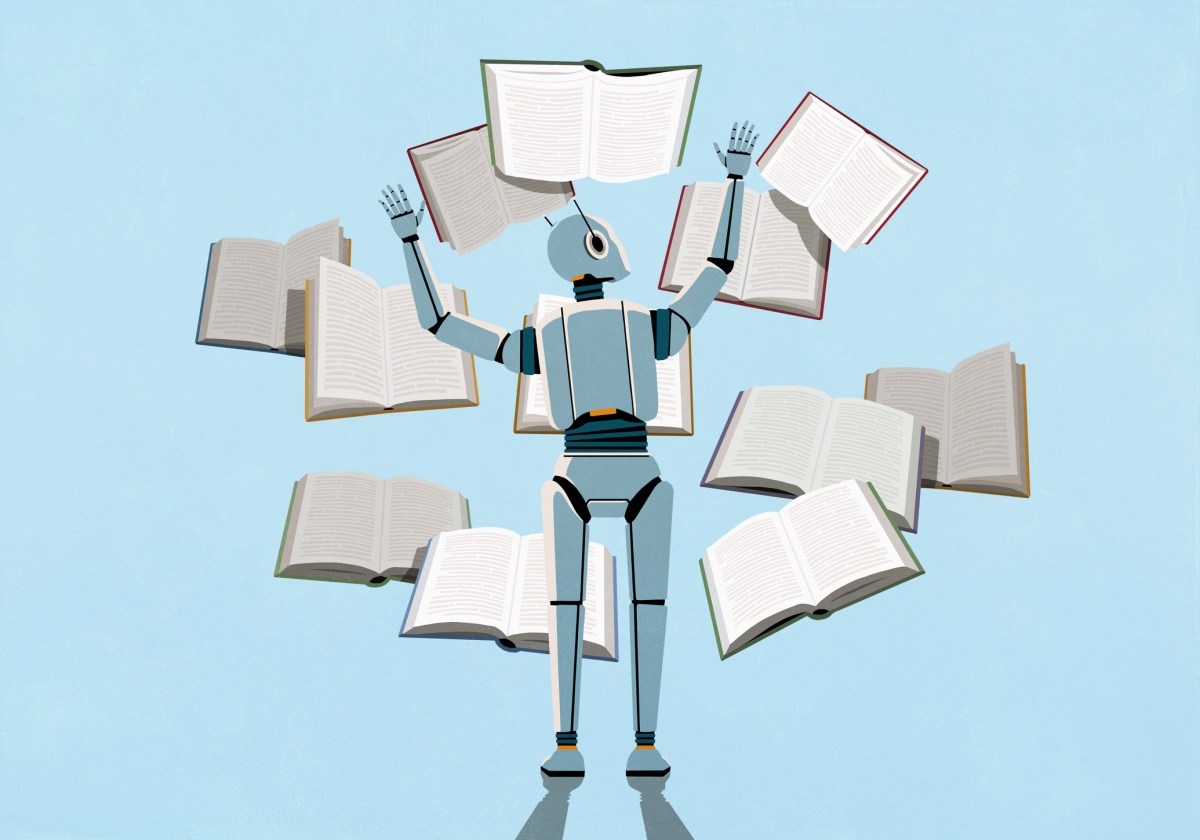
Box founder Aaron Levie got us talking this week with a social media post suggesting that tech CEOs are “uniquely prone to AI psychosis.”
On the latest episode of TechCrunch’s Equity podcast, Kirsten Korosec, Sean O’Kane, and I did our best to unpack Levie’s comment. For one thing, we noted that he isn’t disavowing AI tools, merely insisting that CEOs need to actually use those tools to understand them.
That’s a relatively gentle note of skepticism compared to other signs of a broader backlash, whether you look at graduating college students booing any mention of AI, the bad vibes around tech industry layoffs, or the apparent surge of installs at search engine DuckDuckGo after Google’s announcement that it’s bringing more AI to the search experience.
Kirsten suggested that Google faces a dilemma where it’s “chasing that thing it feels like it has to do to keep up, but it’s messing with the thing that people attach to the brand the most, and it’s not improving it.” More broadly, she wondered “if this anti-AI moment is an opportunity for startups or other areas of business.”
Keep reading for a preview of our conversations, edited for length and clarity.
Anthony Ha: AI is incredibly polarizing. And that’s part of what’s challenging to talk about, you can feel a little crazy because [simultaneously,] everybody’s using it and everybody loves it, but also no one’s using it and everybody hates it at the same time. There are large contingents for whom both of those things are true.
On the user side, one thing that was very striking, we [already] talked about Google’s announcements about search and how AI is becoming a bigger part of search — although it’s been interesting to see how Google has tried to walk that back a little bit, or at least add some nuance in terms of, if you want that 10 blue links experience, there are still ways you can get it. It’s not going away entirely.
But I think a lot of people are not excited about the direction Google is going in. And so you see, for example, that DuckDuckGo said installs are up 30%, which is a huge leap. Now, of course, DuckDuckGo is a much, much smaller product than Google. I don’t think Google is in any immediate trouble, but I think that’s a sign that there is a very significant audience that does not like the current AI direction.
Sean O’Kane: I will say one thing that I keep looking for when I look at all of these leading AI labs or tech companies that are really pushing AI features and products — to me, there seems to just be this collapsing towards Anthropic’s approach, this idea of really trying to understand what it is you want to offer people and sticking to that.
And Google is one of the ones that I would say is actually still pushing the other direction. They’re trying to do a lot of different things, but they don’t do themselves any favors by being so vague about it.
What I mean by that is, when Google goes on stage at IO and talks about the way that it thinks it’s going to change search, so much of what they’re talking about, they’re talking about shopping or stuff that ends in a commercial transaction. And I think so much of what we think of Google as collectively, especially people who have been using it for two or three decades, is as an information retrieval system.
Google can struggle with that a lot, where they get reactive fears of how they may be damaging the information retrieval side of things, and their response is, “Yeah, but that’ll still be there. Let’s focus on how it’s going to help you book a flight or something like that.”
And then they also go off and sort of shoot themselves in the foot by releasing — it must be very challenging to stress test these systems, but they go out and they release this stuff and they’re running into the same problems they’ve run into for years.
Kirsten Korosec: We had a great article that just published about how Google doesn’t know how to spell its own name. If you ask it, “How many P’s are in Google?” it says two.
It’s this tension between: Google is chasing that thing it feels like it has to do to keep up, but it’s messing with the thing that people attach to the brand the most, and it’s not improving it.
What I’m wondering is, we’ve already seen some early evidence of people’s fingers doing the voting or walking for them, by literally going to another service. But I wonder if there are opportunities for other startups out there or culturally speaking, if this anti-AI moment is an opportunity for startups or other areas of business that we haven’t really thought about.
Anthony: Absolutely. Again, it’s probably a challenge because there is such a range of opinions. And if you build something that’s tailored for a group that’s skeptical [of] AI, then you’re probably going to alienate other users who are much more evangelistic or gung-ho about it. But I think that’s just the moment we’re living in.
And you can see in how DuckDuckGo is promoting itself, that they’re very much emphasizing this idea of being anti-AI, which I find very striking because I’ve mentioned before, [I’ve been] moving away from Google myself, trying out other search engines. And I would say that a year ago, when I started that exploration, even these alternative search engines were still trying to experiment with AI features, emphasizing AI to some degree because they also thought they had to do it.
And now I think they’re seeing that there is actually a lane to be like, “No, we just were not interested in that stuff at all. Or inasmuch as we’re doing it, we’re very much putting it in a separate sandbox that’s not going to affect your core search experience.”
Kirsten: I think we unfairly sometimes categorize all the tech CEOs as force-feeding people AI.
In the world of tech CEOs, there’s one individual who has boldly pointed out the prevalence of what he calls “psychosis” among his peers when it comes to artificial intelligence. Aaron Levie, the founder of Box and a familiar face at Disrupt events, has raised concerns about the detachment of CEOs from the practical implementation of AI, which is essential for maximizing its value.
Levie’s observations shed light on a common phenomenon in the tech industry, where executives may be so removed from the day-to-day operations that they fail to grasp the intricacies of AI’s potential impact. This disconnect can lead to what he refers to as “AI psychosis,” a state of exaggerated optimism or fear regarding AI without a solid understanding of its practical implications.
The repercussions of this mindset extend beyond the boardroom, affecting the workforce as well. As companies embrace AI-driven technologies, layoffs have become a common occurrence, reshaping the way people work across various sectors. This shift is not limited to tech giants or AI startups but is permeating industries that traditionally rely on physical infrastructure and manufacturing.
In sectors like transportation, where physical operations are intertwined with technological advancements, the pace of AI adoption has been slower but is now gaining momentum. Companies are increasingly incorporating AI into robotics, self-driving technologies, and manufacturing processes, revolutionizing the way tasks are performed.
While the software side of AI is experiencing rapid transformation, concerns persist about the top-down approach to AI adoption and its impact on the workforce. Executives and venture capitalists often champion the idea of AI-driven productivity gains, envisioning leaner teams achieving remarkable efficiency. However, as Levie emphasizes, true understanding of AI tools requires hands-on engagement and a deep comprehension of their effects on workflow and outcomes.
The evolving landscape of AI in the workplace underscores the dual impact on employees through layoffs and changes in work practices. Companies are leveraging AI tools to streamline operations and boost productivity, but this evolution comes with challenges and implications for workers at all levels.
Ultimately, the integration of AI into business processes necessitates a balanced approach that considers both the technological advancements and the human element. As companies navigate the AI revolution, understanding the nuances of AI implementation and its consequences on the workforce is crucial for sustainable growth and innovation.













Game Devs Fearful of Copycats: A New Era of GenAI Gloom

Embracing the Mundane: Finding Beauty in the Ordinary Unicorn

Apple’s Strict Guidelines: Crackdown on Nudify AI Apps

Exclusive: Apple Website Leak Reveals iPad mini 8 Release

Unleashing Potential: Overcoming Limitations

Uncovering the Bystander Problem: Insights from a Former AWS Security Engineer on Amazon’s Bee AI Devices

Arizona Sunshine: Unleashing the Doggy Co-op Mode in January

International Collaboration: Surrey, Sheffield, and Melbourne Join Forces on £3.2m Project to Create Provably Secure Sandbox for AI Agents

Tech Advisor Announces Samsung Galaxy Phones Now Available on Google Play Store

EU Takes Action Against Instagram and Facebook for Violating Illegal Content Rules

Warning: Facebook Creators Face Monetization Loss for Stealing and Reposting Videos

Facebook’s New Look: A Blend of Instagram’s Style

Facebook Compliance: ICE-tracking Page Removed After US Government Intervention

Facebook and Instagram to Reduce Personalized Ads for European Users

InstaDub: Meta’s AI Translation Tool for Instagram Videos

Reclaim Your Account: Facebook and Instagram Launch New Hub for Account Recovery

Meta discontinues Messenger apps for Windows and macOS

Breaking Updates: Meta Connect 2025 Unveils Latest Developments

Finally Fixing my Wi-Fi – Zyxel Multy X!

$25,000 Gaming Setup – EVOLUTION!

The Maze Alpha X is HERE!

Cool Tech under $100 – December!

MYSTERY UNBOXING FROM GOOGLE!

TOP 6 Smartphones from Companies you NEVER Expected!

A Surprise Smartphone from EE!

DOOGEE MIX 2 VS DOOGEE MIX 1!

INCREDIBLE Smartphone Gadgets on Amazon!
-
 Facebook12 months ago
EU Takes Action Against Instagram and Facebook for Violating Illegal Content Rules
-
 Facebook1 year ago
Warning: Facebook Creators Face Monetization Loss for Stealing and Reposting Videos
-
 Facebook10 months ago
Facebook’s New Look: A Blend of Instagram’s Style
-
 Facebook1 year ago
Facebook Compliance: ICE-tracking Page Removed After US Government Intervention
-
 Facebook10 months ago
Facebook and Instagram to Reduce Personalized Ads for European Users
-
 Facebook1 year ago
InstaDub: Meta’s AI Translation Tool for Instagram Videos
-
 Facebook11 months ago
Reclaim Your Account: Facebook and Instagram Launch New Hub for Account Recovery
-
 Apple12 months ago
Meta discontinues Messenger apps for Windows and macOS
