This week’s cybersecurity challenges have highlighted the dangers that lurk in seemingly harmless actions. From familiar repositories to useful installers, from harmless sync settings to old bugs resurfacing, the threat landscape is evolving rapidly.
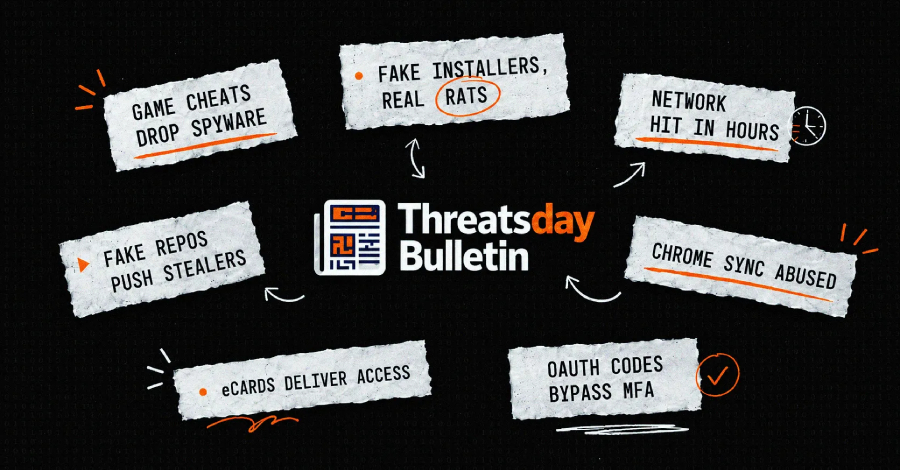
One of the alarming incidents involves game cheats dropping spyware. Cybersecurity researchers have uncovered 11 malicious NuGet packages masquerading as game utilities, bots, and panels. These packages act as first-stage downloaders for a Python payload named “pepesoft.exe,” fetching it from GitHub Releases and Hugging Face paths. The payloads have advanced capabilities, including connecting to Google Sheets, hardware binding, and executing remote commands.
Another concerning development is the deployment of remote access tools (RATs) through fake installers. A financially motivated adversary has been targeting users in the U.S. and Europe with a Python-based RAT called Starland RAT and a C2 memory implant known as WLDR agent. These tools aim to steal credentials, cryptocurrency assets, and establish persistent connections to victims’ machines.
Additionally, an IT services company in South Asia fell victim to the Spirals ransomware, with the attackers swiftly encrypting the network within hours of the initial breach. The ransom note threatens to publish stolen data unless a ransom is paid, highlighting the growing threat of ransomware attacks.
The U.S. Cybersecurity and Infrastructure Security Agency (CISA) has flagged actively exploited vulnerabilities in Oracle E-Business Suite and KNX Protocol, emphasizing the importance of patching known vulnerabilities promptly.
Furthermore, a joint guidance by CISA, NSA, JPCERT/CC, NCSC-NL, and NCSC-UK aims to streamline vulnerability disclosure processes between security researchers and software providers, enhancing product security.
Law enforcement agencies have made significant strides in combating cybercrime, with the dismantling of a 700-person scam network in the Netherlands and the disruption of a €140 million fraud network in Spain. These operations highlight the global reach and impact of cybercriminal activities.
On the technical front, researchers have uncovered techniques using Windows’ bind links to evade EDR products, demonstrating the need for enhanced defense mechanisms against sophisticated attacks.
In a disturbing revelation, Chrome Sync has been exploited by stalkers to gain unauthorized access to victims’ browsing activities, underscoring the importance of securing personal data and devices.
Phishing campaigns leveraging seasonal themes and commercial RMM tools have been observed, emphasizing the need for vigilance and awareness among users to prevent falling victim to such attacks.
Lastly, a financially motivated campaign has been identified distributing Vidar stealer and XMRig cryptocurrency miner to unsuspecting victims worldwide, showcasing the evolving tactics of cybercriminals to maximize their profits.
As the cybersecurity landscape continues to evolve, the key takeaway is to exercise caution and diligence in all online activities. By staying informed, applying patches promptly, and verifying sources before granting trust, individuals and organizations can mitigate the risks posed by cyber threats.