Automated pentesting tools are valuable for assessing network security but may not fully test the effectiveness of your security controls. This guide explores the key areas that need validation to enhance your cybersecurity posture.
Download Now


In a recent directive, the U.S. Cybersecurity and Infrastructure Security Agency (CISA) has instructed government agencies to bolster their defenses against a critical Oracle WebLogic Server vulnerability. This vulnerability, known as CVE-2024-21182, was actually patched two years ago but is currently being actively exploited by cyber threat actors.
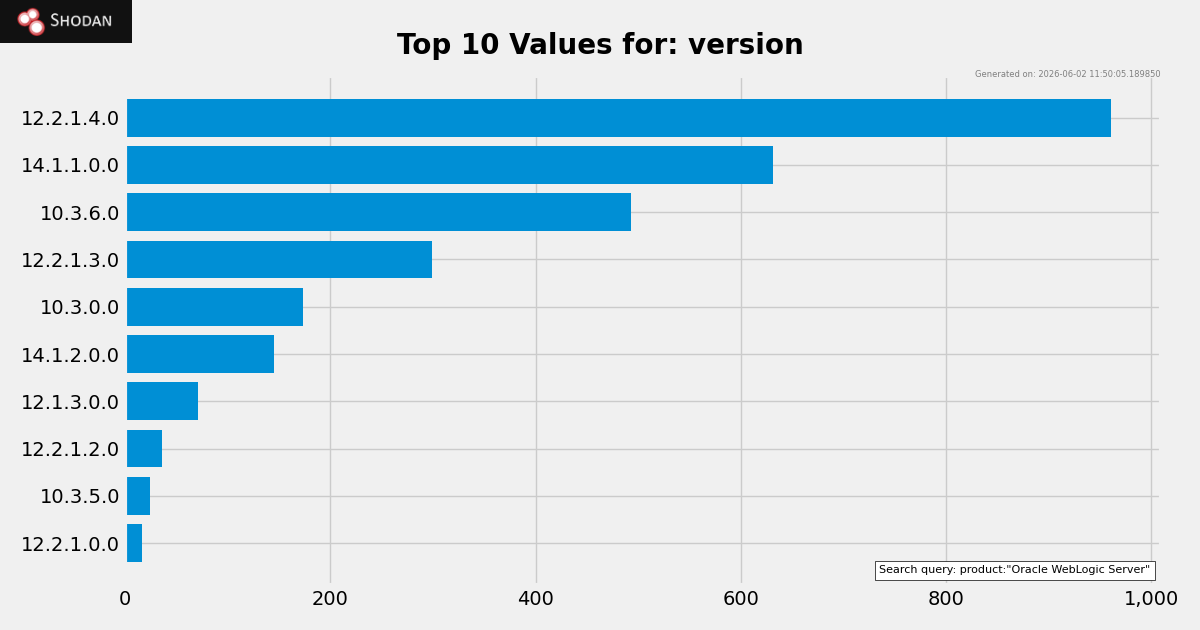
Oracle WebLogic Server, a robust Java application server commonly used in large-scale distributed applications, is the target of this high-severity vulnerability. Threat actors can exploit CVE-2024-21182 remotely, without any privileges, through low-complexity attacks on systems running Oracle WebLogic Server versions 12.2.1.4.0 and 14.1.1.0.0.
According to Oracle, the vulnerability allows unauthenticated attackers with network access to compromise Oracle WebLogic Server. Successful exploitation of this flaw can lead to unauthorized access to critical data or complete control over all accessible data on the server.
As of now, Shodan, an internet intelligence platform, has identified over 1,592 Oracle WebLogic servers online that are vulnerable to CVE-2024-21182 exploits, with 961 running version 12.2.1.4.0 and 631 running version 14.1.1.0.0.
CISA has now included this vulnerability in its list of actively exploited security flaws and mandated federal agencies to patch their WebLogic servers by a specified deadline. While this directive applies to federal agencies, CISA has advised all network defenders, including those in the private sector, to apply patches promptly to safeguard against ongoing attacks.
The cybersecurity agency highlighted the significant risks posed by such vulnerabilities and emphasized the importance of following vendor instructions for mitigating the threat. In cases where mitigations are not available, discontinuing the use of the affected product is recommended.
Furthermore, CISA has previously issued directives to address other vulnerabilities in Oracle products, such as an unauthenticated server-side request forgery (SSRF) flaw in Oracle E-Business Suite and a critical unauthenticated remote code execution vulnerability in Identity Manager and Web Services Manager.
Over the years, CISA has identified and reported numerous vulnerabilities across various Oracle products that have been exploited in the wild, with some even linked to ransomware attacks.
Automated pentesting tools are valuable for assessing network security but may not fully test the effectiveness of your security controls. This guide explores the key areas that need validation to enhance your cybersecurity posture.
Download Now



EU Takes Action Against Instagram and Facebook for Violating Illegal Content Rules

Warning: Facebook Creators Face Monetization Loss for Stealing and Reposting Videos

Facebook’s New Look: A Blend of Instagram’s Style

Facebook Compliance: ICE-tracking Page Removed After US Government Intervention

Facebook and Instagram to Reduce Personalized Ads for European Users

InstaDub: Meta’s AI Translation Tool for Instagram Videos

Reclaim Your Account: Facebook and Instagram Launch New Hub for Account Recovery

Meta discontinues Messenger apps for Windows and macOS
Subscribe to our weekly newsletter below and never miss the latest News or an exclusive offer.