
Startups
The Future of SaaS: A Rebirth in 2026?

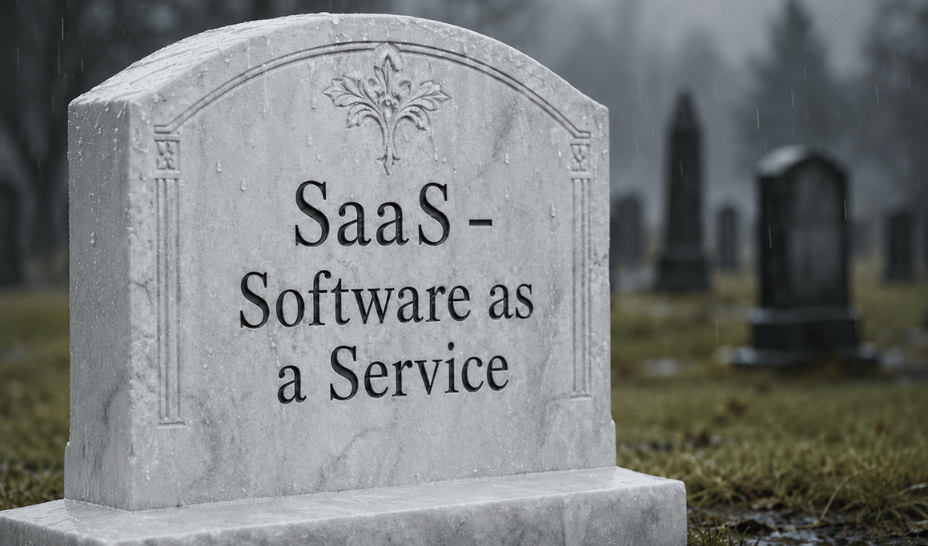
“SaaS is dead” has become the line of the year. But the obituaries are premature. Software isn’t shrinking. It is being rebuilt to compete for a far bigger prize.
You will find it on founder feeds, in investor memos, and on conference stages from Lisbon to Helsinki. And on the surface, the market seems to agree. Public software valuations have split in two: legacy SaaS names have repriced sharply, some to their lowest revenue multiples in years, while AI-native software trades at several times that on the very same exchanges, watched by the same analysts.
Read quickly, that gap looks like decline. Read carefully, it is something more useful.
The market is not writing software off. It is repricing it, moving value from tools that help a human work to software that does the work itself. That is not a funeral. For founders willing to build on the right side of the gap, it is the largest opening we have seen in years.
To see why, it helps to stop asking whether SaaS is dying and start watching where it is moving. Software is being rewired on four axes at once.
Shift one: the user becomes an agent
For twenty-five years, every SaaS product assumed a human in the chair: someone logging in, clicking through screens, reading dashboards. That assumption is quietly breaking. Increasingly, the “user” of your software is another piece of software acting on a person’s behalf.
Gartner projects that 40% of enterprise applications will include task-specific AI agents by the end of 2026, up from under 5% in 2025.
Shift two: the interface becomes an API
Graphical interfaces exist because humans need to see things. Agents do not need to see; they need to call. So the interface layer of software is being rebuilt for a non-human user.
The clearest signal is the Model Context Protocol, the emerging standard that lets agents connect to tools and data. Anthropic, which introduced it, reports it going from near-zero to around 97 million monthly Software Development Kit (SDK) downloads and thousands of public servers in barely eighteen months.
Stripe rebuilt its commerce stack so agents could transact directly. The takeaway for founders is simple: if an agent cannot reach your product, it cannot buy, use, or recommend it. The front door is no longer a login screen.
Shift three: pricing moves from the seat to the outcome
Per-seat pricing was the financial engine of SaaS, and it assumed one thing: a human occupying the seat. When an agent does the work of ten people, ten seats do not follow.
The model has to change and it already is.
Roughly 77% of the largest software companies now use some form of consumption pricing, according to Metronome’s 2025 pricing study. Cursor, the AI coding tool, scaled to billions of dollars in annual revenue with a team of only a few hundred people, charging for how much its product is used rather than for how many people log in.
That combination, a lean team on usage revenue, is what the market now pays up for: in June of this year SpaceX agreed to buy Cursor in a €52 billion ($60 billion) all-stock deal expected to close later in the year, the largest takeover of a venture-backed startup on record.
Founders are no longer selling access to a tool. They are selling units of work.
Shift four: the budget moves from IT to HR
This is the shift that reframes everything. When software sold seats, it was paid for out of the IT budget. When software does the work, it competes for the labour budget instead, and the labour budget is vastly larger.
Foundation Capital estimates the opportunity for what it calls “Service-as-Software” at around €4.02 trillion ($4.6 trillion). Set against a global SaaS market of roughly €175 billion ($200 billion), that is not a rounding error. It is more than twenty times the market that classic SaaS was ever addressing.
The total addressable market did not shrink when agents arrived. It expanded, because software is now reaching into work that once required people and professional services.
You can already see it category by category: customer support handled by agents instead of call centres, bookkeeping closed by software instead of junior accountants, first-line legal drafted before a lawyer opens the file. Each of those was a services budget, not a software one.
That single reframe is why the valuation “collapse” is misread. Value is not disappearing. It is migrating from the small budget to the enormous one.
What this means for European founders
None of this arrives cleanly. The same firm that forecasts the agent boom, Gartner, also expects more than 40% of agentic AI projects to be cancelled by the end of 2027, undone by cost, weak governance or unclear value. The direction of travel is not in doubt; the execution is where founders will win or lose.
The good news is that Europe is already producing proof that the new model works, and works lean.
Lovable, out of Stockholm, reportedly reached around €350 million in annual recurring revenue in early 2026 with only about 150 staff. In a single month it added €87.4 million ($100 million) in revenue, and it has climbed further since. Berlin’s n8n has become critical plumbing for agent-driven automation. London’s ElevenLabs turned voice into an API that other products simply call.
None of these looks like a traditional per-seat SaaS company, and that is precisely the point.
The pattern behind them is consistent. Go vertical, because domain knowledge, not code, is the defensible moat now that anyone can generate software. Own proprietary workflow data that incumbents cannot easily copy.
Price the outcome, not the seat. And plan for structurally leaner teams, because revenue per employee is becoming the number that separates the new winners from the old ones.
The founders who struggle will be the ones defending a seat-based tool in a category where the buyer has started paying for results.
In the competitive world of startups, winning founders are those who view the four shifts as a design brief, shaping their strategies accordingly. On the other side of the coin, investors are advised to prioritize lean, high-output teams, outcome-linked pricing, and a proprietary data moat over traditional metrics like headcount growth and seat counts.
To navigate this evolving landscape, it’s crucial to see the changing valuation news as an opportunity for growth rather than a sign of collapse. Identifying and embracing the four key shifts – users, interface, pricing, and budget – can help businesses stay ahead of the curve. By exposing products to agents, implementing usage-based pricing, focusing on domain expertise, and maintaining lean teams, companies can adapt to the new era of Service-as-a-Software.
While Software-as-a-Service (SaaS) may not be dead, it is transforming into something bigger and more lucrative. Service-as-Software, as coined by Foundation Capital, represents a shift towards service delivery through software. With users becoming agents, interfaces turning into APIs, pricing based on outcomes, and budgets shifting towards labor rather than traditional IT expenses, the market potential expands exponentially.
The shift from Software-as-a-Service to Service-as-Software opens up a world of opportunity for entrepreneurs. With a €4 trillion market to compete in, founders have twenty-three times more room to innovate and build successful businesses. By embracing these changes and reimagining their approach to software delivery, companies can thrive in the new era of Service-as-a-Software.











Oneplus 5T vs Pixel 2 XL vs S8 vs iPhone 8 Battery life Drain Test!

Oneplus 5T vs Pixel 2 XL vs S8 vs iPhone 8 Battery Charging Speed Test!

The Affordable Next-Gen Xbox: Debunking the $1,800 Price Tag

Revelation: A New Dawn in the Helldivers Universe

Battery Life Halved by Garmin’s New Voice Controls

Revolutionizing Energy: The Future of Next-Gen Battery Life

Warhound Secures $200M Investment to Develop Advanced Military Canines Equipped with Anduril Technology

No, the iPhone Duo isn’t a miniature device

Rebirth of Resilience: The Evolution of Crisis Management in the Digital Age

EU Takes Action Against Instagram and Facebook for Violating Illegal Content Rules

Warning: Facebook Creators Face Monetization Loss for Stealing and Reposting Videos

Facebook’s New Look: A Blend of Instagram’s Style

Facebook Compliance: ICE-tracking Page Removed After US Government Intervention

Facebook and Instagram to Reduce Personalized Ads for European Users

InstaDub: Meta’s AI Translation Tool for Instagram Videos

Reclaim Your Account: Facebook and Instagram Launch New Hub for Account Recovery

Meta discontinues Messenger apps for Windows and macOS

Breaking Updates: Meta Connect 2025 Unveils Latest Developments
Oneplus 5T vs Pixel 2 XL vs S8 vs iPhone 8 Battery life Drain Test!
Oneplus 5T vs Pixel 2 XL vs S8 vs iPhone 8 Battery Charging Speed Test!

MY NEW CAR?! (Q&A)

Should you buy your Smartphones Refurbished!?

6 Amazing SECRET Android Launchers (2017 / 2018)

6 Value for Money Tech Products you NEED to try!

iPhone X Helicopter 1200ft Drop Test!! + Mous Case Review

7 UNBELIEVABLE Smartphone Magic Tricks!

Oneplus 5T vs Oneplus 1 – 3 Years Later.
-
 Facebook12 months ago
EU Takes Action Against Instagram and Facebook for Violating Illegal Content Rules
-
 Facebook1 year ago
Warning: Facebook Creators Face Monetization Loss for Stealing and Reposting Videos
-
 Facebook11 months ago
Facebook’s New Look: A Blend of Instagram’s Style
-
 Facebook1 year ago
Facebook Compliance: ICE-tracking Page Removed After US Government Intervention
-
 Facebook11 months ago
Facebook and Instagram to Reduce Personalized Ads for European Users
-
 Facebook1 year ago
InstaDub: Meta’s AI Translation Tool for Instagram Videos
-
 Facebook11 months ago
Reclaim Your Account: Facebook and Instagram Launch New Hub for Account Recovery
-
 Apple1 year ago
Meta discontinues Messenger apps for Windows and macOS
