
Amazon
Revolutionizing Amazon: The Impact of Agentic AI on Team Dynamics and Traditions

[Editor’s Note: Agents of Transformation is an independent GeekWire series, underwritten by Accenture, exploring the adoption and impact of AI and agents. See coverage of our related event.]
Amazon is legendary for its process of “working backwards.” Start with a customer problem, imagine a future in which it’s solved, draft a press release and FAQs as if it had already happened, obsess over the document until it’s just right, and then go make it a reality.
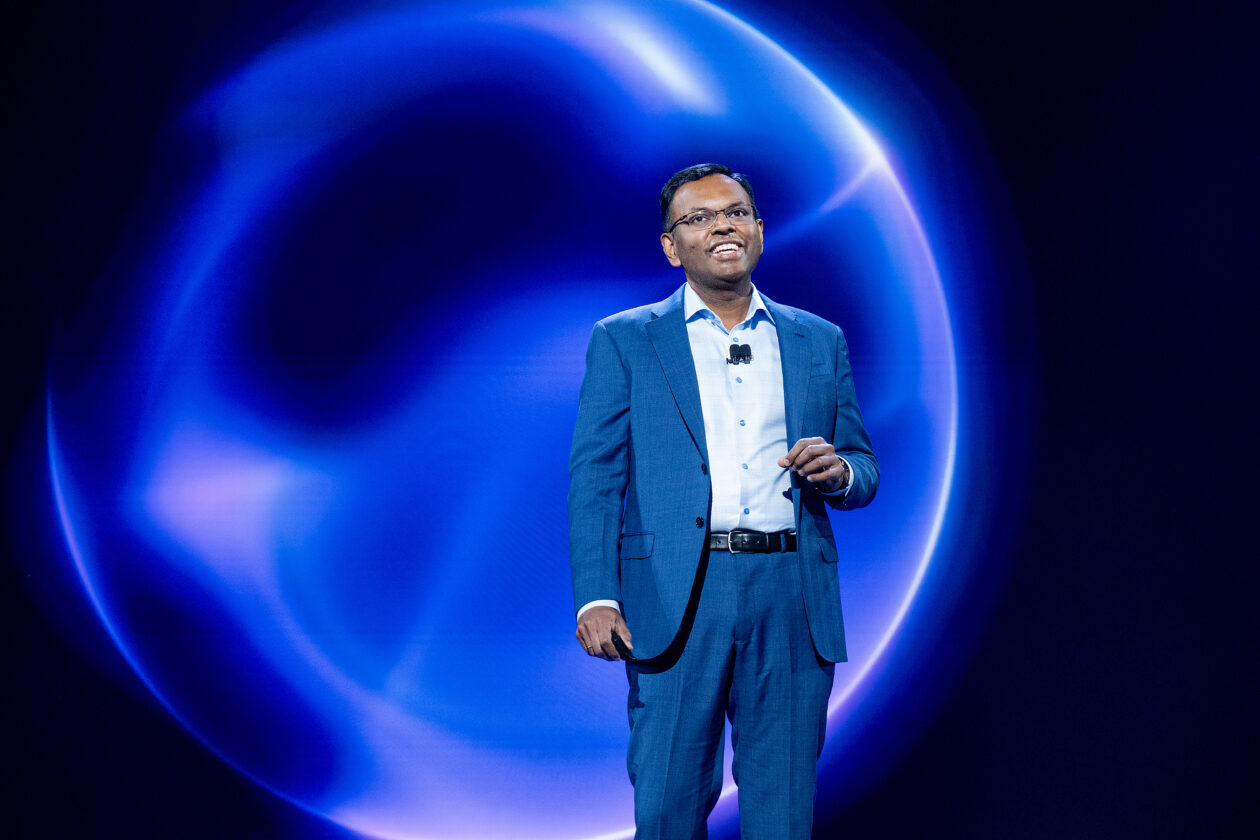
But sometime last year, it dawned on Swami Sivasubramanian, Amazon Web Services VP of agentic AI, that new coding tools had suddenly made it easier for his teams to develop a demo — actual working software — than to write and perfect the classic six-page Amazon “PRFAQ.”
So they began starting with the prototype instead.
If something is “a low-risk bet where we just want to prove our intuition, then I actually say, let’s first go build the demo, and then iterate,” Sivasubramanian said in an interview last week, in advance of his keynote address Wednesday at the AWS New York Summit.
It’s an illustration of how agentic tools are reshaping even the most entrenched workplace practices and traditions. But it’s just one of the ways that the AWS agentic AI team is departing from the company’s established norms, and in some ways returning to its roots.
Inside Amazon, CEO Andy Jassy says he wants the company to run like the world’s largest startup. Sivasubramanian’s division may be the closest thing to what that looks like in practice.
Back to two pizzas
The AWS agentic AI division is organized into dozens of small teams, many of them just large enough to feed with two pizzas. That was the organizing principle that Amazon pioneered in its early days and that much of the company outgrew as it scaled to 1.5 million employees.
When Matt Garman, the CEO of AWS, carved out agentic AI as its own division last year, Sivasubramanian went with small teams on purpose. It matches the new reality of the AI era: projects that once required 30 to 40 people, he said, can now be done by teams of six to eight.
Case in point: the Amazon Quick desktop app, which connects to a user’s email, calendar, Slack, documents, and other apps in a single workspace, and uses AI to search across them, answer questions, and perform tasks. It’s Amazon’s entry in a market where Anthropic, Microsoft, Google, and OpenAI have captured much of the attention.
It traces its roots to late January of this year, when Sivasubramanian said it became clear to him and others on the team that the underlying models had gotten good enough that the main missing ingredient was connecting them to the systems where people actually work.
He pulled together a team of about six engineers to build it. Six weeks later, 200 people inside Amazon were using it. Ten weeks in, it was up to 10,000 internally. The team circled back to write the PRFAQ after the product was already in beta, to help refine their approach to the external launch. They shipped on April 28, three months after they got started.
Under the old system — writing the PRFAQ, routing it through layers of review — the paperwork alone could have taken as long as building and shipping the actual product.
Similar stories are playing out across the division.
- One team open-sourced Strands, an AWS software development kit for building AI agents, after a member of Sivasubramanian’s team messaged him at 7 a.m. with the idea. After a quick call with Garman, they decided to go ahead. Within days, it was done.
- Kiro, the AI coding tool, was built by a deliberately small team, using Kiro itself to build it. One engineer prototyped a complex cross-platform notification feature for Kiro that had been estimated at four weeks of work, and shipped it in a day and a half.
- The internal Amazon team that rebuilt the inference engine for the company’s Bedrock platform for AI models did it with six engineers in 76 days, a project originally expected to take 30 developers 12 to 18 months.
Smaller teams everywhere
What’s happening inside Amazon’s agentic AI division is part of a trend across the tech industry toward smaller teams and flatter organizations, driven by AI and agents.
Microsoft’s 2026 Work Trend Index, a survey of 20,000 workers in 10 countries, found that the biggest factor behind AI’s real impact in the workplace isn’t individual skill but whether the organization has restructured around the new technologies.
Vijaye Raji, OpenAI’s CTO of applications, said during a recent Technology Alliance event that the company’s “ambitions are growing faster than we can hire people” — but the profile of who gets hired is changing. OpenAI increasingly looks for engineers who work with AI tools natively, and the gap between those who do and those who don’t is stark: the top engineers at OpenAI use roughly 100 times more AI tokens than the median.
All of this leads to a natural question: what does this mean for jobs? Amazon has cut roughly 30,000 corporate jobs since late 2025 as part of what Jassy has described as an effort to reduce bureaucracy. He has said he expects AI to shrink the corporate workforce over time.
Similar cuts are playing out across the industry, from Meta to Block to LinkedIn, as companies rethink not only the roles they need to fill but also how many people they need overall.
Bigger goals, same team
Sivasubramanian describes the shift differently: In his division, the same number of people are now pursuing a bigger charter. With the new structure, they’re able to take on more projects, and faster, accomplishing things in weeks that would have taken much longer in the past.
The nature of the roles inside those teams is changing, too. Increasingly, product managers write code, and engineers make product decisions.
“`
Revolutionizing Team Management and Product Development with AI
Within the Kiro team, innovative approaches to product development are reshaping the way tasks are handled. One notable example is a product manager utilizing Kiro to create the initial version of a cost analysis dashboard, showcasing the platform’s versatility and efficiency.
Furthermore, the evolving landscape of team leadership necessitates a shift in operational strategies. For instance, Sivasubramanian emphasizes the importance of closely monitoring decision-making processes, even while traveling, to prevent unnecessary delays. In a fast-paced environment, a mere four to five days of postponement can potentially increase a team’s shipping timeline by up to 10%.
Managing these dynamic teams also presents novel challenges, as highlighted by the division’s meticulous tracking of AI token expenditures. By treating AI tokens as a fundamental operational cost, the division ensures prudent utilization of resources. Fortunately, platforms like Kiro streamline the development process by investing in comprehensive specifications and context upfront, thereby optimizing token usage and minimizing wastage.
Despite the manageable current costs, it is anticipated that companies will need to adopt a holistic approach to assessing operating expenses, encompassing not only personnel expenses but also the costs associated with AI integration.
Emphasizing the importance of meticulous planning, Sivasubramanian emphasizes that the key bottleneck lies in crafting precise specifications, tests, and ensuring an optimal product and customer experience, rather than the speed of development.
In a recent blog post, Sivasubramanian highlighted the substantial productivity gains achieved by teams that restructured their workflows around AI, underscoring the significance of integrating AI seamlessly into existing processes for maximum efficiency.
Coding and Testing Challenges
While the acceleration of code generation poses significant advantages, the lack of upfront definition of success criteria, such as specifications, tests, and edge cases, can hinder the efficacy of AI agents. To address this, Amazon has adopted a strategy of integrating testing into the coding phase, allowing agents to validate their work before deployment.
An illustrative anecdote from Sivasubramanian’s experience underscores the importance of comprehensive testing. During a trip to India, he attempted to rebuild a critical piece of AWS infrastructure using Kiro, only to encounter setbacks due to inadequate testing protocols. Once the proper specifications and testing environment were established, the task was swiftly completed, underscoring the value of thorough testing procedures.
While the journey to harnessing the full potential of AI may present challenges, with the right team and a collaborative spirit, remarkable feats can be achieved. Sivasubramanian’s experience serves as a testament to the transformative power of AI in revolutionizing product development and team management.












Ram Trucks Australia Braces for Price Increases Due to Emissions Regulations

Revving Up: Tractor Battle Adventure RPG Expands with Mod Support on Steam Workshop

Troubleshooting Guide: Unable to Access 192.168.0.1

Choosing the Right AI: Ensuring Trust in Multi-Model Translation Systems

Friday Night Baseball Madness: iPhone 18 Pro Edition

Partnership Potential: JAC & Huawei in Talks to Produce Electric Maserati Vehicles

Grand Theft Auto VI: The Soundtrack – Limited Edition Physical Release

The Never-Ending Battle of the Galaxy S27 Ultra Camera: A Tech Advisor’s Perspective

Motorola Signature 27: Unveiled Specs and Vibrant Colour Options – Tech Advisor

EU Takes Action Against Instagram and Facebook for Violating Illegal Content Rules

Warning: Facebook Creators Face Monetization Loss for Stealing and Reposting Videos

Facebook’s New Look: A Blend of Instagram’s Style

Facebook Compliance: ICE-tracking Page Removed After US Government Intervention

Facebook and Instagram to Reduce Personalized Ads for European Users

InstaDub: Meta’s AI Translation Tool for Instagram Videos

Reclaim Your Account: Facebook and Instagram Launch New Hub for Account Recovery

Meta discontinues Messenger apps for Windows and macOS

Breaking Updates: Meta Connect 2025 Unveils Latest Developments

Huawei P20 Pro Unboxing!

Huawei P20 Pro vs Samsung S9 Plus!

Huawei P20 vs P20 Pro vs iPhone 8 Plus vs S9 Battery Drain Test!

10 Android Mods that Change Everything

I used the first Android Phone in the World.

DOOGEE MIX 4 UNBOXING (PROTOTYPE)!

MYSTERY UNBOXING FROM SAMSUNG!

The Truth about Huawei P20 Pro – REAL Review

How to Love your Android Phone again.
-
 Facebook11 months ago
EU Takes Action Against Instagram and Facebook for Violating Illegal Content Rules
-
 Facebook11 months ago
Warning: Facebook Creators Face Monetization Loss for Stealing and Reposting Videos
-
 Facebook9 months ago
Facebook’s New Look: A Blend of Instagram’s Style
-
 Facebook11 months ago
Facebook Compliance: ICE-tracking Page Removed After US Government Intervention
-
 Facebook9 months ago
Facebook and Instagram to Reduce Personalized Ads for European Users
-
 Facebook11 months ago
InstaDub: Meta’s AI Translation Tool for Instagram Videos
-
 Facebook10 months ago
Reclaim Your Account: Facebook and Instagram Launch New Hub for Account Recovery
-
 Apple11 months ago
Meta discontinues Messenger apps for Windows and macOS
