
Amazon
Navigating the Balance: Amazon’s Latest AI Agents and the Quest for Autonomy

Introducing Amazon Web Services’ Latest AI Agents
Amazon Web Services has unveiled a groundbreaking set of AI agents designed for businesses, developers, and individual users. These agents have the capability to address a wide range of tasks, from resolving security vulnerabilities to managing email triage.
Presented at the AWS Summit in New York, these AI agents aim to enhance autonomy while ensuring that humans retain control over the extent to which AI operates independently.
This initiative aligns with the broader industry trend of advancing AI agents, with major players like Google, Microsoft, Anthropic, and OpenAI also developing AI solutions that can perform tasks autonomously.
One notable addition is the AWS Continuum security agent, which initiates in a supervised “learn mode” and progresses to autonomous action based on permission granted by customers, category by category.
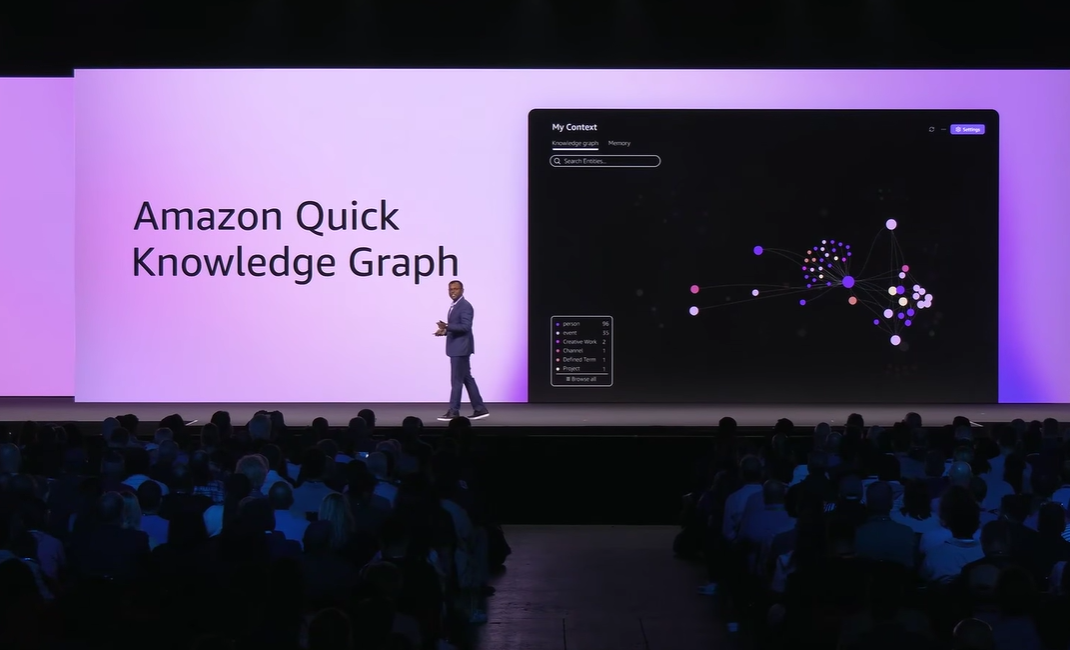
The Amazon Quick AI assistant now enables users to create custom background agents using simple language, enabling tasks such as monitoring stalled business deals and highlighting regulatory changes.
Enhancements to Amazon Quick include a revamped activity feed that consolidates email, messages, and calendar items into a prioritized view, integration with services like Adobe and WhatsApp, and the ability to leverage multiple connected services to address specific queries.
For developers, AWS is empowering coding agents to handle more routine tasks such as code testing and maintenance, while leaving final deployment decisions in human hands. The introduction of a new iPhone app for Kiro, the AI coding assistant, allows developers to initiate and monitor tasks from their mobile devices.
Deepak Singh, the AWS VP leading the Kiro team, emphasizes the objective of offloading background tasks like code review and security assessments to AI agents, reducing human intervention to a minimum.
By accelerating code writing and issue identification, AI agents create more opportunities for human oversight and testing. Singh underscores the importance of maintaining code quality and security amidst increased automation.
Furthermore, AWS has expanded AgentCore, its agent-building platform, and introduced AWS Context, a service that organizes company data for enhanced agent reasoning capabilities.
The launch of the Continuum security agent addresses the rapid evolution of powerful AI models, such as Anthropic’s Claude Mythos, which can identify vulnerabilities and exploit them more efficiently than human teams.
Continuum initially focuses on code vulnerabilities, with plans to extend its scope to other security aspects. The agent follows a methodical approach similar to human teams, triaging findings, assessing exploitability, and proposing fixes with potential side effects.
In authorized categories, Continuum can autonomously implement fixes within existing deployment pipelines, streamlining the security response process.
Neha Rungta, AWS director of applied science, highlights the urgency of AI-driven security measures due to evolving threats. AI can now combine minor vulnerabilities into critical issues, necessitating swift and accurate responses to maintain security.
Rungta emphasizes the goal of raising the security “floor” to thwart sophisticated attacks enabled by AI advancements.













Ram Trucks Australia Braces for Price Increases Due to Emissions Regulations

Revving Up: Tractor Battle Adventure RPG Expands with Mod Support on Steam Workshop

Troubleshooting Guide: Unable to Access 192.168.0.1

Choosing the Right AI: Ensuring Trust in Multi-Model Translation Systems

Friday Night Baseball Madness: iPhone 18 Pro Edition

Partnership Potential: JAC & Huawei in Talks to Produce Electric Maserati Vehicles

Grand Theft Auto VI: The Soundtrack – Limited Edition Physical Release

The Never-Ending Battle of the Galaxy S27 Ultra Camera: A Tech Advisor’s Perspective

Motorola Signature 27: Unveiled Specs and Vibrant Colour Options – Tech Advisor

EU Takes Action Against Instagram and Facebook for Violating Illegal Content Rules

Warning: Facebook Creators Face Monetization Loss for Stealing and Reposting Videos

Facebook’s New Look: A Blend of Instagram’s Style

Facebook Compliance: ICE-tracking Page Removed After US Government Intervention

Facebook and Instagram to Reduce Personalized Ads for European Users

InstaDub: Meta’s AI Translation Tool for Instagram Videos

Reclaim Your Account: Facebook and Instagram Launch New Hub for Account Recovery

Meta discontinues Messenger apps for Windows and macOS

Breaking Updates: Meta Connect 2025 Unveils Latest Developments

Huawei P20 Pro Unboxing!

Huawei P20 Pro vs Samsung S9 Plus!

Huawei P20 vs P20 Pro vs iPhone 8 Plus vs S9 Battery Drain Test!

10 Android Mods that Change Everything

I used the first Android Phone in the World.

DOOGEE MIX 4 UNBOXING (PROTOTYPE)!

MYSTERY UNBOXING FROM SAMSUNG!

The Truth about Huawei P20 Pro – REAL Review

How to Love your Android Phone again.
-
 Facebook11 months ago
EU Takes Action Against Instagram and Facebook for Violating Illegal Content Rules
-
 Facebook11 months ago
Warning: Facebook Creators Face Monetization Loss for Stealing and Reposting Videos
-
 Facebook9 months ago
Facebook’s New Look: A Blend of Instagram’s Style
-
 Facebook11 months ago
Facebook Compliance: ICE-tracking Page Removed After US Government Intervention
-
 Facebook9 months ago
Facebook and Instagram to Reduce Personalized Ads for European Users
-
 Facebook11 months ago
InstaDub: Meta’s AI Translation Tool for Instagram Videos
-
 Facebook10 months ago
Reclaim Your Account: Facebook and Instagram Launch New Hub for Account Recovery
-
 Apple11 months ago
Meta discontinues Messenger apps for Windows and macOS
