
Mobile Tech
Insider Info: Trump Reveals Apple-Intel Chip Partnership

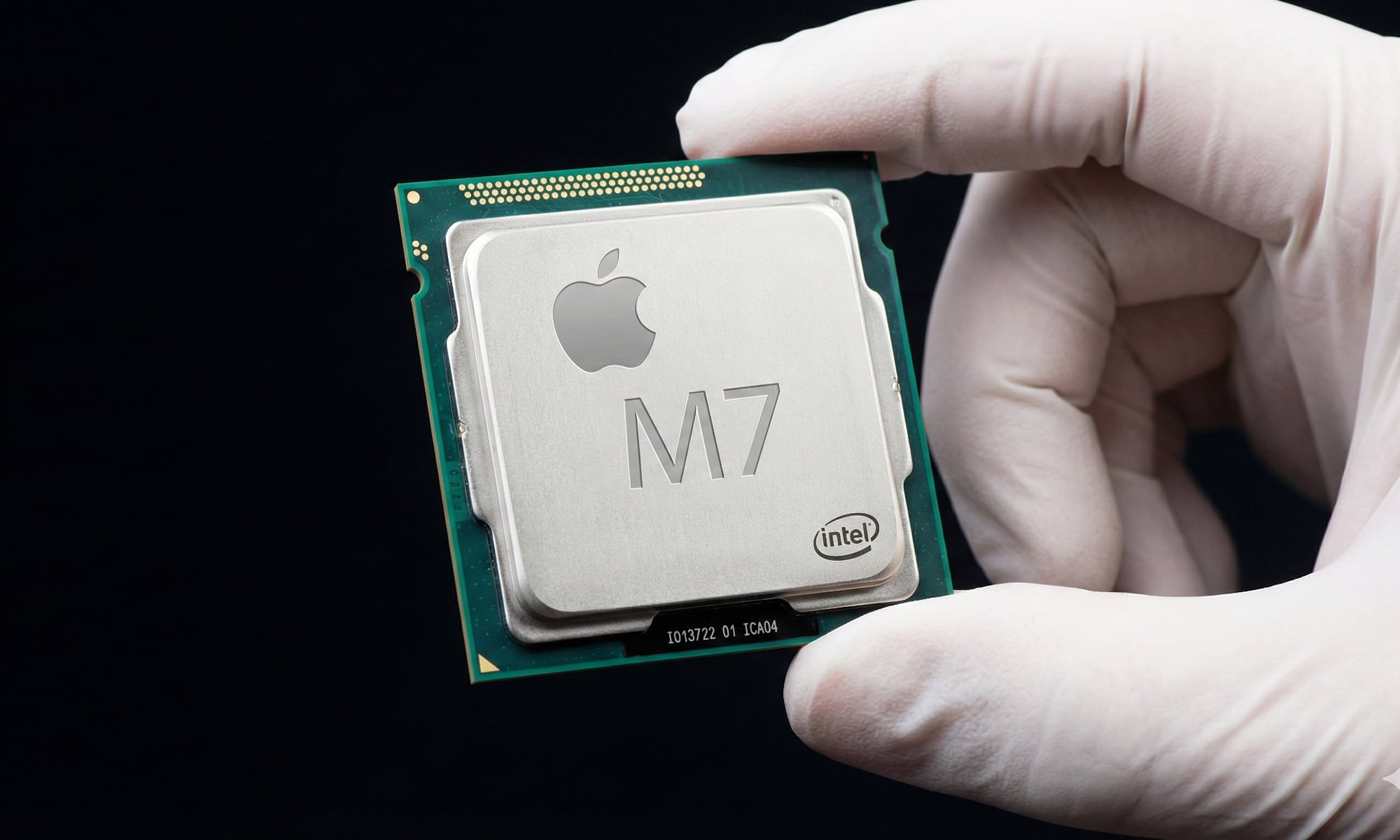
In a recent report by The Wall Street Journal, it was revealed that Apple and Intel had come to a preliminary agreement for the US-based chipmaker to produce Apple silicon for upcoming Macs, iPhones, and iPads. Despite numerous reliable inside sources confirming the news, including analysts like Ming-Chi Kuo, both Apple and Intel remained silent on the matter.
Speculations arose as to whether the silence was due to the agreement still being finalized or a strategic move not to overshadow the President of the United States. Last August, the US government had invested $8.9 billion in Intel, aiming to boost electronics manufacturing within the country. Hence, the collaboration between Apple and Intel could be seen as a significant outcome of this initiative.
Interestingly, it was President Donald Trump who indirectly disclosed the partnership in an early morning post on Truth Social, mentioning that “Apple has agreed to work with Intel to design and build its Chips in America.” This announcement led to a 10% increase in Intel’s shares, although no further details were provided at that time.
The Trump administration’s efforts to reduce US companies’ reliance on chip production from Taiwan, particularly from TSMC, a leading fabricator, have been ongoing. While skepticism exists regarding Intel’s ability to compete with TSMC, the partnership with Apple and the government’s investment could expedite their progress.
Initially, Intel is expected to manufacture Apple’s entry-level chips, such as the A-series and M-series without any high-tier suffixes. Analysts predict that the M7 chip for Apple’s late 2027 and early 2028 Mac models, along with an A21 or A22 chip for the 2028 iPhone lineup, could be the first products of this collaboration.
Although Intel is currently conducting trial runs for chip fabrication, mass production is anticipated to commence in 2027. Apple’s push for accelerated production involves validating Intel’s capabilities under real-world conditions and scaling up operations swiftly. This approach is crucial for meeting consumer demand efficiently.
While TSMC is slated to continue producing Apple’s “Pro” chips, including the A21 Pro and beyond, Intel has the opportunity to prepare for the base A21 chip, which may not be required until six months later. The potential inclusion of Apple’s N-series Wi-Fi/Bluetooth and C-series modem chips in the Intel deal adds another layer to this collaboration, especially considering Apple’s acquisition of Intel’s 5G modem business in 2019.
global $wp;
. ‘/’;
??>











Revving Up: Tractor Battle Adventure RPG Expands with Mod Support on Steam Workshop

Troubleshooting Guide: Unable to Access 192.168.0.1

Choosing the Right AI: Ensuring Trust in Multi-Model Translation Systems

Friday Night Baseball Madness: iPhone 18 Pro Edition

Partnership Potential: JAC & Huawei in Talks to Produce Electric Maserati Vehicles

Grand Theft Auto VI: The Soundtrack – Limited Edition Physical Release

The Never-Ending Battle of the Galaxy S27 Ultra Camera: A Tech Advisor’s Perspective

Motorola Signature 27: Unveiled Specs and Vibrant Colour Options – Tech Advisor

Angle Health Soars to $2.7B Valuation: Y Combinator Insurance Tech Alum Makes Waves in Health Industry

EU Takes Action Against Instagram and Facebook for Violating Illegal Content Rules

Warning: Facebook Creators Face Monetization Loss for Stealing and Reposting Videos

Facebook’s New Look: A Blend of Instagram’s Style

Facebook Compliance: ICE-tracking Page Removed After US Government Intervention

Facebook and Instagram to Reduce Personalized Ads for European Users

InstaDub: Meta’s AI Translation Tool for Instagram Videos

Reclaim Your Account: Facebook and Instagram Launch New Hub for Account Recovery

Meta discontinues Messenger apps for Windows and macOS

Breaking Updates: Meta Connect 2025 Unveils Latest Developments

Huawei P20 Pro Unboxing!

Huawei P20 Pro vs Samsung S9 Plus!

Huawei P20 vs P20 Pro vs iPhone 8 Plus vs S9 Battery Drain Test!

10 Android Mods that Change Everything

I used the first Android Phone in the World.

DOOGEE MIX 4 UNBOXING (PROTOTYPE)!

MYSTERY UNBOXING FROM SAMSUNG!

The Truth about Huawei P20 Pro – REAL Review

How to Love your Android Phone again.
-
 Facebook11 months ago
EU Takes Action Against Instagram and Facebook for Violating Illegal Content Rules
-
 Facebook11 months ago
Warning: Facebook Creators Face Monetization Loss for Stealing and Reposting Videos
-
 Facebook9 months ago
Facebook’s New Look: A Blend of Instagram’s Style
-
 Facebook11 months ago
Facebook Compliance: ICE-tracking Page Removed After US Government Intervention
-
 Facebook9 months ago
Facebook and Instagram to Reduce Personalized Ads for European Users
-
 Facebook11 months ago
InstaDub: Meta’s AI Translation Tool for Instagram Videos
-
 Facebook10 months ago
Reclaim Your Account: Facebook and Instagram Launch New Hub for Account Recovery
-
 Apple11 months ago
Meta discontinues Messenger apps for Windows and macOS
