
Tech News
Revolutionizing Healthcare Administration: Enhancing Efficiency and Quality Care

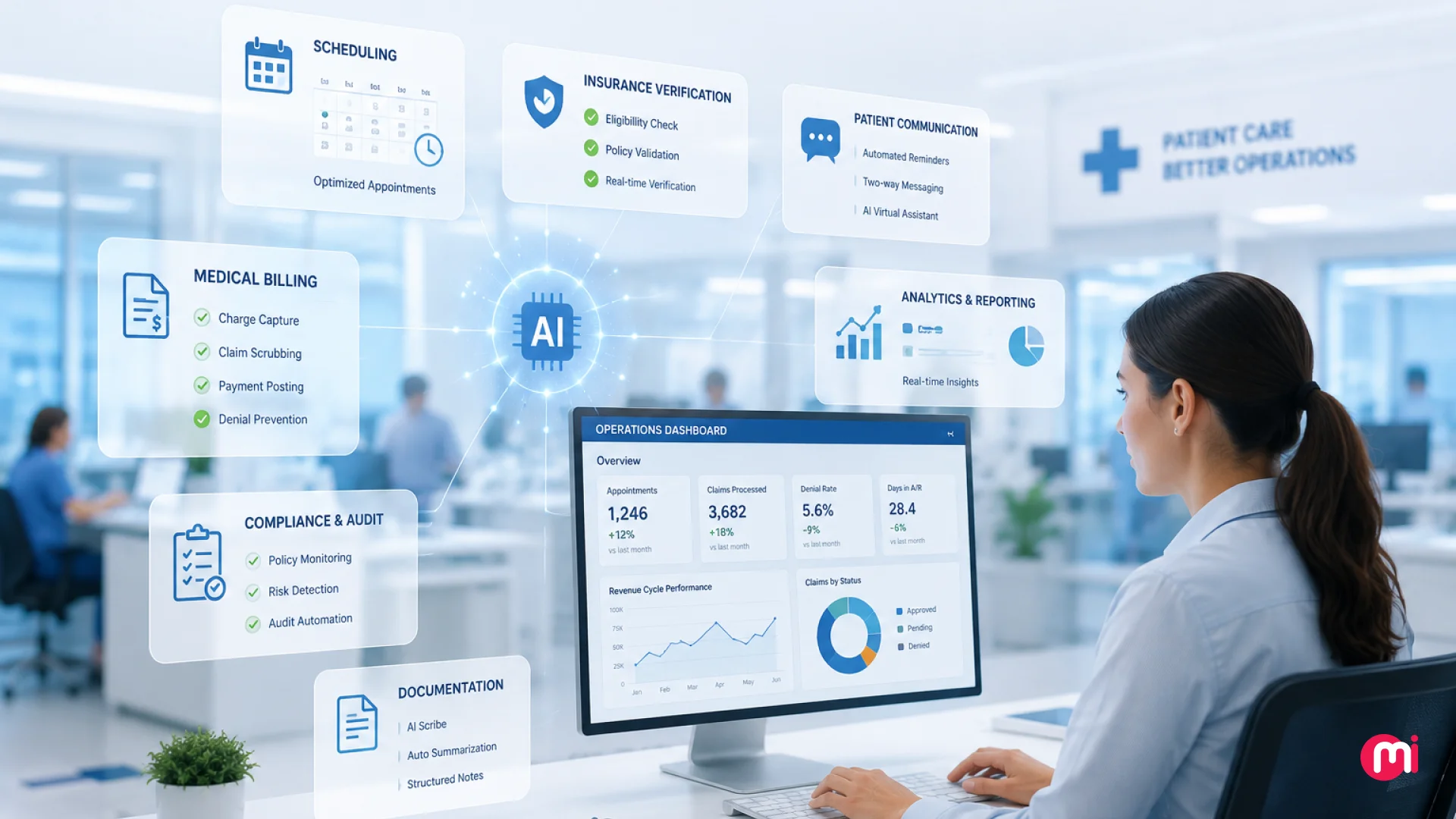
The Role of AI in Transforming Healthcare Administration
Healthcare administration is a field that operates on repetitive, high-volume tasks such as appointment scheduling, insurance verification, billing reconciliation, compliance documentation, and more. These tasks consume a significant amount of administrative time and often lead to operational inefficiencies. However, the integration of artificial intelligence (AI) in healthcare administration is changing this landscape.
AI in healthcare administration aims to automate repetitive processes, enhance coordination across systems, and facilitate faster decision-making. By leveraging technologies like machine learning, natural language processing, and robotic process automation, healthcare organizations can streamline their administrative workflows, reduce manual workloads, and improve operational efficiency.
Modern healthcare platforms are increasingly incorporating AI directly into their administrative processes to enhance efficiency, reduce manual workloads, and support scalable operations. This shift towards AI integration is also driving the demand for advanced healthcare app development services capable of incorporating AI into daily healthcare operations.
This comprehensive guide covers everything healthcare leaders and operational teams need to know about AI-powered healthcare administration, including core technologies, operational applications, implementation strategies, challenges, and long-term business impact.
Key Takeaways
- AI in healthcare administration helps automate repetitive workflows such as scheduling, billing, documentation, and compliance management.
- Administrative healthcare automation reduces manual workload while improving operational efficiency and workflow coordination.
- AI-powered documentation and ambient scribing tools help reduce administrative burden and improve record consistency.
- Successful AI implementation depends on structured healthcare data, EHR integration readiness, and HIPAA-compliant infrastructure.
- Healthcare organizations must address integration complexity, compliance requirements, data quality, and scalability challenges during deployment.
The Significance of AI in Healthcare Administration
AI in healthcare administration involves the utilization of technologies like machine learning, natural language processing, and robotic process automation to streamline operational processes such as billing, scheduling, compliance, and patient communication. Administrative overhead remains a significant cost center in healthcare, and AI plays a crucial role in addressing these challenges.
AI in healthcare administration offers the following benefits:
1. Reduced Administrative Workload
AI automates repetitive administrative tasks such as appointment scheduling, billing support, insurance verification, patient intake, and document handling. This reduction in manual effort allows staff to focus on more critical operational responsibilities.
2. Faster and More Accurate Documentation
AI-powered documentation tools streamline medical notes, transcription, and record management processes. This results in reduced paperwork, minimized documentation delays, and improved accuracy and consistency of healthcare records.
3. Improved Operational Efficiency
Healthcare organizations manage large volumes of appointments, claims, records, and internal processes daily. AI helps streamline these workflows, reduce bottlenecks, and enhance coordination across departments, leading to smoother operations.
4. Better Patient Coordination
AI supports patient communication through automated reminders, follow-ups, scheduling assistance, and digital support systems. This improves patient engagement, reduces missed appointments, and enhances the overall care experience.
5. Enhanced Decision Support
Administrative teams work with significant amounts of operational and financial data. AI aids in identifying workflow inefficiencies, scheduling conflicts, billing issues, and process gaps more quickly, enabling faster and more informed decisions.
6. Reduced Staff Burnout
Administrative overload is a major challenge in healthcare environments. By automating repetitive tasks and simplifying workflows, AI helps reduce pressure on healthcare professionals and administrative staff, improving productivity and workplace satisfaction.
7. Stronger Compliance and Standardization
Healthcare administration requires strict documentation and regulatory adherence. AI helps standardize workflows, improve record consistency, and support compliance-related processes while reducing the risk of manual errors.
8. Better Integration Across Systems
Healthcare providers often use multiple platforms for scheduling, billing, patient records, and reporting. AI enhances the connection between these systems, improving data flow and reducing dependency on manual coordination between departments.
9. Long-Term Digital Transformation
AI is becoming an integral part of core healthcare infrastructure rather than just a standalone tool. Organizations are integrating AI into daily administrative operations to build more scalable, efficient, and technology-driven healthcare systems.
Types of AI Used in Healthcare Administration
Various types of AI technologies empower healthcare administration, each with specific strengths and applications:
1. Natural Language Processing (NLP)
NLP converts unstructured text and speech into structured data, used for clinical documentation, automated coding, prior authorizations, and patient intake processing.
2. Machine Learning (ML)
ML analyzes historical data to predict outcomes, common uses include no-show prediction, claim denial detection, staffing forecasts, and fraud identification.
3. Robotic Process Automation (RPA)
RPA automates rule-based tasks like data entry, eligibility checks, form submissions, and reporting, especially in high-volume workflows.
4. Generative AI (LLMs)
Generative AI creates content such as prior authorization drafts, patient communication, clinical summaries, and compliance reports.
5. Predictive Analytics
Predictive analytics forecasts demand, revenue risks, and operational bottlenecks to improve planning and resource allocation.
6. AI Agents
AI agents execute multi-step workflows like scheduling, intake, referrals, and billing with minimal human intervention.
The integration of these AI technologies into healthcare administration processes enhances efficiency, reduces manual workloads, and supports scalable operations.
Key Applications of AI in Healthcare Administration
AI is revolutionizing healthcare administration across various operational areas. Some of the most impactful applications of AI in healthcare administration include:
1. Intelligent Appointment Scheduling
AI-powered scheduling systems analyze booking patterns, provider availability, patient behavior, and cancellation trends to optimize scheduling workflows automatically. This improves appointment utilization, reduces administrative burden, and enhances the patient scheduling experience.
2. Revenue Cycle Management (RCM) & Medical Billing
AI applications in revenue cycle management improve billing accuracy, streamline claims processing, and reduce claim denials. Automation in this area includes automated medical coding support, claim denial prediction, insurance verification, billing workflow automation, and fraud detection.
3. Clinical Documentation & Ambient Scribing
Ambient scribing tools use AI to generate structured clinical notes in real time, reducing the documentation burden on healthcare professionals. This automation improves record accuracy, minimizes manual charting time, and enhances patient care.
4. Prior Authorization Automation
AI assists in automatically generating authorization requests using existing clinical documentation and integrating them into EHR workflows. This accelerates approval processes, reduces administrative delays, and enhances workflow efficiency.
5. Patient Communication & Virtual Assistants
Conversational AI tools manage routine patient inquiries, appointment confirmations, scheduling requests, prescription refill questions, and general support queries. These virtual assistants improve patient engagement, reduce response times, and provide faster access to information and support services.
6. Predictive Staffing and Workforce Optimization
Predictive staffing models analyze patient demand, seasonal trends, admission forecasts, and historical workforce data to optimize staffing decisions. This optimization enhances workforce allocation, improves operational efficiency, and supports better resource planning.
7. Compliance & Audit Monitoring
AI systems monitor records and workflows in real time to identify incomplete documentation, policy violations, or potential compliance risks before audits occur. This proactive approach to compliance management enhances organizational stability and operational reliability.
Implementation Costs and Cost-Saving Measures
When implementing AI in healthcare administration, it is essential to understand the costs involved and the potential cost-saving measures. Typical AI implementation costs range based on the scope of the project:
- Chatbot or scheduling automation pilot: $25,000–$50,000+
- Revenue cycle AI module (coding, claims): $150,000–$500,000 depending on EHR complexity
- Enterprise-wide administration automation: $500,000–$2M+, including integration, training, and compliance infrastructure
Cost-benefits of AI in healthcare administration stem from five concrete sources:
| Savings Driver | Mechanism |
| Labor efficiency | Fewer staff hours on repetitive tasks; lower cost per transaction |
| Error reduction | Automated coding reduces rejections, resubmissions, and audit penalties |
| Revenue capture | Better coding accuracy and denial management recover written-off revenue |
| Compliance cost reduction | Automated monitoring reduces HIPAA fines and manual review costs |
| Staff retention | Reduced administrative burden improves satisfaction and lowers turnover |
The Technical Stack Behind AI-led Healthcare Administration
AI in healthcare administration operates across three integrated layers, each handling specific functions:
1. Data Layer: The Foundation
This layer manages the ingestion, storage, and standardization of sensitive medical data. It includes standards like HL7 FHIR-compliant data models, cloud infrastructure, integrations with major EHRs, and HIPAA-compliant data pipelines.
2. AI/ML Layer: The Intelligence
This layer processes data into actionable insights or automated tasks using technologies such as NLP, predictive analytics, process automation, and generative AI.
3. Application & Security Layers: The Interface & Shield
This layer focuses on user interaction with the system and security measures to protect data. It includes middleware for EHR integration, patient-facing portals, administrative dashboards, and security compliance features.
Before deployment, organizations must audit their data infrastructure to ensure readiness for AI implementation. Key questions include data structure, format, de-identification, and accessibility.
How to Implement AI in Healthcare Administration: A Practical Roadmap
Implementing AI in healthcare administration involves a systematic approach:
Step 1: Identify a High-Friction, Measurable Workflow
Focus on specific administrative workflows with clear pain points and available data for measurement.
Step 2: Establish Governance and Ethical Guardrails
Form a committee to oversee AI implementation, define liability frameworks, ensure bias monitoring, and establish oversight protocols.
Step 3: Audit Your Data Readiness
Audit your data infrastructure to ensure it is clean, structured, and ready for AI implementation.
Step 4: Choose a Build, Buy, or Hybrid Approach
Select the approach that best suits your organization’s needs, whether it’s buying mature tools, building proprietary models, or using a combination of both.
Step 5: Ensure HIPAA-Compliant Infrastructure
Ensure that your AI system meets HIPAA requirements, including encryption, access control, vendor agreements, and breach detection protocols.
Step 6: Pilot, Measure, and Expand
Run a pilot project, measure success metrics, review results, and expand implementation to other workflows based on lessons learned.
Challenges of AI in Healthcare Administration
Despite the benefits, organizations face several challenges when implementing AI in healthcare administration:
1. Integration Complexity
Legacy systems may pose integration challenges, leading to workflow disruptions and data inconsistencies.
2. Data Quality and Readiness
Data preparation, especially with unstructured data, is often underestimated and requires significant effort.
3. Regulatory and Compliance Uncertainty
Adhering to evolving HIPAA regulations and other data privacy laws can be challenging.
4. Staff Resistance and Shadow AI
Employee resistance to AI tools and the use of unauthorized alternatives can pose risks to data governance and security.
5. Vendor Risk and AI Accuracy
Not all AI vendors share equal responsibility for model accuracy, leading to potential risks and performance issues.
6. Scalability Gaps
AI tools that perform well at a small scale may face challenges when scaling up to meet increased demand.
The Future of AI in Healthcare Administration
The future of AI in healthcare administration points towards deeper integration, greater autonomy, and significant financial transformation. AI applications are expected to provide self-organizing workflow control, AI-powered records, predictive revenue intelligence, workforce optimization, and enterprise-wide integration.
By 2035, a significant shift in healthcare spend towards AI-enabled operating models is projected, highlighting the importance of investing in AI foundations today to reap future benefits.
Why Choose MindInventory as Your Healthcare AI Partner
Implementing AI in healthcare administration requires specialized domain knowledge and experience. At MindInventory, we offer expertise at the intersection of AI/ML engineering and healthcare operations, ensuring seamless integration and optimal deployment of AI solutions.
Our comprehensive services cover consulting, architecture, development, EHR integration, compliance validation, and ongoing optimization. Whether you need a single-workflow pilot or enterprise-wide transformation, our tailored approach ensures successful AI implementation in healthcare administration.
FAQs
AI can handle high-volume, rule-based tasks in insurance billing automation but may still require human review for complex cases.
AI systems have confidence thresholds and routes tasks to human reviewers when certainty levels are low.
AI models are trained on payer-specific rule sets and learn from historical data to predict denials.
HIPAA-compliant AI systems adhere to strict data security and privacy regulations set by HIPAA.
RPA focuses on rule-based tasks, while AI adds judgment and adaptability to handle unstructured inputs.
Human oversight, audit trails, and feedback loops are essential for correcting AI errors in healthcare records.
Metrics such as claim denial rate, days in accounts receivable, and staff hours spent on manual rework are crucial for measuring AI ROI in healthcare administration.












Upgrade Alert: HomePod Mini 2 and HomePod 2 Set to Become Default Mac Speakers

Finally Fixing my Wi-Fi – Zyxel Multy X!

Lost in the Living Maze: Unraveling Hidden Terrain Magic Through Copy-Paste

Samsung Unveils Exclusive Galaxy Z Fold 8 BTS Edition

Navigating the Digital World: Expert Tech Advice for Everyman

OMass Therapeutics Secures €275 Million Funding to Advance Innovative Small-Molecule Therapies

The Evolution of Apple’s Smart Home Strategy: A Closer Look at Their Own Devices

Unveiling the Imposter: The Truth Behind the Fake WhatsApp Clone on the Play Store

Digital Protection: How a 1988 Law Could Safeguard Your Online Viewing Experience

EU Takes Action Against Instagram and Facebook for Violating Illegal Content Rules

Warning: Facebook Creators Face Monetization Loss for Stealing and Reposting Videos

Facebook’s New Look: A Blend of Instagram’s Style

Facebook Compliance: ICE-tracking Page Removed After US Government Intervention

Facebook and Instagram to Reduce Personalized Ads for European Users

InstaDub: Meta’s AI Translation Tool for Instagram Videos

Reclaim Your Account: Facebook and Instagram Launch New Hub for Account Recovery

Meta discontinues Messenger apps for Windows and macOS

Breaking Updates: Meta Connect 2025 Unveils Latest Developments
Finally Fixing my Wi-Fi – Zyxel Multy X!

$25,000 Gaming Setup – EVOLUTION!

The Maze Alpha X is HERE!

Cool Tech under $100 – December!

MYSTERY UNBOXING FROM GOOGLE!

TOP 6 Smartphones from Companies you NEVER Expected!

A Surprise Smartphone from EE!

DOOGEE MIX 2 VS DOOGEE MIX 1!

INCREDIBLE Smartphone Gadgets on Amazon!
-
 Facebook12 months ago
EU Takes Action Against Instagram and Facebook for Violating Illegal Content Rules
-
 Facebook1 year ago
Warning: Facebook Creators Face Monetization Loss for Stealing and Reposting Videos
-
 Facebook10 months ago
Facebook’s New Look: A Blend of Instagram’s Style
-
 Facebook1 year ago
Facebook Compliance: ICE-tracking Page Removed After US Government Intervention
-
 Facebook10 months ago
Facebook and Instagram to Reduce Personalized Ads for European Users
-
 Facebook1 year ago
InstaDub: Meta’s AI Translation Tool for Instagram Videos
-
 Facebook11 months ago
Reclaim Your Account: Facebook and Instagram Launch New Hub for Account Recovery
-
 Apple12 months ago
Meta discontinues Messenger apps for Windows and macOS
