
Inovation
US Unveils Top 8 Critical Uses for Fault-Tolerant Quantum Computers

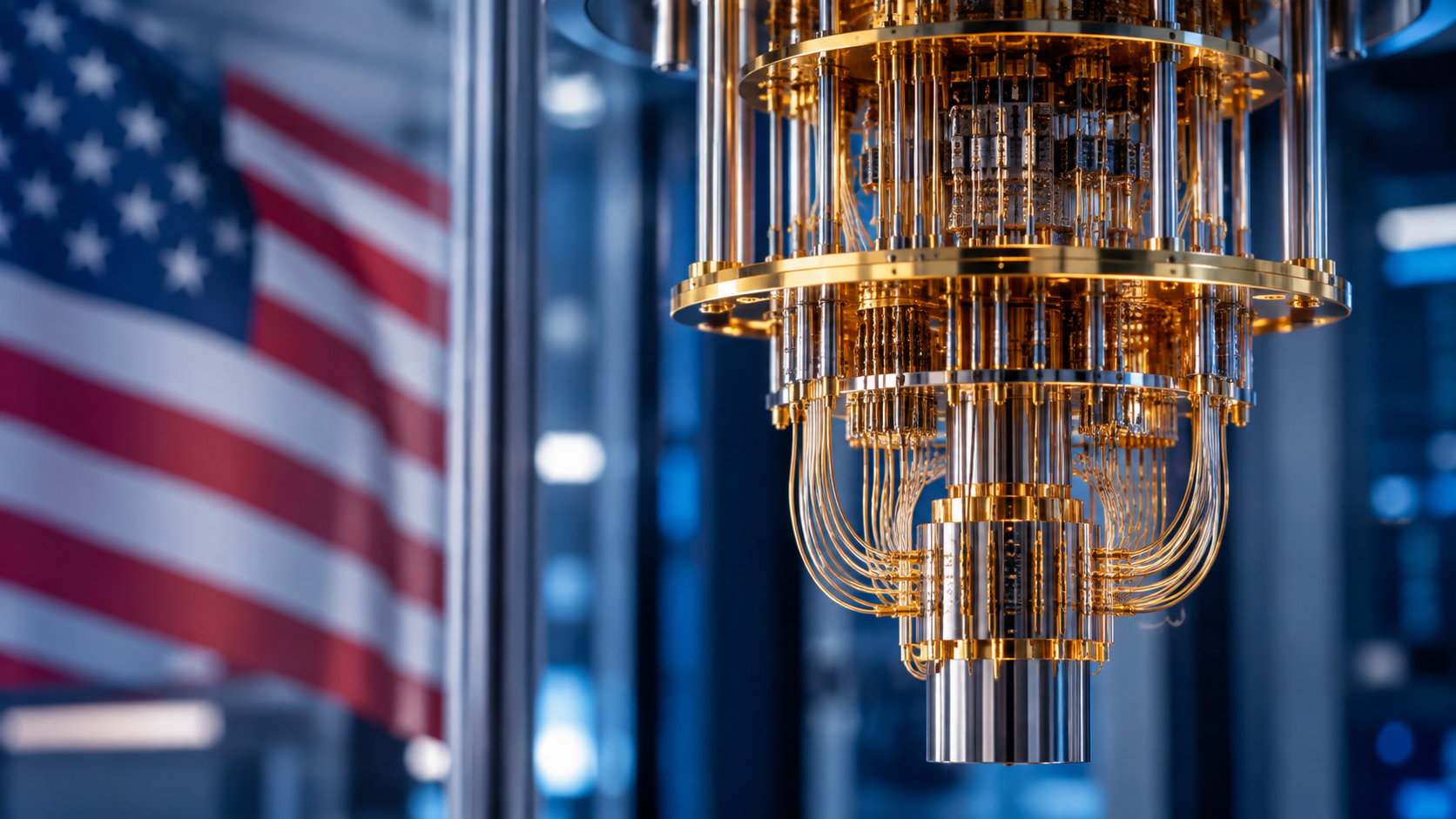
Exploring the Future of Quantum Computing in Scientific Applications
The United States Department of Energy (DOE) has outlined a groundbreaking initiative focused on developing fault-tolerant quantum computers for eight key scientific applications. These applications, part of the Quantum Genesis program, aim to push the boundaries of scientific discovery beyond what traditional computing methods can achieve.
By emphasizing collaboration across quantum hardware, software, and various scientific disciplines, the DOE seeks to establish benchmarks that will gauge the practical value of quantum technology. The prioritized applications are categorized into four domains: chemistry, materials science, subatomic physics, and applied mathematics, forming the Quantum Genesis Priority Applications (QGPAs).
Aligned with President’s executive order on quantum innovation, the DOE’s initiative is set to revolutionize scientific research in the United States. Under Secretary for Science, Darío Gil, envisions a future where fault-tolerant quantum computers serve as powerful tools for unlocking new scientific frontiers.
Understanding Fault-Tolerant Quantum Computers
Fault-tolerant quantum computers are engineered to execute accurate computations despite potential errors during quantum operations. Unlike traditional computers that use bits, quantum computers leverage qubits based on quantum mechanics to process and manipulate information.
The DOE’s primary focus is on developing quantum systems that can tackle complex scientific challenges reliably, rather than merely showcasing quantum capabilities without practical applications.
Targeting Four Scientific Domains
The eight priority applications are strategically grouped into four scientific domains that align with the DOE’s mission:
- Chemistry: Modeling reaction mechanisms, complex chemical systems, and light-responsive processes.
- Materials Science: Exploring quantum materials, superconductors, and materials in extreme conditions.
- Subatomic Physics: Simulating interactions within protons, neutrons, atomic nuclei, and high-density matter.
- Applied Mathematics: Addressing linear and differential equations crucial for scientific research.
Each domain includes specific applications and target computations to provide quantum researchers with well-defined problems for assessing progress.
Empowering Quantum Research with Quantum Genesis
The DOE’s Quantum Genesis program will steer research through the Q Competition, a forthcoming National Quantum Computing User Facility, and targeted studies on quantum computing applications. The initiative also explores emerging areas like plasma physics, biochemistry, and optimization for potential quantum advancements.
With a focus on practical scientific challenges, the DOE aims to accelerate the integration of quantum computing into real-world applications. The prioritized applications will serve as a roadmap for evaluating progress and showcasing the capabilities of fault-tolerant quantum computers compared to current supercomputing systems.












Zombie Police: The Unhappy New Year of Midsummer Begins

Samsung One UI 9 Update Now Available for Galaxy S24, Fold 6, and Flip 6 – Get the Latest Features!

US Unveils Top 8 Critical Uses for Fault-Tolerant Quantum Computers

Rumors Swirl as Samsung Galaxy S27 Price Increase Looms – Tech Advisor

Revolutionizing Communication: How Honeyjar’s AI Tools are Transforming PR Strategies Across Industries

Unveiling the Future: Apple HomeView & Welcome Home Event 2026

DOOGEE MIX 2 VS DOOGEE MIX 1!

Rare Opportunity: Bid on a Limited Edition BMW M3 Lime Rock Park Edition

Nicolas Cage: From Spider-Noir to Amazon Adventure

EU Takes Action Against Instagram and Facebook for Violating Illegal Content Rules

Warning: Facebook Creators Face Monetization Loss for Stealing and Reposting Videos

Facebook’s New Look: A Blend of Instagram’s Style

Facebook Compliance: ICE-tracking Page Removed After US Government Intervention

Facebook and Instagram to Reduce Personalized Ads for European Users

InstaDub: Meta’s AI Translation Tool for Instagram Videos

Reclaim Your Account: Facebook and Instagram Launch New Hub for Account Recovery

Meta discontinues Messenger apps for Windows and macOS

Breaking Updates: Meta Connect 2025 Unveils Latest Developments
DOOGEE MIX 2 VS DOOGEE MIX 1!

INCREDIBLE Smartphone Gadgets on Amazon!

10 Android Apps you NEED to try in 2017 / 2018

The Most Bizarre Smartphone we’ve seen all year.

Best Tech under $2000 – December 2017 / January 2018!

This could be your next Smartphone.

Top 10 most INSANE Limited Edition Smartphones!

How Smart is the AI-Powered Huawei Mate 10 – with EMUI 8.0?

I used a 2012 Smartphone in 2018 – Here’s what happened.
-
 Facebook12 months ago
EU Takes Action Against Instagram and Facebook for Violating Illegal Content Rules
-
 Facebook12 months ago
Warning: Facebook Creators Face Monetization Loss for Stealing and Reposting Videos
-
 Facebook10 months ago
Facebook’s New Look: A Blend of Instagram’s Style
-
 Facebook12 months ago
Facebook Compliance: ICE-tracking Page Removed After US Government Intervention
-
 Facebook10 months ago
Facebook and Instagram to Reduce Personalized Ads for European Users
-
 Facebook12 months ago
InstaDub: Meta’s AI Translation Tool for Instagram Videos
-
 Facebook10 months ago
Reclaim Your Account: Facebook and Instagram Launch New Hub for Account Recovery
-
 Apple12 months ago
Meta discontinues Messenger apps for Windows and macOS
