
Security
Security Threats Roundup: Adobe RCE, DNS Wallet Theft, NVIDIA Container Escape, Self-Healing Backdoor, and 23 Other Vulnerabilities

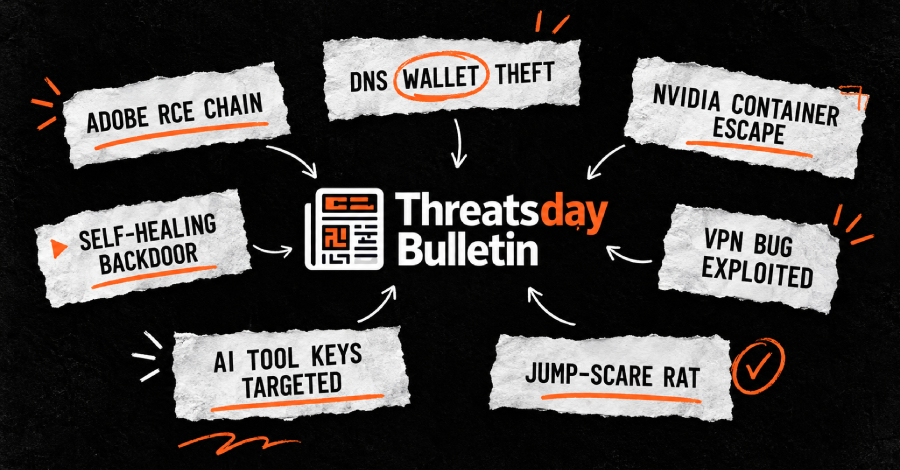
Security Threats of the Week: A Recap
Recent security incidents have highlighted the ongoing threats faced by organizations and individuals in the digital realm. From ransomware exploits to hybrid warfare tactics, malicious actors continue to find ways to exploit vulnerabilities for their gain. Let’s delve into some of the notable security stories from the past week.
Ransomware Exploitation Alert
Groups like Qilin and Settra have been actively exploiting an authentication bypass vulnerability in PAN-OS GlobalProtect and Prisma Access. This vulnerability, disclosed in May 2026, can lead to credential theft, data breaches, and ransomware attacks. Organizations are advised to upgrade affected systems, disable authentication override cookies, and monitor for suspicious activities.
Escalation of Hybrid Warfare
Russia has intensified its use of hybrid warfare tactics across Europe following its invasion of Ukraine earlier this year. These tactics involve a combination of psychological, cyber, and physical strategies to test defenses, disrupt infrastructure, and instill fear in target populations. Vigilance and preparedness are crucial in the face of such threats.
Cryptocurrency Wallet Theft via DNS
An analysis by Infoblox has uncovered a sophisticated cryptocurrency wallet-drainer kit named Noir, which leverages DNS TXT records to locate its hosted pool. By querying public DoH services, the malware can identify active backend pools and execute theft without requiring sensitive information like seed phrases or private keys. The use of AI assistance in developing such malware raises concerns about evolving cyber threats.

Discord-Based Remote Access Trojan
A remote access trojan called CikaBika Bot has been observed using Discord for command and control activities, reconnaissance, and data exfiltration. This trojan, delivered through malicious documents, demonstrates the evolving tactics of threat actors to evade detection and carry out malicious operations.
Psychological Harassment in Remote Access Trojan
The KGB RAT, a Windows-based remote access trojan, boasts a wide range of capabilities, including credential theft, keylogging, ransomware deployment, and psychological harassment features such as screamer functions and forced system crashes. This blend of technical sophistication and psychological manipulation poses a significant threat to victims and highlights the need for comprehensive cybersecurity measures.
Live-Screen Surveillance Malware
An undisclosed .NET remote access trojan named BotHelper RAT has been identified, featuring live screen surveillance capabilities. This multi-stage malware chain enables attackers to gather system information, establish persistence, and execute remote commands, underscoring the importance of proactive threat detection and response.
Enhanced Security Measures for Android Users
Google has introduced multi-layered protections in Google Messages and other messaging apps to safeguard Android users against mobile scams. These measures include enhanced scam detection, link safety checks, and real-time verification for bank calls, aiming to mitigate the risks posed by fraudulent activities on mobile devices.
Challenges in AI Model Security
Anthropic has implemented new security measures in its AI models, aiming to reduce data harvesting through distillation attacks. Preserved thinking, two-stage classifiers, and other safeguards have been introduced to enhance the security of AI systems against potential threats.
Enterprise Browser Security Controls
Mozilla has launched Firefox Enterprise, a browser tailored for organizations with stringent security requirements. This iteration provides IT teams with enhanced control over data, infrastructure, and browser environments, bolstering technological independence and operational resilience.
Unusual WordPress Backdoor Malware
Wordfence has identified a unique malware strain that disguises itself as a must-use WordPress plugin and employs self-healing mechanisms to evade detection and removal. This malware, equipped with advanced features like EtherHiding and administrator access manipulation, poses a significant risk to WordPress installations and user data.
GitHub Data Breach via Stolen Credentials
Meta has notified individuals, including its employees, about a data breach in some of its GitHub repositories caused by threat actors using stolen credentials. This incident underscores the importance of robust authentication measures and continuous monitoring to prevent unauthorized access to sensitive data.
XWorm Malware Evolution
The XWorm malware has evolved from an infostealer to a comprehensive surveillance platform, with new plugins enabling GPS tracking, live audio streaming, browser session hijacking, and webcam access. This expansion of capabilities highlights the evolving sophistication of malware threats and the need for proactive cybersecurity measures.
Rewards for Memory-Safety Bug Discovery
Google has increased bug bounty rewards for Chrome vulnerabilities, particularly focusing on memory safety issues. Researchers can now earn higher payouts for identifying vulnerabilities in Chrome processes, incentivizing the discovery and remediation of critical security flaws.
Preparing for Post-Quantum Authentication
Microsoft is urging organizations to prepare for post-quantum authentication by assessing their certificate systems, hardware security modules, and security appliances. Early testing and readiness measures are essential to ensure a smooth transition to post-quantum security standards.
AI Tool Credential Risk
A new malware-as-a-service infostealer named Warden Stealer targets AI assistant configuration files and local data, posing a risk to AI developers and agentic coding tools. This sophisticated malware variant utilizes obfuscation techniques and frequent updates to evade detection, emphasizing the need for robust cybersecurity practices in AI development.
Advanced Browser Data Theft Tactics
New iterations of CastleStealer have been identified, capable of bypassing encryption in Chromium-based browsers and executing remote commands for data exfiltration. This C#-based stealer represents a significant threat to user privacy and data security, underscoring the importance of browser security measures.
Targeting AI Developer Credentials
The Aoki infostealer targets credential and session files used by AI coding assistants, potentially compromising sensitive information and access to AI service providers. This threat highlights the vulnerabilities associated with AI credentials and the need for enhanced security measures to protect against unauthorized access.
MaaS Infostealer Customization
K7 Labs has identified a Python-based builder sold under a malware-as-a-service model, enabling threat actors to create customized Windows executables for infostealer payloads. This approach allows for tailored malware deployments with anti-analysis techniques, persistence mechanisms, and data exfiltration capabilities.
Cloud Credential Theft Vulnerability
An SSRF vulnerability in Harbor, the CNCF container registry, poses a risk of cloud credential theft by allowing registered users to access cloud metadata endpoints. This vulnerability underscores the importance of securing container registries and monitoring for unauthorized access attempts.
Unauthenticated RCE Exploitation
A critical vulnerability in Adobe Experience Manager (AEM) enables unauthenticated remote code execution through a chain of exploits. The flaw affects the cloud version of AEM and has been patched, highlighting the ongoing need for secure web application development and maintenance.
SQL Injection Risk in WebAlliance eCommerce
Rapid7 has disclosed a critical SQL Injection vulnerability in Channel Software WebAlliance eCommerce, allowing attackers to access sensitive data and execute system commands. This exploit emphasizes the importance of secure coding practices and regular vulnerability assessments to mitigate SQL injection risks.
Security Patch for Execution Flaws
NSD has released patches for four security vulnerabilities that could lead to arbitrary command execution. These flaws, identified by security researchers, have been addressed in the latest NSD updates, underscoring the importance of timely software updates and vulnerability remediation.
Virtual Machine Security Concerns
A race condition vulnerability in Xen’s grant-table mechanism poses a risk of compromising virtual machine hosts and allowing guest privilege escalation. Mitigation measures are available to address this vulnerability, emphasizing the need for secure virtualization practices and hypervisor configurations.
SYSTEM-Level Remote Code Execution
A security vulnerability in MyReport Updater 2.1.1 can enable attackers to gain SYSTEM-level access to machines, including remote control without authentication. This exploit, which can lead to full system compromise, highlights the importance of securing software applications and access controls.
In conclusion, these security incidents underscore the evolving landscape of cyber threats and the importance of robust cybersecurity measures to protect against malicious activities. Organizations and individuals must remain vigilant, implement proactive security practices, and stay informed about emerging threats to safeguard their digital assets effectively.













BMW Unlocks Greater Range for i7 Model Through Innovative Technology

Modern Warfare 4: The Final Chapter and the Birth of a New COD Legacy

Enhanced Sleep Tracking for Samsung Health: Galaxy Watch, Fit, and Ring Upgrade

Building a Sustainable Future: Actionable Recommendations from the European Parliament

Exploring the Superior Camera Quality of the Oppo Find X10 Pro Max: First Impressions from Tech Advisor

Strategies for Reducing Customer Acquisition Costs While Maintaining Lead Quality

Preorder the iPhone Duo for $1,999 and Experience the Ultimate Mobile Duo

Enhancing Google’s AI Responses with Prominent Inline Links

Uncommon ‘Hatfield’ Apple-1 Sets New Auction Record with $1.15M Sale

EU Takes Action Against Instagram and Facebook for Violating Illegal Content Rules

Warning: Facebook Creators Face Monetization Loss for Stealing and Reposting Videos

Facebook’s New Look: A Blend of Instagram’s Style

Facebook Compliance: ICE-tracking Page Removed After US Government Intervention

Facebook and Instagram to Reduce Personalized Ads for European Users

InstaDub: Meta’s AI Translation Tool for Instagram Videos

Reclaim Your Account: Facebook and Instagram Launch New Hub for Account Recovery

Meta discontinues Messenger apps for Windows and macOS

Breaking Updates: Meta Connect 2025 Unveils Latest Developments

$25,000 Gaming Setup – EVOLUTION!

The Maze Alpha X is HERE!

Cool Tech under $100 – December!

MYSTERY UNBOXING FROM GOOGLE!

TOP 6 Smartphones from Companies you NEVER Expected!

A Surprise Smartphone from EE!

DOOGEE MIX 2 VS DOOGEE MIX 1!

INCREDIBLE Smartphone Gadgets on Amazon!

10 Android Apps you NEED to try in 2017 / 2018
-
 Facebook12 months ago
EU Takes Action Against Instagram and Facebook for Violating Illegal Content Rules
-
 Facebook1 year ago
Warning: Facebook Creators Face Monetization Loss for Stealing and Reposting Videos
-
 Facebook10 months ago
Facebook’s New Look: A Blend of Instagram’s Style
-
 Facebook1 year ago
Facebook Compliance: ICE-tracking Page Removed After US Government Intervention
-
 Facebook10 months ago
Facebook and Instagram to Reduce Personalized Ads for European Users
-
 Facebook1 year ago
InstaDub: Meta’s AI Translation Tool for Instagram Videos
-
 Facebook10 months ago
Reclaim Your Account: Facebook and Instagram Launch New Hub for Account Recovery
-
 Apple12 months ago
Meta discontinues Messenger apps for Windows and macOS
