
Inovation
Revolutionizing Life with Enhanced 3D Printing Technology

Revolutionizing Bioprinting: EU-Funded Researchers Lead Breakthrough in Tissue Engineering
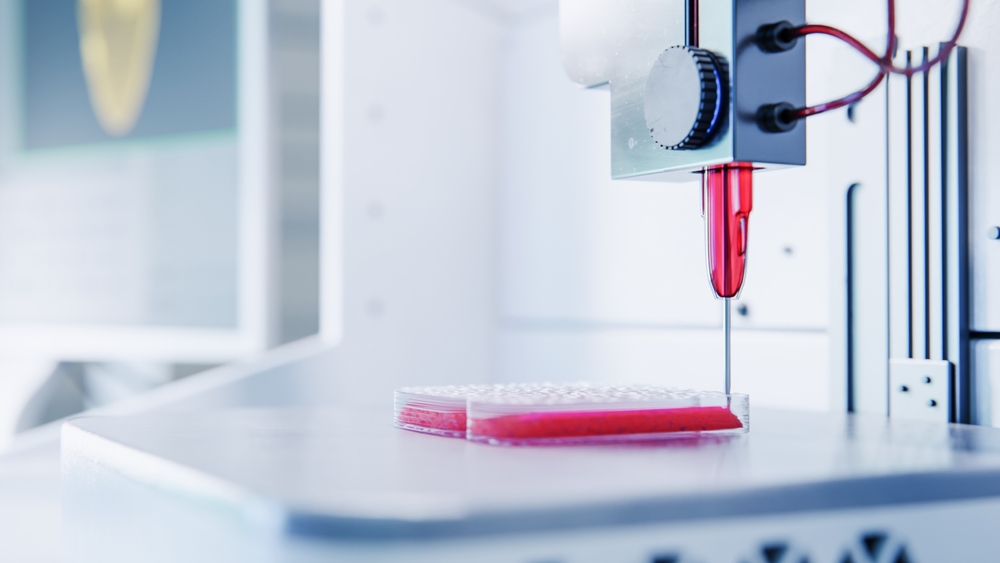
In a groundbreaking development, a team of EU-funded researchers has pioneered a 3D bioprinting technique that enables the growth of living bone, fat, and muscle tissues in a laboratory setting. This innovative approach holds immense promise for a wide array of applications, ranging from leukemia research to the production of cultivated meat.
Nature’s intricate process of constructing with living cells over billions of years has inspired researchers to mimic and accelerate this natural phenomenon. Professor Massimo Vassalli, a leading bioengineering expert at the University of Glasgow, aims to unravel the mysteries of tissue formation and reproduction within lab environments.
Heading the PRISM-LT project, a five-year endeavor supported by the EU until 2027, Vassalli and his team are focused on developing a cutting-edge 3D bioprinting platform for the creation of complex living tissues. These tissues have diverse applications in biomedical research and the emerging field of cultivated meat production.
The core concept driving this project is the creation of Engineered Living Materials (ELMs). These materials, composed partly or wholly of living cells, possess the remarkable ability to grow, adapt, and self-repair in ways that traditional static materials cannot emulate.
Engineered living materials offer dynamic features that conventional materials lack, according to Vassalli, emphasizing the transformative potential of this technology across various industries, from healthcare to food production.
Unlocking the Potential of Engineered Living Materials
The challenge lies in effectively printing living cells into intricate structures without compromising their viability or developmental control. The PRISM-LT team addresses this hurdle by utilizing tiny capsules containing living cells and a gel-like scaffold material referred to as bioink.
By encapsulating living building blocks, the team can precisely position these capsules using a robotic arm or layer them to create sophisticated tissue architectures. This approach diverges from conventional methods that lack biological guidance, ensuring the survival and proper development of the printed cells.
Genetically engineered microbes within the capsules act as biological guides, releasing growth factors to direct stem cells towards desired tissue types during differentiation. The manufacturing process is swift, followed by a maturation period where stem cells evolve into bone, fat, or muscle tissues.
The project’s complexity stems from the need to foster a symbiotic relationship between disparate living components, such as yeast and stem cells, within the same environment. This intricate interaction mirrors the evolutionary processes that have shaped the natural world.
Applications Beyond the Lab
The researchers are focused on recreating specific tissue types, including bone marrow interfaces for biomedical research and muscle-fat structures essential for cultivated meat production. Additionally, the platform will generate miniature tissue models for drug testing and personalized medicine applications.
By engineering various tissues using a unified set of principles, the project aims to cater to diverse needs within the healthcare and food sectors. The team’s efforts in developing 3D bone marrow models hold promise for advancing drug research, particularly in conditions like leukemia.
On the food front, achieving optimal fat distribution in alternative meats is crucial for consumer acceptance. The bioprinting technology employed by the team enables the replication of authentic meat textures, potentially revolutionizing the market.
Despite the exciting prospects, translating this technology into practical applications will take time. While focusing on fundamental principles, the researchers are mindful of future challenges and the need to address consumer perceptions, especially regarding the use of genetically modified microorganisms.
Navigating Regulatory Frontiers
Introducing engineered living materials into mainstream medicine and food production necessitates a paradigm shift in regulatory frameworks. The unique combination of living cells and genetically modified microorganisms in ELMs poses regulatory challenges that current frameworks are ill-equipped to address.
Collaborating with the European Innovation Council, the team is engaging with regulatory bodies like the European Medicines Agency to pave the way for the eventual approval and integration of ELMs into various industries.
While scalability remains a key challenge, the potential impact of ELMs is vast. Vassalli envisions a future where living materials coexist with traditional materials, ushering in a new era of innovation and sustainability.
This article was originally published in Horizon, the EU Research and Innovation Magazine.
Research featured in this article received partial funding from the European Innovation Council (EIC).













International Collaboration: Surrey, Sheffield, and Melbourne Join Forces on £3.2m Project to Create Provably Secure Sandbox for AI Agents

Tech Advisor Announces Samsung Galaxy Phones Now Available on Google Play Store

Exploring the Boundaries of Physical AI: Insights from an Nvidia Veteran Turned Investor

The Latest Updates on Apple’s iPhone Duo

Google Unveils Revolutionary ‘Universal’ Online Shopping Cart for Seamless Shopping Experience

Upgrade Alert: HomePod Mini 2 and HomePod 2 Set to Become Default Mac Speakers

Finally Fixing my Wi-Fi – Zyxel Multy X!

Lost in the Living Maze: Unraveling Hidden Terrain Magic Through Copy-Paste

Samsung Unveils Exclusive Galaxy Z Fold 8 BTS Edition

EU Takes Action Against Instagram and Facebook for Violating Illegal Content Rules

Warning: Facebook Creators Face Monetization Loss for Stealing and Reposting Videos

Facebook’s New Look: A Blend of Instagram’s Style

Facebook Compliance: ICE-tracking Page Removed After US Government Intervention

Facebook and Instagram to Reduce Personalized Ads for European Users

InstaDub: Meta’s AI Translation Tool for Instagram Videos

Reclaim Your Account: Facebook and Instagram Launch New Hub for Account Recovery

Meta discontinues Messenger apps for Windows and macOS

Breaking Updates: Meta Connect 2025 Unveils Latest Developments
Finally Fixing my Wi-Fi – Zyxel Multy X!

$25,000 Gaming Setup – EVOLUTION!

The Maze Alpha X is HERE!

Cool Tech under $100 – December!

MYSTERY UNBOXING FROM GOOGLE!

TOP 6 Smartphones from Companies you NEVER Expected!

A Surprise Smartphone from EE!

DOOGEE MIX 2 VS DOOGEE MIX 1!

INCREDIBLE Smartphone Gadgets on Amazon!
-
 Facebook12 months ago
EU Takes Action Against Instagram and Facebook for Violating Illegal Content Rules
-
 Facebook1 year ago
Warning: Facebook Creators Face Monetization Loss for Stealing and Reposting Videos
-
 Facebook10 months ago
Facebook’s New Look: A Blend of Instagram’s Style
-
 Facebook1 year ago
Facebook Compliance: ICE-tracking Page Removed After US Government Intervention
-
 Facebook10 months ago
Facebook and Instagram to Reduce Personalized Ads for European Users
-
 Facebook1 year ago
InstaDub: Meta’s AI Translation Tool for Instagram Videos
-
 Facebook11 months ago
Reclaim Your Account: Facebook and Instagram Launch New Hub for Account Recovery
-
 Apple12 months ago
Meta discontinues Messenger apps for Windows and macOS
