
Security
Redefining Enterprise Trust Boundaries: Navigating AI-Driven Cyber Threats in 2026

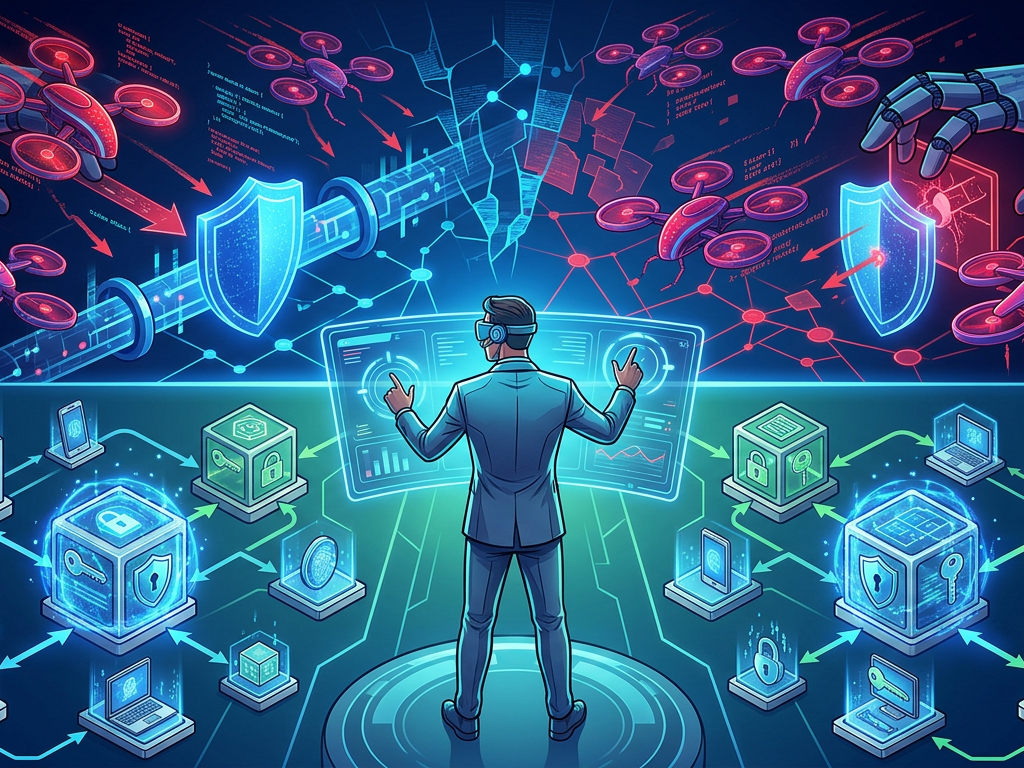
Revolutionizing Enterprise Cybersecurity: The Shift Towards Zero Trust
The landscape of enterprise cybersecurity is evolving rapidly, propelled by the convergence of two powerful trends: the erosion of traditional network boundaries and the swift adoption of artificial intelligence by cybercriminals.
Research indicates that more than 80% of recent cyber breaches involve compromised identities, underscoring the critical need for robust security measures. Organizations without mature Zero Trust frameworks face prolonged breach response times and increased financial repercussions.
Furthermore, the emergence of AI-driven phishing attacks, deepfake impersonation tactics, and automated vulnerability exploitation has drastically expedited the execution of targeted cyber assaults, diminishing the time required from days to mere minutes.
For Chief Information Security Officers (CISOs), the message is clear: trust can no longer be assumed based on traditional factors like network location or device status.
The Evolution of Trust Models
Historically, security strategies relied on a trusted internal network and a vulnerable external perimeter. However, this model is no longer tenable due to various factors:
- Fragmented cloud-native infrastructure across multiple cloud environments
- Dispersed identities in remote and hybrid work settings
- Interconnected systems through APIs
- Integration of third-party vendors into critical workflows
Consequently, the attack surface for enterprises is no longer confined but distributed, dynamic, and continuously expanding.
AI’s Impact on Cybersecurity
The integration of artificial intelligence has revolutionized cyber threats by enhancing both the scale and precision of attacks.
Notable shifts include:
- AI-powered phishing campaigns with personalized contextual content
- Deepfake-based impersonation targeting executives with convincing voice and video manipulation
- Automated discovery and exploitation of vulnerabilities, reducing attacker dwell time
- Adaptive malware systems that evade detection through behavioral modifications
These advancements minimize manual efforts for attackers and boost operational efficiency on a large scale.
The Imperative of Zero Trust
Zero Trust has transcended its technical origins to become a strategic business risk mitigation approach.
An effective Zero Trust architecture enforces:
- Continuous identity validation for every access request
- Dynamic least privilege access controls
- Workload and environment micro-segmentation
- Validation of device posture before and during sessions
- Context-aware access control determinations
This model presupposes inevitable compromises and focuses on minimizing lateral movement and impact radius.
Challenges in Zero Trust Implementation for CISOs
Despite widespread adoption, enterprises encounter hurdles in implementing Zero Trust due to:
- Constraints of legacy infrastructure
Many organizations operate hybrid environments ill-suited for identity-centric security enforcement.
- Escalating identity sprawl
The proliferation of machine identities, APIs, and service accounts heightens unmanaged access risks.
- Fragmentation of security tools
Diverse security solutions lack unified visibility across identity, endpoint, and cloud layers.
- Executive alignment challenges
Zero Trust is often misconstrued as a mere tool upgrade instead of a fundamental architectural shift.
Strategic Roadmap for Zero Trust Maturity
CISOs aiming for robust Zero Trust adoption should prioritize:
- Centralized identity governance as the core security control
Implementing real-time risk scoring for authentication and authorization decisions
- Network micro-segmentation to limit lateral movement
Aggregating endpoint, cloud, and identity logs for unified analytics
- Quantifying Zero Trust maturity in tangible business outcomes
Reducing breach impact, enhancing incident response speed, and aligning with regulatory requirements.
The Role of Cyber Intelligence in Zero Trust Environments
Modern Zero Trust frameworks necessitate continuous cyber intelligence feeds to detect emerging threats.
Integration of external threat intelligence enhances detection speed and response accuracy.
The combination of AI-powered threats and complex enterprise structures has rendered traditional perimeter-based security obsolete.
Zero Trust is now imperative for ensuring business continuity in the face of rapid cyber threats, emphasizing identity-centric security and continuous validation.
Organizations failing to adopt robust security measures remain vulnerable to significant cyber disruptions.
Ikeh James, a cybersecurity and digital risk expert at Privacy Needle, focuses on enterprise security strategy, Zero Trust architecture, and AI-driven cyber threat analysis. His work delves into bolstering cyber resilience through identity-centric security models, continuous validation frameworks, and advanced threat intelligence integration.
He writes extensively on cybersecurity governance, privacy safeguards, and evolving attack methodologies impacting modern enterprises and critical digital infrastructure.
Contact Ikeh James via [email protected], connect on LinkedIn at https://www.linkedin.com/in/ikeh-james-4a273a17b/, or visit https://privacyneedle.com.
Transform the following sentence into a question:
They are going to the party tonight.
Are they going to the party tonight?












How Smart is the AI-Powered Huawei Mate 10 – with EMUI 8.0?

Reviving the Legacy: Porsche Mission S Unveils Carrera GT-Inspired Gauge Cluster

Navigating the New Normal: Satya Nadella’s Journey in the Post-COVID World of Microsoft

Persona 4 Reborn: Unveiling Naoto Shirogane’s Return in New Trailer

Unveiling the Powerhouse: Xiaomi 18 Pro Max Global Leak Exposes Impressive Performance Features

Breaking News: Android U-Turn Officially Confirmed by Tech Advisor

Strategies for Building a Successful Home Services Franchise System: Driving Growth and Scalability

Apple and LG Unveil Game-Changing ‘Tap to Control’ HomeKit Features

The Surprising Decision: Tim Cook’s Early Departure Before iPhone Duo Launch

EU Takes Action Against Instagram and Facebook for Violating Illegal Content Rules

Warning: Facebook Creators Face Monetization Loss for Stealing and Reposting Videos

Facebook’s New Look: A Blend of Instagram’s Style

Facebook Compliance: ICE-tracking Page Removed After US Government Intervention

Facebook and Instagram to Reduce Personalized Ads for European Users

InstaDub: Meta’s AI Translation Tool for Instagram Videos

Reclaim Your Account: Facebook and Instagram Launch New Hub for Account Recovery

Meta discontinues Messenger apps for Windows and macOS

Breaking Updates: Meta Connect 2025 Unveils Latest Developments
How Smart is the AI-Powered Huawei Mate 10 – with EMUI 8.0?

I used a 2012 Smartphone in 2018 – Here’s what happened.

How to send ANY file Anywhere!

NEW Oneplus 5T Sandstone White Unboxing – The Ultimate Oneplus 5T?

HUAWEI P20 – THE SMARTPHONE REVOLUTION IS HERE?

How OnePlus succeeded when they should have failed.

Samsung sent us THIS! #AD

Ulefone Power 3 – Quad Camera Smartphone that last 2 weeks!

EPIC Smartphone FAILS that people will never forget.
-
 Facebook12 months ago
EU Takes Action Against Instagram and Facebook for Violating Illegal Content Rules
-
 Facebook12 months ago
Warning: Facebook Creators Face Monetization Loss for Stealing and Reposting Videos
-
 Facebook10 months ago
Facebook’s New Look: A Blend of Instagram’s Style
-
 Facebook12 months ago
Facebook Compliance: ICE-tracking Page Removed After US Government Intervention
-
 Facebook10 months ago
Facebook and Instagram to Reduce Personalized Ads for European Users
-
 Facebook12 months ago
InstaDub: Meta’s AI Translation Tool for Instagram Videos
-
 Facebook10 months ago
Reclaim Your Account: Facebook and Instagram Launch New Hub for Account Recovery
-
 Apple12 months ago
Meta discontinues Messenger apps for Windows and macOS
