
Inovation
Idaho Secures $8 Million NSF Grant to Lead Microelectronics Research Initiative

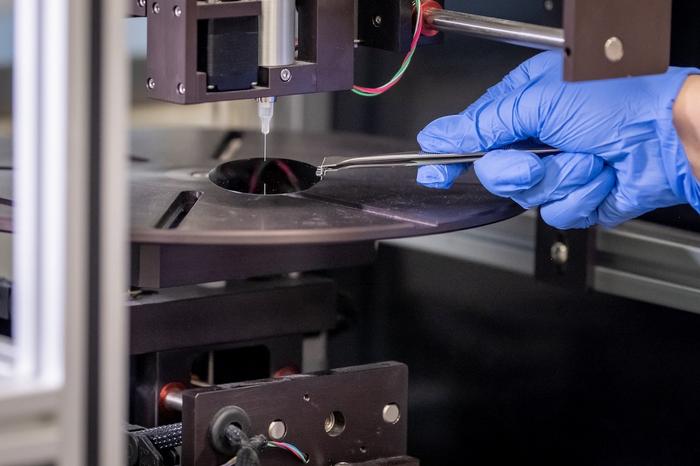
Boise State University Receives $8 Million NSF Grant for Microelectronics Research
Boise State University has recently been awarded a substantial $8 million grant from the National Science Foundation (NSF) to enhance Idaho’s research and development in resilient microelectronics designed for extreme environments.
The initiative, known as the XTREME project, will bring together a consortium consisting of Boise State University, the University of Idaho, three community colleges, Brigham Young University-Idaho (BYU-Idaho), Micron Technology, and Idaho National Laboratory (INL).
One of the primary focuses of the program will be the investigation of material behavior under challenging conditions such as high temperatures, radiation exposure, and mechanical stress.
This NSF award marks Idaho’s first grant under the Established Program to Stimulate Competitive Research (EPSCoR) E-RISE program, and it will facilitate a comprehensive approach to research, workforce development, and jurisdictional capacity in the field of microelectronics. The applications of this research are particularly relevant to sectors such as energy, defense, and aerospace.
Boise State President David Hahn expressed his enthusiasm for the funding, highlighting the university’s long-term commitment to building a regional center for microelectronics research in collaboration with industry and government partners. He emphasized the significance of these funds in establishing a robust research infrastructure that will drive graduate education and lead to critical discoveries in materials essential for national energy and defense systems.
Exploring Microelectronics for Harsh Environments
The XTREME project, which stands for “Capacity Building for Resilient Microelectronics for Extreme Environments,” will concentrate on developing materials capable of withstanding extreme conditions.
Researchers aim to create materials that can enable microelectronics and sensors to function effectively in environments exceeding 1,000°C and in high-radiation settings. The ultimate goal of this research is to generate knowledge that will be instrumental in the development of future energy and defense systems.
Boise State University and the University of Idaho will spearhead the research efforts, leveraging their existing expertise in materials science and engineering. Boise State has a longstanding partnership with INL spanning two decades, focusing on research, education, and workforce development in microelectronics and related fields.
The collaborative nature of the project will involve the participation of the College of Western Idaho, College of Southern Idaho, and College of Eastern Idaho, in addition to BYU-Idaho, establishing a comprehensive statewide partnership encompassing universities, community colleges, industry, and national laboratory research.
Building on Idaho’s Microelectronics Research Landscape
The NSF grant builds upon previous investments made in Idaho’s microelectronics research ecosystem, with Micron Technology’s significant $25 billion investment in microelectronics fabrication in Boise being a notable component of this initiative.
Micron Technology has also been actively involved in supporting research endeavors at Idaho universities, including the establishment of an endowment that provides ongoing funding for the University of Idaho’s Next Generation Microelectronics Research Center (NGeM).
Boise State University, with the support of the Micron Foundation, established the Micron Center for Materials Research in 2015 through a generous $25 million donation. The university has further enhanced its research capabilities through collaborations with INL and the Department of Energy (DOE) in the realm of advanced sensors and instrumentation.
The XTREME project will build upon these existing initiatives while aligning NGeM with national research priorities in the field.
Training the Next Generation of Microelectronics Experts
Education and workforce development will be central components of the XTREME project, offering students at various academic levels valuable hands-on research opportunities. The participating institutions will collaborate to cultivate skills relevant to microelectronics and related disciplines.
An advisory board consisting of representatives from NASA, the Air Force Research Laboratory at Wright-Patterson Air Force Base, DOE Nuclear Science User Facilities, industry partners, and R1 universities will provide guidance and expertise throughout the project.
The combined efforts in research and education aim to bolster Idaho’s capabilities in resilient microelectronics while advancing materials research for systems operating in extreme environments.












Revamped Directive 8020: The Ultimate Online Multiplayer Experience

Revolutionizing the Smartphone Market: A Sneak Peek at the Oppo Find X10 and Other Exciting Releases in 2026

Upgrade Your Viewing Experience with the Samsung Galaxy S27 Display – Tech Advisor

Ownership Divide: Eric Schmidt’s Stake in Anthropic

Enhanced Security Measures: Chrome’s New Warning Feature for ‘Suspicious’ Sites

Apple Boosts US Manufacturing for iPhone Duo & 18 Pro Models

Freelander Sets Sights on 25 Dealers for 2027 Launch in Australia

Global Crackdown: Taking Down a Multimillion-Dollar Phishing Network

Visa Troubles: Umamusume Live Concert Amid US Regulations

EU Takes Action Against Instagram and Facebook for Violating Illegal Content Rules

Warning: Facebook Creators Face Monetization Loss for Stealing and Reposting Videos

Facebook’s New Look: A Blend of Instagram’s Style

Facebook Compliance: ICE-tracking Page Removed After US Government Intervention

Facebook and Instagram to Reduce Personalized Ads for European Users

InstaDub: Meta’s AI Translation Tool for Instagram Videos

Reclaim Your Account: Facebook and Instagram Launch New Hub for Account Recovery

Meta discontinues Messenger apps for Windows and macOS

Breaking Updates: Meta Connect 2025 Unveils Latest Developments

Oneplus 5T vs Oneplus 1 – 3 Years Later.

Top 20 BEST Smartphones of 2017!

5 Amazing Upcoming Smartphone Features – 2018 / 2019

ULTIMATE Power Banks / The Best Power Banks (2017-2018)

TOP 5 BEST UPCOMING SMARTPHONES – 2018!!

How to Apply a Screen Protector

The Flagship Samsung Smartphone you Never Considered.

Finally Fixing my Wi-Fi – Zyxel Multy X!

$25,000 Gaming Setup – EVOLUTION!
-
 Facebook12 months ago
EU Takes Action Against Instagram and Facebook for Violating Illegal Content Rules
-
 Facebook1 year ago
Warning: Facebook Creators Face Monetization Loss for Stealing and Reposting Videos
-
 Facebook10 months ago
Facebook’s New Look: A Blend of Instagram’s Style
-
 Facebook1 year ago
Facebook Compliance: ICE-tracking Page Removed After US Government Intervention
-
 Facebook11 months ago
Facebook and Instagram to Reduce Personalized Ads for European Users
-
 Facebook1 year ago
InstaDub: Meta’s AI Translation Tool for Instagram Videos
-
 Facebook11 months ago
Reclaim Your Account: Facebook and Instagram Launch New Hub for Account Recovery
-
 Apple12 months ago
Meta discontinues Messenger apps for Windows and macOS
