
Cars
Unveiling the Evolution: A Look at Every E53 Model

Article Summary
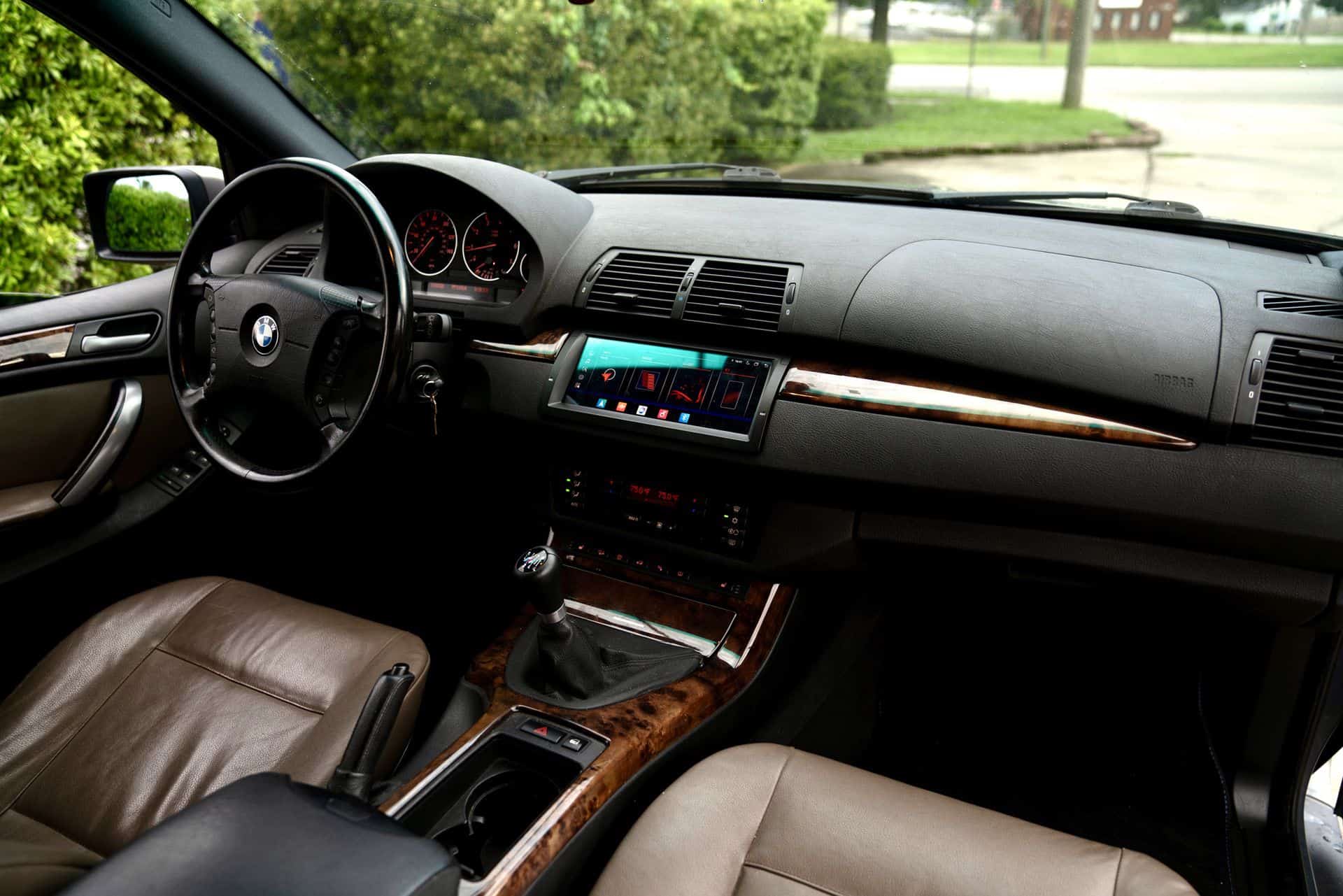
- The only X5s ever sold with a six-speed manual were the facelifted 2004 to 2006 E53 3.0i and 3.0d, and the V8s were automatic-only.
- In the US, the six-speed was standard on the 3.0i, and the diesel 3.0d was never officially sold there.
- Manual 3.0i cars are rare, with an enthusiast registry counting about 4,446 US manual E53s, but recent sales still land under $10,000.
The BMW X5 has been on sale since 1999, and its fifth generation begins rolling out in October with the new G65 generation. For about three years of the E53 run, BMW also sold its big SAV with a six-speed manual. That window closed when the E70 arrived: the second-generation X5 dropped the manual entirely and came only with automatics. Every six-speed X5 is a late E53, and every one has an inline-six under the hood. Those cars are worth a closer look today, both for what they were and for what their disappearance says about where the X5 went next.
An SAV Built For The Road
The X5 was conceived as a road car, but in reality, very few BMW owners took their cars on even mild off-roading. Instead, they became both utility vehicles (hence the name SUV) and luxury family haulers later on. The original X5 used unibody construction and independent suspension, and its all-wheel drive sent 62 percent of the power to the rear axle. A manual gearbox fit that idea. BMW didn’t invent the stick-shift luxury SUV, but it made one that drove like a BMW sedanish and let you row the gears.
Which X5s Had A Six-Speed
The original X5 offered a clutch pedal early on, but with five forward gears. The six-cylinder 3.0i arrived in spring 2000 with a five-speed manual as standard and an automatic as the option. The sixth gear came with the LCI (Life Cycle Impulse, BMW’s term for a mid-cycle refresh). BMW’s facelift announcement said the 3.0i now came with a new six-speed manual and the xDrive all-wheel drive system.
The V8s never had a manual at all. The 4.4i and 4.8is came only with a six-speed automatic. That leaves two six-speed manual X5s, each with its own gearbox:
- X5 3.0i (LCI): M54 3.0-liter inline-six, GS6X37BZ six-speed manual, sold in markets including Europe, North America, and South Africa
- X5 3.0d (LCI): M57TU 3.0-liter diesel inline-six, GS6X53DZ six-speed manual, never officially sold in the US
The gearbox codes come from BMW’s parts catalogue: the 3.0i uses the GS6X37BZ, while the 3.0d is listed with the GS6X53DZ. Every six-speed car also has xDrive, which replaced the fixed rear-biased split. xDrive varies torque between the axles as grip changes, using an electronically controlled multi-plate clutch.
The gearing is short at the bottom. BMW’s US brochure lists the 3.0i six-speed with a 5.14:1 first gear and a 4.10:1 final drive. Owners notice. The Autopian’s Mercedes Streeter, who bought a manual E53, described first gear as so short it works almost like a crawler gear, and suggested starting in second when you want to pull away quickly.
X5 3.0i Six-Speed

This is the gasoline car, and the only six-speed manual X5 BMW sold in America. In the US it was the default gearbox, not an option. The equipment list at the time showed the six-speed manual as standard on the 3.0i, with the five-speed automatic listed as a $1,275 option, and the manual stayed standard through 2006.
BMW of North America rated the engine at 225 hp at 5,900 rpm and 214 lb-ft at 3,500 rpm. The manual was also the quicker car. BMW’s preliminary figures gave the 3.0i a 0-60 mph time of 7.8 seconds with the manual and 8.3 seconds with the automatic.
Standard 3.0i equipment included 17-inch wheels on 235/65R-17 all-season tires and 8-way power seats for both driver and passenger. Leather came through the Premium Package. The Sport Package was more about stance and cockpit than grip: on the 3.0i it included sport suspension calibration, Shadowline trim, a three-spoke sport steering wheel, and 18-inch wheels with 255/55R-18 all-season tires. The 19-inch performance tires were reserved for the 4.4i.
At the time, a 2004 BMW X5 3.0i cost $40,800 plus $695 destination, in pricing effective April 2004, and $42,500 plus $695 by 2006. BMW rated the US-market 2004 3.0i to tow up to 6,000 pounds.
X5 3.0d Six-Speed
The diesel is the six-speed X5 Americans never got. The specification sheet lists the 3.0d at 160 kW (218 PS) and 500 Nm (369 lb-ft), with 0-62 mph in 8.3 seconds for the manual and 8.8 seconds for the automatic. It was efficient for its size too: the manual was rated at 8.6 L/100 km combined, against 9.4 for the automatic. In the UK for example, the six-speed manual was standard and the six-speed Steptronic automatic cost £1,490 extra.
Torque was quite impressive for the time. The 2004 X5 4.4i V8 made 324 lb-ft and could only be had with an automatic. The diesel made more, and it came with three pedals.
The first diesel X5 sold in the US was the E70 xDrive35d, which arrived in 2009. For a six-speed E53 diesel, the route is the federal 25-year import exemption, which is based on each car’s actual manufacture date. The earliest LCI 3.0d manuals reach 25 years around late 2028, and EPA and state registration requirements still apply separately.
The X5 Was First To Drop The Stick
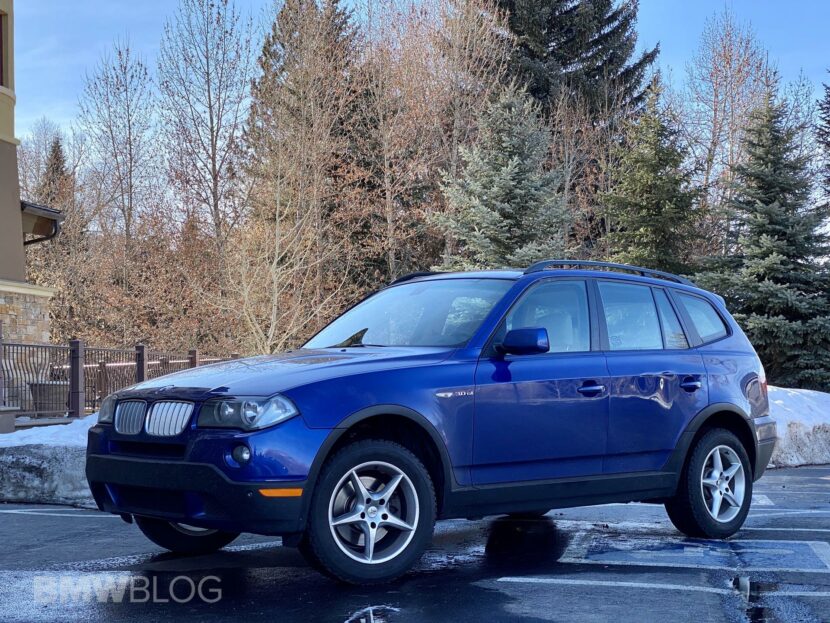
The X5 wasn’t the only luxury SUV of its era with a manual. The first-generation X3 3.0i offered a six-speed manual alongside a five-speed automatic.
The Porsche Cayenne underwent significant changes in 2005, with the introduction of a six-speed manual transmission as standard on the V6 model. This trend continued in 2008 with the Cayenne GTS, which also offered a manual option with its 4.8-liter V8 engine.
One notable feature of the X5 during this time was the transition to an electronic joystick selector in the E70 model, replacing the traditional gear lever. This change allowed for more space in the console area. Despite this, the smaller X3 retained its manual transmission option. Porsche followed suit by continuing to offer a manual transmission on the base V6 Cayenne in its second generation.
The rarity of manual X5s is evident, with estimates suggesting that only 4,446 first-generation X5s in the US were equipped with manual transmissions. This number includes both five-speed and six-speed variants and is based on enthusiast estimates rather than official figures. In comparison, BMW produced 467,995 E53 X5s worldwide across all versions.
Rarity has not yet translated into high collector values for manual X5s. Recent sales of a 2005 X5 3.0i with a manual transmission have ranged from $7,700 to $8,999. However, potential buyers should be aware of the maintenance challenges associated with the E53 X5, as neglect and costly repairs are common issues. It is recommended to budget for maintenance costs before purchasing a manual X5.
For those considering purchasing a six-speed X5, the 3.0d model is a popular choice due to its torque and efficiency. In the US, the 3.0i with the Sport Package from 2004 to 2006 is a recommended option, with a focus on condition and documentation rather than mileage.
In conclusion, manual X5s offer a unique driving experience that is increasingly rare in the automotive market. While they may not yet be considered collector’s items, they present an opportunity for enthusiasts to own a piece of automotive history.











Unveiling iOS 27.2: Enhanced features, official release date, and much more

THE BEST PHONE HTC EVER MADE?

Revolutionizing Luxury: The 2027 Bentley Torcal – A Fusion of British Elegance and Porsche Performance

Activision’s Halo Takeover: A Game-Changing Xbox Overhaul

AI Revolution: Amazon’s Seller Tools Embrace Anthropic’s Claude

Ragdoll Rampage: The Malicious Mod Menace

Apple Reportedly Developing a Fitbit Air Competitor, Tech Advisor Reports

AI: A Threat to Employee Retention?

AI Sentry: Enhancing Military Logistics Security with U.S. TRANSCOM’s Deployed Technology

EU Takes Action Against Instagram and Facebook for Violating Illegal Content Rules

Warning: Facebook Creators Face Monetization Loss for Stealing and Reposting Videos

Facebook’s New Look: A Blend of Instagram’s Style

Facebook Compliance: ICE-tracking Page Removed After US Government Intervention

Facebook and Instagram to Reduce Personalized Ads for European Users

InstaDub: Meta’s AI Translation Tool for Instagram Videos

Reclaim Your Account: Facebook and Instagram Launch New Hub for Account Recovery

Meta discontinues Messenger apps for Windows and macOS

Breaking Updates: Meta Connect 2025 Unveils Latest Developments
THE BEST PHONE HTC EVER MADE?

The Truth about Google?

Samsung S9/ S9+ vs iPhone X vs Galaxy Note 8 Battery Life DRAIN TEST

Samsung S9 / S9+ vs Mate 10 Pro vs iPhone X Charging SPEED Test

The BEST APPS in 2018 – ft. MKBHD, UrAvgConsumer, iJustine + More

The ULTIMATE Smartphone Unboxing!!

HOW GOOD can a $250 Smartphone Camera be!?

10 Android Apps you NEED to try in 2018

They could not believe how cheap this Phone is
-
 Facebook11 months ago
EU Takes Action Against Instagram and Facebook for Violating Illegal Content Rules
-
 Facebook11 months ago
Warning: Facebook Creators Face Monetization Loss for Stealing and Reposting Videos
-
 Facebook10 months ago
Facebook’s New Look: A Blend of Instagram’s Style
-
 Facebook11 months ago
Facebook Compliance: ICE-tracking Page Removed After US Government Intervention
-
 Facebook10 months ago
Facebook and Instagram to Reduce Personalized Ads for European Users
-
 Facebook11 months ago
InstaDub: Meta’s AI Translation Tool for Instagram Videos
-
 Facebook10 months ago
Reclaim Your Account: Facebook and Instagram Launch New Hub for Account Recovery
-
 Apple11 months ago
Meta discontinues Messenger apps for Windows and macOS
