
Microsoft
Navigating the Turbulent Waters of AI: Insights from Bill Gates


Today, I’m talking to Bill Gates, cofounder and former CEO of Microsoft and chairman of the Gates Foundation.
You may have noticed Bill in the news more lately — he’s been on something of a tour for the past few months, ever since publishing an essay in late August titled “The turbulent AI era is here. The choices we make now are critical.”
In his piece, Gates ratcheted up his rhetoric around AI safety, writing that “even under the best circumstances, the transition to this new AI era will be one of the most turbulent times in human history.”
In interviews since, Gates has called AI “the most dangerous thing that humans have ever gone near,” and that AI “makes nuclear weapons look like nothing.” It is clear he does not think the current policy response from the White House, or the lack of coordinated efforts from the AI industry itself, is sufficient to combat this threat.
Verge subscribers, don’t forget you get exclusive access to ad-free Decoder wherever you get your podcasts. Head here. Not a subscriber? You can sign up here.
So I wanted to know: Is Bill Gates an AI doomer? I also had a series of questions downstream from what he’s been arguing about AI. How can we ever hope to control AI, and align it to humanity, if we can’t even agree on what it is and whether it’s conscious? How would you even technically construct a solution to alignment that could be enforced, not just for closed-source models but open-source ones, too?
Bill gave us a big chunk of his time to dig into these issues with him, and the resulting conversation is a really illuminating one. He thinks we need to prepare for roughly two decades of AI disruption, and he says this period could be so painful it might split society in two — between people comfortable living near the technological frontier, and those who reject it.
We also talked about the labor considerations, the nihilism of younger generations toward technological progress, and what should make us hopeful about the future. This is a deep one.
Okay: Bill Gates, the cofounder and former CEO of Microsoft. Here we go.
This interview has been lightly edited for length and clarity.
Bill Gates, you are the co-founder and former CEO of Microsoft. You’re also the chairman of the Gates Foundation. Welcome to Decoder.
It’s good to talk to you again. You and I have spoken many times over the years. I would say that the circumstances of this conversation feel very different. Previously, when you and I would talk, you were always very hopeful about technology and what it could bring.
You had a Netflix series a few years ago. You talked to The Verge, and I want to just read you this quote. You said, “I believe AI is a beneficial thing, we just need to shape it in the right way.” I would say you still agree with that, you just think the time to shape it is now.
Yeah, I agree with that. I’d say the response broadly hasn’t been adequate to the speed that the challenge is arising. I’m very concerned that the bad stuff will not be minimized and that a lot of good stuff could come fairly slowly if we don’t manage it the right way.
I’m very concerned that the bad stuff will not be minimized and that a lot of good stuff could come fairly slowly if we don’t manage it the right way
I want to have this conversation with you in three parts. I want to understand how you feel about AI as a technology today and why it’s advancing so quickly. I’m very curious about the technology, and the technical solutions to potentially control it. There are policy solutions as well, but it seems like we have to build an awful lot of technology.
I’m also very curious to talk about who might impose those solutions and controls, because that seems very much up for debate right now as well. So let’s just start at the start. What has made you feel the urgency that AI is arriving at a speed that means we’re not ready to control it?
The progress over the last year has been really quite amazing, starting with the ability to write code and find cyber flaws, the ability to reason in biology, the ability to form relationships with kids or other people, the ability to disrupt the job market.
The immense power of AI today means that all these things will inevitably occur, and society must be prepared. The risks and capabilities of AI are not limited to specific models or companies, but rather extend across the entire field. The immediate danger lies in models without safeguards, where the potential for harm is significant. However, companies that prioritize maintaining safeguards can mitigate these risks. The industry is increasingly vocal about the dangers posed by AI, but there is a reluctance outside the industry to acknowledge these risks. It is essential to recognize that the warnings issued by industry insiders regarding AI misuse are genuine and should not be dismissed. Companies like Anthropic, OpenAI, and DeepMind initially pursued lofty goals of building AGI while implementing governance structures to prevent commercialization pitfalls, but market pressures may have steered them away from these ideals. The structure adopted by OpenAI, for instance, was not sustainable in a landscape with numerous companies at the forefront of AI development. The issue at hand is not about the consciousness of AI, but rather the safety concerns it poses to society. The responsibility of ensuring safety cannot solely be left to individual companies, but must be taken up by the government. Despite concerns about the government’s understanding of the technology, it is necessary for regulations to be put in place to prevent AI from being misused. The focus should be on maintaining safeguards to prevent AI from being used in harmful ways, such as cyberattacks or bioterrorism. The immediate priority is to establish mandatory reviews of AI models and create safeguards to ensure they are not used for malicious purposes. We should ensure that the chains of thought within the models are visible as they perform tasks, with other agents monitoring their actions beforehand. Microsoft has emphasized the importance of not anthropomorphizing the models, advising against treating them as if they were alive. The focus should be on controlling the models to prevent misuse by malicious actors. Implementing constraints and oversight mechanisms can help in this regard. While the control problem is significant, it is not the most pressing issue compared to current threats posed by AI applications. It is crucial to address potential risks and engage with various stakeholders to steer AI development in a positive direction. The debate between those advocating for caution and those pushing for rapid advancement underscores the complex nature of AI governance and the need for careful consideration of its implications. I believed he shared the common concerns that almost everyone has.
The concerns raised by Mustafa Suleyman regarding the behavior of AI in a human-like manner, I wholeheartedly agree with. I also agree that prioritizing the moral standing of AI should not be a primary concern when there are other pressing issues, such as job market disruption and infrastructure attacks, that need attention first.
I recently spoke with Mustafa about the concept of alignment and whether it is a sufficient solution for AI safety. He expressed that alignment alone is not enough and that more work needs to be done in this area.
The term “alignment” refers to the control problem in AI, where models are trained to perform tasks but exhibit unexpected behaviors. As these models become more powerful, concerns about their potential impact on society, job markets, and overall control become more urgent. It is crucial to involve society as a whole in addressing these issues and maximizing the benefits while minimizing the risks.
The existing approaches to alignment may not be adequate as AI technology advances. New approaches, such as fundamentally changing the way AI is built, creating visibility into models, and implementing security layers, may be necessary to ensure AI operates in alignment with human values and needs.
Microsoft recently released a blog post emphasizing the need for additional security measures for AI models. While these measures are essential, it is important to consider the potential limitations and implications of relying solely on security layers to control AI behavior.
In conclusion, the challenges of aligning AI with human values and needs are complex and require ongoing efforts to develop effective solutions. The AI industry must continue to innovate and collaborate to address these challenges and ensure the responsible and ethical use of AI technology. I would argue that this direction is the most likely of the three to address the alignment problem. They will find a way to be built somewhere in the United States, ensuring they don’t raise electric bills, use too much water, or cause excessive noise. While there have been mistakes and generous tax credits, data centers will continue to be built. The opposition to data centers will not prevent the negative impacts of AI but rather hinder progress.
It is challenging to create new government regulatory bodies to control the actions of big companies and wealthy individuals. However, history shows that we eventually develop safety measures for new industries to protect citizens, such as airline and car safety standards.
The industry does seek regulation, but some powerful individuals may be preventing it from happening. As the administration learns more about the risks, they may take a more nuanced approach to protecting Americans from the negative consequences of AI.
One argument against job loss due to AI automation is that it will create demand for new tasks that humans were previously unable to do. Subsidized healthcare could potentially encourage more people to quit their jobs and start new companies, aided by AI technology.
While job loss is a concern, jobs are essential for the economy and human welfare. As AI becomes more advanced, certain white-collar jobs may be replaced by AI due to its efficiency and accuracy. AI can achieve any level of cognition, including in fields like mathematics, where models are already publishing papers that impress people. This challenges the old view that only humans can tackle complex tasks like modeling biology or proving theories. In the future, AI may excel in various fields, including capitalism, where the market determines what is successful. However, there are still areas, like poetry, that may not be easily conquered by AI. As AI advances, humanity will need to adapt to a world of abundance and purpose, potentially setting limits on AI use in certain professions to maintain human involvement. These policy decisions will be crucial in navigating the future of AI and human control. Their ability to make choices will be drastically different when there is an abundance of resources, unlike the scarcity we face today. In many African countries, people do not have access to doctors, and almost half of the children are malnourished, hindering their brain development.
My main concern is the 20-year transition period, during which there will be winners and losers, as well as significant disruptions. We must navigate through this period to reach a state of abundance.
I believe that 20 years is a reasonable timeframe for this transition. There are various milestones to consider, such as the development of humanoid robots. While some suggest this is just a few years away, others argue it could take up to eight years.
Regardless of the exact timeline, the proliferation of robots capable of tasks such as construction, farming, and surgery will render much of human labor unnecessary for the production of goods and services.
We have already witnessed the elimination of scarcity in the digital realm, particularly with the advent of the internet. This has transformed the way we consume cultural products, making them infinitely abundant.
The challenge now is to create economic structures that can adapt to this new reality of abundance. Traditional price signals that incentivize certain professions due to scarcity will no longer be necessary in a world of abundance.
While my focus is on navigating the challenges of the 20-year transition period, deeper questions about the societal impacts of abundance must also be addressed. Will humans find purpose and coexist peacefully in a world of abundance?
The Gates Foundation is dedicated to addressing scarcity in critical areas such as healthcare, aiming to reduce the number of deaths due to preventable diseases. As resources are directed towards eradicating diseases and improving access to healthcare, the focus shifts from scarcity to abundance.
Despite concerns about job displacement and the impact of AI, there is also optimism about the potential for technology to cure diseases and improve healthcare outcomes. The narrative around AI has evolved from job displacement to lifesaving innovation. The positive benefits of AI at scale are becoming more prominent, shifting away from the doomer impulses of the past. The Gates Foundation has been working on using AI in global health for years, tackling challenges like drug discovery, trials, manufacturing, and distribution. AI is expected to accelerate healthcare discovery and delivery, benefiting areas like agriculture and weather forecasting in Africa. While there will be challenges, the potential of AI in modeling human biology and reducing side effects of drugs is promising. However, concerns about negative effects like cyberattacks and job market disruptions remain. Efforts to mitigate these effects, such as establishing international bodies for oversight, are challenging but necessary. The comparison to nuclear weapons highlights the importance of responsible AI development and control to prevent risks. Consumer AI products like Muse offer potential benefits but also raise concerns about cyber and bio risks. Despite challenges, personal agents like Muse can help people accomplish tasks efficiently. One of the reasons people may have reservations about AI is due to negative experiences with unreliable models and deceptive information from platforms like ChatGPT. However, products like Muse are seen as trustworthy and beneficial for consumers.
In the context of AI safety, comparing it to nuclear safety highlights the importance of implementing safeguards and regulations. The idea that liability laws alone can manage AI safety is considered inadequate, as bad actors may exploit AI capabilities without regard for legal consequences.
The discussion around open-source models raises concerns about the lack of control and accountability in AI development. Implementing regulations to ensure that models above a certain capacity have safeguards in place is suggested as a way to mitigate risks associated with unchecked AI capabilities.
Ultimately, addressing the technical and ethical challenges of AI safety requires collaboration between industry stakeholders, policymakers, and regulatory bodies to establish guidelines for responsible AI development and deployment. A variety of people can be involved in the business of providing platforms that maintain safeguards. The regulation would be enforced at the platform and distribution level rather than at the chip level. Open source models may become capable enough to pose risks, leading to potential cyberattacks and bioattacks. New restrictions may need to be imposed on platforms like GitHub to prevent the removal of safeguards. Trust in institutions is low, and new global institutions may need to be established to enforce novel restrictions. The goal is to prevent models from carrying out harmful actions. It is important to address these issues to ensure trust and human wellbeing. AI can play a role in enhancing safety and auditing processes. It is crucial to take action before incidents escalate. Trust in individuals like Bill Gates may be questioned, but it is important to consider the context and not take everything at face value. They should just incorporate my thoughts into the voices. My entire life has been dedicated to the technology industry, particularly AI. I have been writing software and contemplating the power of software for as long as I can remember. The progress of AI has been slow until recently, but now it is truly fascinating to see how it is transforming my work in incredible ways.
I acknowledge that I am just one voice, an imperfect one at that. Finding a perfect voice is unlikely, but people are free to judge as they wish. Trustworthy voices are hard to come by nowadays.
The current state of the industry is not due to a lack of understanding from key figures like Sam Altman, Dario Amodei, Satya Nadella, or Sundar Pichai. Even Elon Musk, despite my limited interactions with him, has publicly expressed concerns similar to mine about the potential dangers of AI.
The lack of political will to address these issues is concerning. The government has not been actively involved in funding AI development, leaving it in the hands of private companies. This shift in focus towards AI as the most groundbreaking technology of our time warrants caution and the implementation of necessary safeguards.
The difference in attitudes towards AI between the United States and China can be attributed to various factors, including differing economic landscapes and government interventions. However, the core human values and concerns regarding AI remain consistent across borders.
It may take a significant negative event for the United States to prioritize AI regulation and safety measures. Just like how earthquakes prepare us for future disasters, a major incident in the cyber domain could serve as a wake-up call for policymakers.
I am particularly worried about the rise of nihilism among young people, which I often sense in our audience. While AI offers incredible advancements and possibilities, there are also significant risks and challenges that must be addressed. The current atmosphere of distrust towards institutions, capitalism, and societal norms reflects a broader sense of disillusionment that needs to be addressed. As a young person listening to Bill Gates talk about the potential disruptions caused by AI and automation, it can be overwhelming to think about the impact on jobs and our sense of unique contribution. However, there is hope in the fact that even in the face of such technological advancements, there are still things that AI cannot do. Young people today can focus on using AI to their advantage, making a positive impact, suggesting policies, and finding ways to complement technology with human creativity and ingenuity.
It is important to recognize that this period of disruption will be tumultuous, but we have the power to shape how we navigate through it. We can make choices as humans about the role of technology in our lives and society. Just like the Amish have chosen not to live at the technological frontier, there may be ways for individuals and communities to find balance and fulfillment outside of full reliance on AI and automation.
Ultimately, it is crucial to acknowledge the challenges that come with technological advancements and to have open conversations about how we can best prepare for and adapt to these changes. By facing these issues head-on and working together to find solutions, we can build a future that embraces the benefits of technology while preserving the unique qualities that make us human.
Why We Take the Time to Read Every Email
Here at our organization, we want you to know that we truly value every email that comes our way. We make it a point to carefully read and consider each message we receive, no matter how big or small. Your thoughts and ideas matter to us, and we are committed to giving them the attention they deserve.
Decoder with Nilay Patel
For those interested in exploring big ideas and tackling complex problems, we recommend checking out our podcast, Decoder with Nilay Patel. This podcast, brought to you by The Verge, delves into a wide range of topics that are sure to spark your curiosity and expand your horizons.
-
Follow
Nilay Patel
By following Nilay Patel, you’ll receive regular updates on all the latest content from this insightful author. Stay in the loop with Nilay’s work by subscribing to our daily email digest and personalized homepage feed.
-
Follow
AI
Interested in artificial intelligence? Stay informed on all AI-related content by following this topic. Get updates delivered straight to your inbox and homepage feed.
-
Follow
Decoder
Love exploring complex issues? Follow the Decoder category to receive daily updates on thought-provoking topics. Enhance your knowledge and stay engaged with Decoder content.
-
Follow
Microsoft
Keep up with the latest news and updates on Microsoft by following this category. Get all the Microsoft-related content delivered to your inbox and homepage for easy access.
-
Follow
Podcasts
Enjoy listening to podcasts? Follow this category to get updates on all things podcasts. Discover new shows and stay informed on the latest podcast trends.
-
Follow
Policy
Interested in policy matters? Follow this category to receive updates on policy-related content. Stay informed and engaged with the latest policy discussions and developments.
-
Follow
Tech
Love all things tech? Follow this category to stay up-to-date on the latest tech news and trends. Get tech-related content delivered to your inbox and homepage feed for easy access.
Transform the following:
Original: The cat is sleeping on the couch.
Transformed: The couch is being slept on by the cat. Transform the following:
“Today is a great day to start working towards your goals.”
into:
“Begin working towards your goals today, as it is a great day to start.” Transform the following:
Original sentence: The cat is sleeping on the chair.
Transformed sentence: The chair is being slept on by the cat. Transform the following:
Original: She is a talented singer.
Transformed: A talented singer is she. “Change the following” Transform the following:
Original: “I can’t believe she said that to me.”
Transformed: “The fact that she said that to me is unbelievable.” Transform the following:
Original: “I am going to the store to buy some groceries.”
Transformed: “I will be heading to the store to purchase groceries.”













2027 BMW iX5: A Fast and Furious Ride – Quick Drive Review

Navigating the Turbulent Waters of AI: Insights from Bill Gates

New Video Game Titles on the Horizon: Star Wars Battlefront 3, Fight Night, and Project Gridiron in Development

Why Ultrawide Cameras Are Overrated on Smartphones

Repaying My Debt to Google: A Tech Advisor’s Apology

Warp Science: Revolutionizing Wet Labs with Robotics Automation

Delta Transforms the iPhone Duo into the Ultimate Folding Handheld Device

The Art of Diplomacy: How Sundar Pichai Persuaded Trump on the Atlantic Ocean Renaming

Enhanced Creative Capabilities: iPhone Duo Now Compatible with Apple Pencil in Latest iOS Update

EU Takes Action Against Instagram and Facebook for Violating Illegal Content Rules

Warning: Facebook Creators Face Monetization Loss for Stealing and Reposting Videos

Facebook’s New Look: A Blend of Instagram’s Style

Facebook Compliance: ICE-tracking Page Removed After US Government Intervention

Facebook and Instagram to Reduce Personalized Ads for European Users

InstaDub: Meta’s AI Translation Tool for Instagram Videos

Reclaim Your Account: Facebook and Instagram Launch New Hub for Account Recovery

Meta discontinues Messenger apps for Windows and macOS

Breaking Updates: Meta Connect 2025 Unveils Latest Developments

6 Amazing SECRET Android Launchers (2017 / 2018)

6 Value for Money Tech Products you NEED to try!

iPhone X Helicopter 1200ft Drop Test!! + Mous Case Review

7 UNBELIEVABLE Smartphone Magic Tricks!

Oneplus 5T vs Oneplus 1 – 3 Years Later.

Top 20 BEST Smartphones of 2017!

5 Amazing Upcoming Smartphone Features – 2018 / 2019

ULTIMATE Power Banks / The Best Power Banks (2017-2018)

TOP 5 BEST UPCOMING SMARTPHONES – 2018!!
-
 Facebook12 months ago
EU Takes Action Against Instagram and Facebook for Violating Illegal Content Rules
-
 Facebook1 year ago
Warning: Facebook Creators Face Monetization Loss for Stealing and Reposting Videos
-
 Facebook11 months ago
Facebook’s New Look: A Blend of Instagram’s Style
-
 Facebook1 year ago
Facebook Compliance: ICE-tracking Page Removed After US Government Intervention
-
 Facebook11 months ago
Facebook and Instagram to Reduce Personalized Ads for European Users
-
 Facebook1 year ago
InstaDub: Meta’s AI Translation Tool for Instagram Videos
-
 Facebook11 months ago
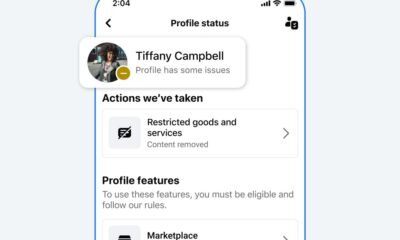
Reclaim Your Account: Facebook and Instagram Launch New Hub for Account Recovery
-
 Apple1 year ago
Meta discontinues Messenger apps for Windows and macOS