My Decoder guest today is Hayden Field, The Verge’s senior AI reporter, and we’re discussing the new wave of consumer-friendly AI agents.

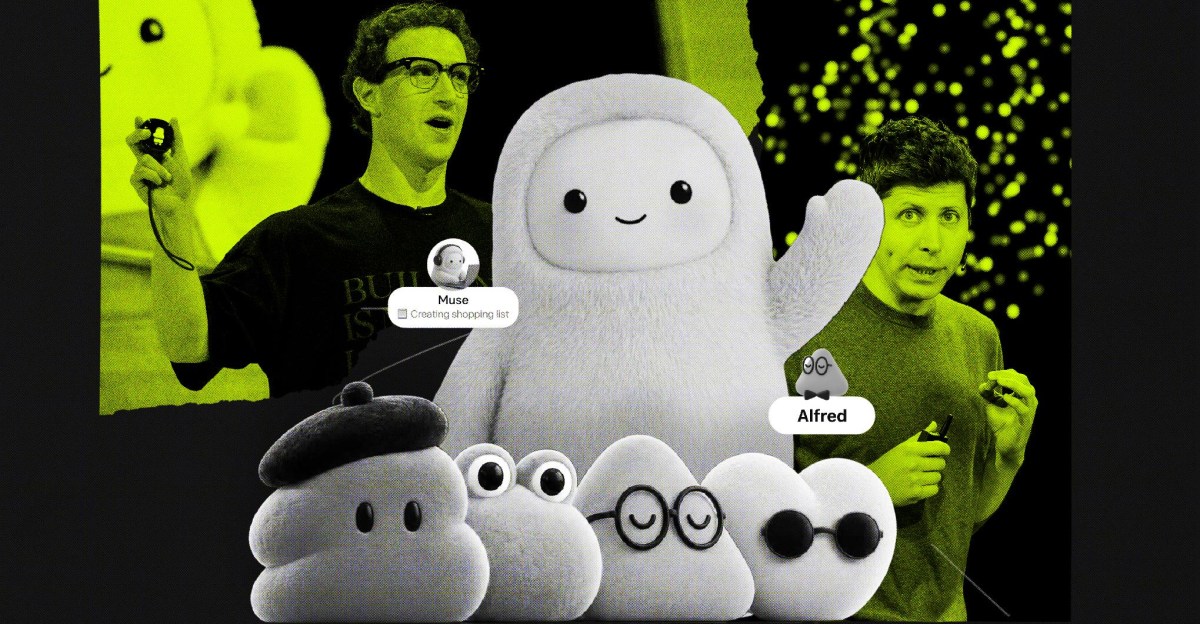
My Decoder guest today is Hayden Field, The Verge’s senior AI reporter, and we’re discussing the new wave of consumer-friendly AI agents.
If you’ve been paying attention to this space, you know AI enthusiasts have been using agents for a minute now — homebrew OpenClaw setups led to a surge in Mac Mini sales earlier this year. But the launches of Meta’s Muse, OpenAI’s Dots, and xAI’s Grok Bot have brought easy-to-use agents to millions.
Muse and Dots have had the highest-profile product launches, and they’re fascinating to pit against each other. Both Meta and OpenAI have decided to pitch these agents to mainstream users and businesses in the form of cute animated mascots.
Verge subscribers, don’t forget you get exclusive access to ad-free Decoder wherever you get your podcasts. Head here. Not a subscriber? You can sign up here.
These can do everything from the boring — restaurant reservations and inbox triage — to more sophisticated tasks. In OpenAI’s cases, the company is even offering “specialist” Dots for marketing, legal work, and accounting.
Muse, notably, is free, while Dots are not. So you’ll hear Hayden and me get into why Meta, which still doesn’t have a frontier model of its own, might have a meaningful edge here because it’s so much better at making and distributing consumer products.
There’s also a huge Decoder-style tension wrapped up in the agent race: a conversation about what AI is good at today, what it still can’t do, and then the privacy and security implications of handing over your credit card information, your email inbox, and other sensitive hard drive data to an AI that might be able to do things for you without even requiring an app or a phone in your hand.
That might be the future of all computing, but it’s not at all clear if most people want to hand over the data to make it happen.
Okay: The Verge’s Hayden Field on Muse, Dots, and trusting AI agents. Here we go.
This interview has been lightly edited for length and clarity.
Hayden Field, you’re the senior AI reporter here at The Verge. Welcome back to Decoder.
I’m excited to talk to you. This time there isn’t any wild interpersonal drama. No one’s feelings have been hurt. I would say Elon Musk tried to hurt some feelings and didn’t get there. Alexandr Wang from Meta has maybe been taking some shots, but none of the Real Housewives stuff we usually end up talking about when you’re on the show.
It’s been a bit of a pause in the soap opera antics for now, which I’m really grateful for.
Yeah, just some good old-fashioned product competition in the marketplace. Let’s see who wins and loses, and maybe everything will kill us all in the end. But, for now, cute mascots.
There’s a lot going on. Let’s start at the start. Hayden, you were at OpenAI DevDay in San Francisco. The company announced Dots, which is their new agent platform with a cute mascot. That happened just a few weeks after Meta Connect, at which the company was all in on Muse, their agent platform with an adorable mascot.
Tell us about the state of the industry right now. Everyone’s very excited about agents. What’s going on?
It’s funny to me because I’ve been covering agents for so long. I remember that in 2022, it was the year of ideation — that’s what tech leaders called it, referring to agents. They were just ideating. They were thinking about what it could look like. There were a lot of references to Jarvis from the Marvel Universe.
They called 2023 the year of deployment: “Let’s try things, let’s deploy and learn more about what’s failing.” Which meant pretty much all of them were failing at the time. Then we had 2024 and 2025. They didn’t have any names for those years, but agents were still pretty bad, as we saw.
2026 seems, to me, like the year of the beginnings of actually useful AI agents for the consumer, like always-on autonomous agents. Obviously, OpenAI was the start of all of this. But what’s interesting to me is that one man, Peter Steinberger, was able to create an actually useful AI agent for the consumer with OpenClaw — an always-on tool, despite its privacy flaws. It had a lot of privacy and security issues.
But it was an agent that was useful enough that people still wanted to use it anyway and try to find ways around these privacy issues that it was having. That inspired these companies to say, “If one man can do this over the course of one weekend, we’ve really been slacking.
We need to pull ourselves together.”
OpenAI hired a guy who created Dots, while Meta developed Muse. Both are autonomous AI agents marketed as personal assistants for various tasks like booking flights and making reservations. Dots goes further by assisting with work-related tasks.
OpenAI and Meta are competing with these AI agents, trying to differentiate them even though they are essentially the same. The agents are AI models wrapped in a harness to perform tasks independently.
The technical approach taken by both companies, known as OpenClaw, involves using a computer with a browser and a model to complete tasks. Meta has created a user-friendly consumer product in Muse, while Dots seems more geared towards software engineers but can still be used for personal tasks like wedding planning.
OpenAI is focusing more on marketing its product for enterprise use, while Meta is targeting consumers with Muse. Despite the similarities between the products, OpenAI is more in need of financial success. The goal is to make it free, accessible, and extremely easy to reach a wider audience. They aim to simplify usage with just one click and make it a norm in the market by flooding it with AI agents. The focus is on Muse being a consumer-facing product, particularly for those willing to pay for a subscription. This contrasts with Meta’s approach, as OpenAI is targeting enterprise customers and emphasizing privacy. Specialized Dots are introduced for various industries, positioning OpenAI as a money-making product for the enterprise sector. The revenue model may initially deter some users due to the subscription cost, but the aim is to create loyalty and lock-in by offering integrations with various tools and services. This strategy aims to keep users within the OpenAI ecosystem, even if the quality may not match that of competitors like Google or Meta. Meta was able to get there first because they focused on creating a consumer-friendly product that people would use on their platforms, rather than prioritizing developing a cutting-edge frontier model like OpenAI. Meta’s Muse Spark model, while not at the frontier of AI capabilities, was better suited for mass-market appeal and had a significant distribution advantage. Additionally, Meta excelled in consumer product design and did not have to pay for advertising on their own platforms, unlike OpenAI. This strategy allowed Meta to attract users and create a successful product without necessarily having the most advanced AI model. If I am able to successfully use a product or service and it saves me time or money in my business, I am more likely to continue using it, leading to increased revenue for me as a business owner. However, consumers tend to walk away if a product or service doesn’t work the first time, without giving it another chance.
I have observed this with Muse, where it encountered obstacles like CAPTCHAs or being blocked by Amazon, causing frustration and leading users to abandon it. In contrast, Dots seems to be more promising to me at the moment, although I am still evaluating its effectiveness.
I have integrated Muse with my Instagram account, allowing it to suggest actions like responding to comments or tracking follower counts. However, some of its suggestions, like creating daily videos on obscure topics, seem impractical to me. Overall, I have yet to find a truly valuable consumer use for these AI agents.
Trust is a key factor in my interactions with these agents. While I am comfortable sharing certain data with them, such as my Instagram metadata, I am hesitant to provide access to sensitive information like my credit card details. The idea of granting access to my credit card receipts for services like canceling subscriptions or negotiating bills is a major concern for me.
This issue of trust and data privacy is a significant challenge for AI agents and their adoption by consumers. I am uneasy about giving my data to Meta or other companies like OpenAI. Trust is a big issue, and many people don’t trust these companies with their personal information. While some may be willing to trade data for convenience or cost savings, the potential risks are concerning. For example, Muse’s aggressive data collection on Macs has raised red flags for me.
The lack of control over AI agents and the potential for data breaches are real concerns. The Facebook Marketplace incident with Muse shows how easily things can go wrong when AI agents have access to our personal information. It’s essential to be cautious and read the fine print before agreeing to share data with these companies.
Using AI to read terms and conditions before agreeing to them could be a helpful way to understand potential risks. It’s crucial to be informed and aware of the consequences of sharing personal data with companies like Meta and OpenAI. Ultimately, it’s up to individuals to decide how much risk they are willing to take when it comes to sharing their data. This did offer people some peace. “You will be responsible for covering the cost of this customer’s shoe purchase from you.”
I don’t know of any businesses that would be enthusiastic about this idea. It seems like businesses that pay Meta more money would be given priority, meaning that I would essentially have a corrupt butler or chief of staff who can be bribed. Is that the kind of business relationship you want?
This concept of a corrupt butler is concerning to me, and I believe it is not what most people desire. Customers want to trust recommendations and avoid being scammed.
The AI industry should consider how similar practices in other industries have led to controversy. For instance, when businesses paid for or deleted reviews, there was public outcry. Similarly, influencers who promoted products without disclosing paid partnerships faced backlash.
Consumers nowadays have to navigate through various tactics to determine trustworthy recommendations. If AI recommendations can be bought, how can companies ensure their credibility?
Companies will need to address these concerns moving forward. The backlash against ChatGPT ads prompted OpenAI to clearly label them as advertisements. If Muse directs customers to Meta-affiliated products without disclosure, many consumers may lose trust in such platforms.
I understand Meta’s perspective on monetization, as they are primarily a consumer-focused company. By offering free products, they can attract more users and drive sales through auctions and advertising.
This advertising model is prevalent in today’s digital landscape, where companies like Google use similar strategies. Meta’s large advertising business allows them to offer free consumer products and generate revenue through partnerships.
Mark Zuckerberg’s willingness to invest in projects like Reality Labs demonstrates his commitment to winning market share. OpenAI, on the other hand, relies on enterprise solutions for revenue generation.
As the competition in the consumer market intensifies, OpenAI focuses on enterprise offerings to sustain growth. While Meta dominates the consumer sector, OpenAI aims to carve a niche in the enterprise market.
The question of whether this model is sustainable remains unanswered. How much of the economy does Meta need to control to sustain its free offerings? The cost of providing free services to millions of users is significant, and funding such initiatives requires a substantial market share.
Meta’s financial resources allow them to reallocate funds from other departments to support new ventures. The company’s quarterly earnings reports will shed light on the success and profitability of these initiatives.
The future of these platforms hinges on user adoption and financial sustainability. It will be intriguing to observe how Meta navigates these challenges and manages the financial implications of their business model. The announcement at the top of the App Store may not hold much significance, as our own David Pierce has explained in his detailed story. It’s sustained success that truly matters in the long run.
It’s reminiscent of the early days of Uber and Lyft, where low prices initially attracted users, but eventually had to be increased. This pattern is common with VC-backed products. Will AI agents follow a similar trajectory, gaining users and sales before potentially pivoting in the future? Meta employees hinted at this possibility in our recent piece.
Meta seems to be leading the way in the future of computing with AI agents, but competition from OpenAI, Google, and Apple is inevitable. The landscape is constantly evolving, and only time will tell how it unfolds.
Thank you for joining us on Decoder, Hayden. Any questions or comments can be sent to decoder@theverge.com. We make it a point to carefully review each and every email that comes our way!
Are you a fan of thought-provoking discussions and intriguing issues? Then you’ll love “Decoder with Nilay Patel,” a podcast from The Verge that delves into big ideas and other challenges. Don’t miss out – SUBSCRIBE NOW!
Don’t miss out on more content like this – follow the topics and authors mentioned in this article to customize your homepage feed and receive email updates. You can choose to follow Nilay Patel, AI, Decoder, Facebook, Meta, OpenAI, Podcasts, or Tech. By following these topics, you’ll get a daily email digest and see related posts on your homepage feed. Stay informed and engaged with the latest insights in these areas. Transform the following:
Original: The cat is sleeping on the couch.
Transformed: On the couch, the cat is sleeping. Transform the following:
Original: “I cannot believe how quickly time has passed since we last saw each other.”
Transformed: “It’s hard to believe how fast time has flown by since our last meeting.” Transform the following sentence:
Original: “The dog ran quickly through the park.”
Transformed: “Quickly, the dog ran through the park.” Transform the following:
“Can you please provide me with more information about the project?”
to
“Could you kindly offer me additional details regarding the project?”



EU Takes Action Against Instagram and Facebook for Violating Illegal Content Rules

Warning: Facebook Creators Face Monetization Loss for Stealing and Reposting Videos

Facebook’s New Look: A Blend of Instagram’s Style

Facebook Compliance: ICE-tracking Page Removed After US Government Intervention

Facebook and Instagram to Reduce Personalized Ads for European Users

InstaDub: Meta’s AI Translation Tool for Instagram Videos

Reclaim Your Account: Facebook and Instagram Launch New Hub for Account Recovery

Meta discontinues Messenger apps for Windows and macOS
Subscribe to our weekly newsletter below and never miss the latest News or an exclusive offer.