
Microsoft
Microsoft’s AI Chip Reduces Dependence on Nvidia GPUs

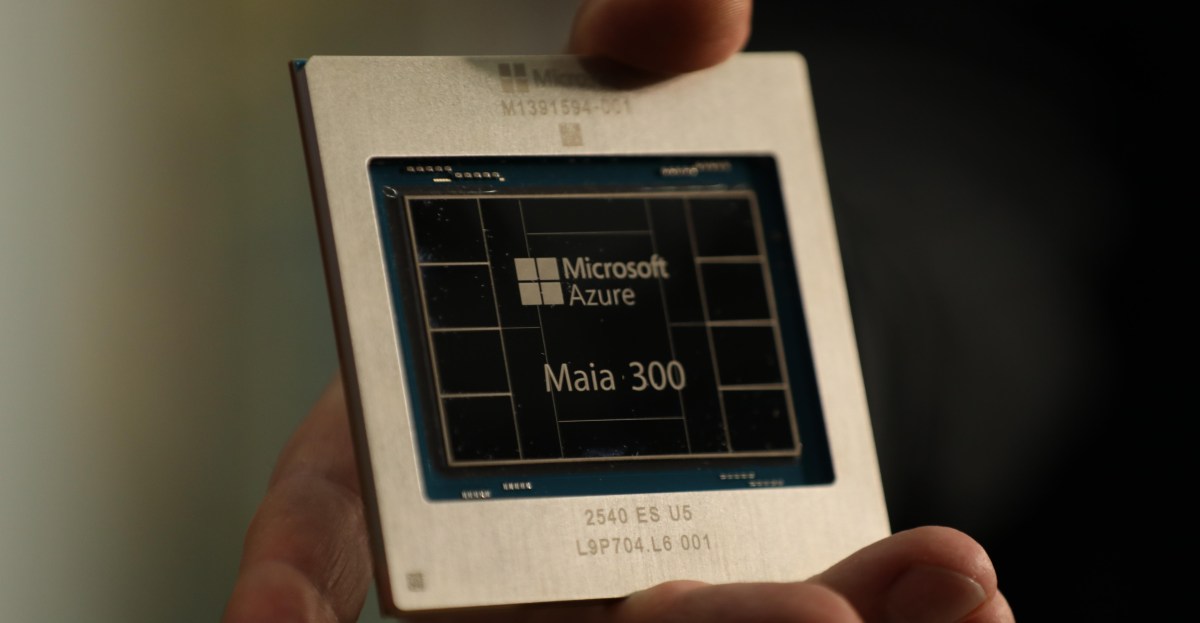
Microsoft Unveils Maia 300: The Next Generation In-House AI Chip
Microsoft has introduced its latest innovation, the Maia 300, marking the third generation of its in-house AI chip. This cutting-edge technology is set to revolutionize the landscape of AI inference systems for Microsoft’s wide range of products and services. Maia 300 is not only geared towards enhancing the efficiency and cost-effectiveness of AI workloads in the cloud but is also equipped to handle advanced reasoning models and agentic tasks.
Scheduled for production rollout in 2027, Maia 300 has been meticulously designed with a focus on efficiency. According to Scott Guthrie, executive vice president of Microsoft’s cloud group, Maia 300 is expected to deliver a remarkable 40 percent increase in tokens per megawatt compared to leading GPU-based systems. In a full 96-accelerator configuration, it can achieve up to 7 times the rack-scale token throughput of its predecessor, Maia 200.
The enhanced efficiency of Maia 300 will enable Microsoft to gradually transition to using its in-house AI chips as the primary choice, moving away from reliance on Nvidia and AMD chips. Guthrie envisions scaling Azure Maia to multi-gigawatt deployments, solidifying Maia as the primary AI inference system for Microsoft’s ecosystem.
Maia 300 succeeds its predecessor, Maia 200, which was introduced just in January. Maia 200 has already become an integral part of various AI workloads across Microsoft, including flagship projects like Microsoft Copilot and GitHub Copilot.
Guthrie praises Maia 200 as the top-performing AI infrastructure within Microsoft’s fleet, emphasizing its real-world impact on AI services. The Maia 300, on the other hand, is designed to cater to the evolving landscape of AI workloads, including long-context reasoning, latency-sensitive conversational experiences, and multi-step agentic tasks.
Microsoft’s adoption of a new chiplet architecture for Maia 300 promises significant efficiency gains. Leveraging TSMC’s N2P process node, this architecture separates compute, memory controller, and I/O functions to enhance compute performance. The Azure hardware and infrastructure team highlights the strategic allocation of resources to optimize functionality.
In addition to powering Microsoft’s AI initiatives, Maia 300 plays a vital role in propelling the company towards its goal of competing with industry giants like Google DeepMind and OpenAI. Mustafa Suleyman, Microsoft’s AI CEO, emphasizes the importance of a cohesive platform that integrates AI models with the Maia chip, underscoring the company’s commitment to innovation.











Toyota Settles $750 Million Class Action Lawsuit Over HiLux and Prado DPF Issues

Microsoft’s AI Chip Reduces Dependence on Nvidia GPUs

The Rise of AI: Epic’s New Disney Shooter with Marvel and Star Wars Characters

Samsung Unveils Exclusive Galaxy Z Fold 8 Limited Edition Model

Say Goodbye to Samsung Headaches with the Galaxy S27: A Tech Advisor Review

WindBorne’s Balloon Data Solution Secures Major US Air Force Contract

The Social Reckoning: A Box Office Bust

Exploring the Universe: No Man’s Sky Lands on iPhone and iPad

INCREDIBLE Smartphone Gadgets on Amazon!

EU Takes Action Against Instagram and Facebook for Violating Illegal Content Rules

Warning: Facebook Creators Face Monetization Loss for Stealing and Reposting Videos

Facebook’s New Look: A Blend of Instagram’s Style

Facebook Compliance: ICE-tracking Page Removed After US Government Intervention

Facebook and Instagram to Reduce Personalized Ads for European Users

InstaDub: Meta’s AI Translation Tool for Instagram Videos

Reclaim Your Account: Facebook and Instagram Launch New Hub for Account Recovery

Meta discontinues Messenger apps for Windows and macOS

Breaking Updates: Meta Connect 2025 Unveils Latest Developments
INCREDIBLE Smartphone Gadgets on Amazon!

10 Android Apps you NEED to try in 2017 / 2018

The Most Bizarre Smartphone we’ve seen all year.

Best Tech under $2000 – December 2017 / January 2018!

This could be your next Smartphone.

Top 10 most INSANE Limited Edition Smartphones!

How Smart is the AI-Powered Huawei Mate 10 – with EMUI 8.0?

I used a 2012 Smartphone in 2018 – Here’s what happened.

How to send ANY file Anywhere!
-
 Facebook12 months ago
EU Takes Action Against Instagram and Facebook for Violating Illegal Content Rules
-
 Facebook12 months ago
Warning: Facebook Creators Face Monetization Loss for Stealing and Reposting Videos
-
 Facebook10 months ago
Facebook’s New Look: A Blend of Instagram’s Style
-
 Facebook12 months ago
Facebook Compliance: ICE-tracking Page Removed After US Government Intervention
-
 Facebook10 months ago
Facebook and Instagram to Reduce Personalized Ads for European Users
-
 Facebook12 months ago
InstaDub: Meta’s AI Translation Tool for Instagram Videos
-
 Facebook10 months ago
Reclaim Your Account: Facebook and Instagram Launch New Hub for Account Recovery
-
 Apple12 months ago
Meta discontinues Messenger apps for Windows and macOS
